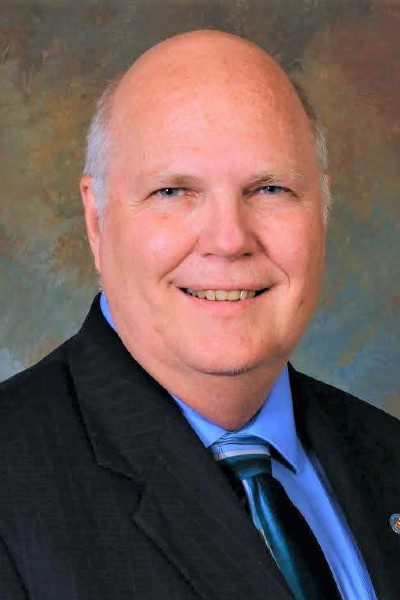



Saybrook University Alumnus Dr. George Aiken Appointed Clinical Director at Community Support Network in Sonoma County, CA
08/31/2012Saybrook University psychology alumnus Dr. George Aiken has been appointed Clinical Director at the non-profit agency Community Support Network (CSN) in Sonoma County, CA, a consortium of 11 facilities serving the mentally ill. Dr. Aiken (M.A. ’01, Ph.D. ’06), the former Director of Alumni Relations at Saybrook University, will guide and direct CSN’s clinical staff and will facilitate staff training. He will also serve as the subject matter expert with respect to CSN’s clinical practices, representing CSN in its contractual relationships with Sonoma County Behavioral Health.
A therapist since 1985, Dr. Aiken is currently a CA Licensed Psychologist in private practice in Santa Rosa, CA. His master’s thesis at Saybrook was titled The Effect of Transcendent Experiences on Personality and Consciousness: An Existential-Humanistic and Transpersonal Perspective, which was chaired by Dr. Eugene Taylor. His doctoral dissertation was titled The Potential Effect of Mindfulness Meditation on the Cultivation of Empathy in Psychotherapy: A Qualitative Inquiry, which was chaired by Dr. Art Bohart.
New iPad app available for Conflict Resolution Education
08/29/2012Conflict resolution education (CRE) is a key component of social transformation. The Conflict Resolution Education Connection is a web site devoted to the promotion of CRE throughout the world. Creducation.org webmaster Bill Warters has developed a new iPad App that provides a great way to browse the field of conflict resolution in education and find ideas for instruction and training activities.
MBM Mentor Studied How Long Distance Running Affects Women’s Lives: Introducing Alison Boudreau, Ph.D.
08/29/2012
Sometimes life’s most challenging events are the ones that help to initiate meaningful change in one’s life. This was the case for Dr. Alison Boudreau, a new mentor guiding students in the College of Mind-Body Medicine at Saybrook University. Alison experienced a convergence of profound life events all around the same time -- the loss of a friend and the loss of her job in the aftermath of the 9-11 terrorism event. These experiences had a transformative effect on her and changed her life’s path.
College of MBM Mentor and Faculty Member Applies Expressive Arts Approach to Workplace: Introducing Terri Goslin-Jones, PhD
08/27/2012Recently Terri Goslin-Jones, PhD, a Saybrook University graduate, agreed to serve as a mentor for students in the College of Mind-Body Medicine. Terri’s main reason for becoming a mentor is to give back to other people, who are on a personal quest to nurture and develop their unique desire to change their part of the world.
College of Mind-Body Medicine PhD Student Completes a Clinical Practicum at the California College of Ayurveda: Introducing Avn Sturm
08/24/2012
Avn Sturm’s dissertation interest is in Ayurveda, with a focus on the doctor-patient healing relationship in Ayurvedic Medicine. Ayruveda is the traditional medicine of India, based originally in the second millennium BCE, and further developed in the millennia since that time. Ayruvedic Medicine treats the whole person, not the disease, and draws heavily on herbs, dietary change, meditation, and life style changes, to draw on the healing resources of the patient.
Saybrook University Makes Strong Showing at APA Conference
08/21/2012
Despite its small size, Saybrook University made an outsize impression though faculty, student and alumni research at the American Psychological Association conference.
The 120th annual conference, held from August 2nd to 5th, in Orlando, Fla., featured internationally known presenters on topics and research currently attracting attention in the field, covering issues such as immigration, racism, eating disorders, clinical practice, social networking and psychotherapy.
Saybrook faculty, alumni, and students presented on such wide-ranging topics as the practice of existential psychology there, the future of positive psychology, the basics of hypnosis and self-hypnosis and how the creative process can promote healing and growth.
College of Mind-Body Medicine at Saybrook University Graduates Fourteen with MS Degree
08/19/2012
On August 14, 2012 Saybrook University's College of Mind-Body Medicine held its first independent graduation ceremony as a College! The Commencement Ceremony took place in San Diego, California. University Provost Dan Sewell, College Dean James Gordon, and College Chair Donald Moss bestowed the master’s degree in mind-body medicine on fourteen individuals. Ten of the 14 graduates were present for the ceremony, and are pictured in the accompanying photo.
UNDP: Access to technology can help prevent violent conflicts
08/16/2012The United Nations Development Programme (UNDP) website features a post by Ozonnia Ojeilo describing the way that mobile phones, social media and other web-based resources have been used to disseminate warnings about potential violence in troubled hot-spots, facilitate rapid responses to emerging conflicts, analyze trends and inform better programming.
"Where is the Unified Japan?" College of MBM Master's Student Tamami Shirai Reports on the Post-Tsunami Developments
08/16/2012Tamami Shirai conducted her master's thesis research in the College of Mind-Body Medicine on the psychophysiological impact of the March 2011 earthquake and tsunami in her native Japan.
Saybrook University Psychology Alumnus Dr. Ken Bausch Releases Body Wisdom in Dialogue: Rediscovering the Voice of the Goddess
08/15/2012BOOK REVIEW: BAUSCH, K.C., & FLANAGAN, T.R. (2012). BODY WISDOM IN DIALOGUE: REDISCOVERING THE VOICE OF THE GODDESS .
by Jerry Kurtyka, M.A. (OS), Saybrook 2002
Body Wisdom in Dialogue is a guide book for understanding the feelings that enable and sustain heartfelt discussions as collective conversations, an ancient art which has been continued within tribal cultures. It is the second AGORAS publication by Thomas Flanagan and Ken Bausch, Ph.D. Saybrook 1998, and follows last year’s book, A Democratic Approach to Sustainable Futures. In one way, Body Wisdom might have come first as it presents the underlying theory (or is it theology?) for the Structured Dialogic Design – SDD - process described in the earlier book.
Body Wisdom addresses how we surface ideas that are embodied below the level of our conscious knowing and then sort out the wheat from the chafe, primarily in a collective context. The authors state that such ideas are known through body wisdom, the repository of inner feelings that can speak to our mind in a conscious way (p. 32). For a collective, these ideas might relate to what are sometimes called wicked problems that resist analysis because there are so many entangled issues and unintended consequences which can potentially result from tackling the problem prematurely. On the other hand, SDD and body wisdom techniques are probably not the best approach to deal with emergencies that require immediate, expert action to avert further disaster (I am recalling the Fukishima nuclear disaster response last year, though SDD would likely be an excellent way to develop contingency plans for such an event).
One technique to elicit unconscious ideas is the use of a trigger question. Trigger questions play an important role to surface the unmanifested ideas from their embodied, unconscious state. The authors give the example of a new cohort of participants for an Indigenous leadership development program who are asked upon entering the program, “Where did you get your Medicine?” This type of existential question is designed to elicit self-disclosure and common group experiences, leading to more cohesion as the cohort evolves. One could imagine asking President Obama about his controversial healthcare program – “How will this be our healing?” – and then listening closely to his answer!
The authors cite the Greek myth of Psyche (mind) and Aphrodite to illustrate the dynamic tension between the unformed yet salient new idea and the current embodied wisdom and practice (Aphrodite), especially as these play out in an organizational context. New ideas exist initially like Psyche, nebulous and still emergent, unproven and undefined, but also pushing at us in some way to find expression. Aphrodite, then, is the current paradigm: its attractiveness; business model; culture; technology; known markets; profits and revenues; respectability (she is a goddess, after all). It is against and with Aphrodite that Psyche must prove herself, but first she has to know herself and to this end is given a set of trials.
So it is with salient ideas; we have to first know them before we can prove them to ourselves and others. This is where body wisdom comes in; it helps us to discern when we need to engage an important problem (p. 132). Not necessarily how to engage, which is more in the domain of our rational mental process and which can be assisted by SDD. Thus, the two domains of body/goddess andmind/reason find each other in a common purpose, as the authors describe.
Publication Date: Feb 25 2012
ISBN/EAN13: 0984526633 / 9780984526635
Page Count: 170
Binding Type: US Trade Paper
Trim Size: 5.25" x 8"
Language: English
Color: Black and White
Related Categories: Psychology / Social Psychology
Saybrook University Alumna Dr. Terilyn Jones-Henderson Embodies Humanistic Ideals in Her Work
08/13/2012Dr. Terilyn Jones-Henderson: A Profile
By Pat Brawley, Ph.D. Saybrook University '97
The College of Mind-Body Medicine Certificate for Health and Wellness Coaching
08/11/2012This College of Mind-Body Medicine Certificate provides a comprehensive training in health and wellness coaching. The Certificate includes five key courses, four residential conferences, and a capstone integrative essay.
“Rethinking Madness”: Saybrook Alumni's New Book Presents Strong Evidence That Schizophrenia and Psychosis Are Best Treated Through Therapy
08/08/2012Americans suffering from schizophrenia and psychosis have among the lowest rates of recovery in the world. American medicine also emphasizes medication for these conditions more than most.
Is that a coincidence?
A new book by Saybrook psychology alumnus Paris Williams presents compelling evidence that many mental illnesses we have come to regard as biological problems – brain chemistry gone awry – are in fact psychological issues: desperate attempts by the psyche to preserve a sense of identity or convey crucial messages.
College of Mind-Body Medicine PhD student, Ramona Rolle-Berg, Completes Practicum Placement in Chiropractic Clinic.
08/08/2012
Food insecurity - how do the world's countries compare?
08/03/2012In the last 10 years, global food prices have risen twice as fast as inflation, according to the World Bank. An estimated 44 million people crossed the poverty line during the food price spikes of 2008, as riots occurred around the globe. Food insecurity is upon us again, as prices continue to rise sharply.
College of Mind-Body Medicine PhD Student, Renee Rolle-Whatley, Completes Practicum Placement in Acupuncture and Traditional Chinese Medicine
08/02/2012Renee Rolle-Whatley, a PhD student in the Saybrook University College of Mind-Body Medicine, recently completed a practicum placement with acupuncture practitioner Timothy Sam Kit Tin, L.Ac. This practicum provided her with the unique opportunity to experience firsthand the real-time use of a medical system of diagnosis and treatment already several thousands of years old. Acupuncture as practiced by Tin and his colleagues at Joyee Acupuncture and Herb, was both grounded in ancient Chinese medical wisdom and focused to treat common modern physical complaints. Mr. Tin was an enthusiastic mentor, jumping in with both feet, even though he and Ms. Rolle-Whatley differed in language, culture, and healthcare profession. By allowing her to learn by observation, discussion, and comparison, he provided a memorable and beneficial internship experience.
Embodied Practice for Health and Wellbeing: A Healing Retreat for Mental Health Professionals Experiencing Burnout and Compassion Fatigue: Introducing Kari M. Allen-Hammer
08/01/2012Mental health professionals often work in stressful environments, and are exposed regularly to human suffering. As a result, they risk emotional and physical exhaustion that can lead to burnout syndrome and compassion fatigue.
For her Master’s project, Kari M. Allen-Hammer described the problems of burnout syndrome and compassion fatigue as experienced by some mental health professionals, examined the research that supports the use of mind-body medicine practices for reducing the emotional stress that can lead to burnout and compassion fatigue, and formulated an original 16-hour urban retreat program designed to guide mental health professionals to embody states of heightened awareness of their mental, physical and spiritual needs.