What Is Counseling?
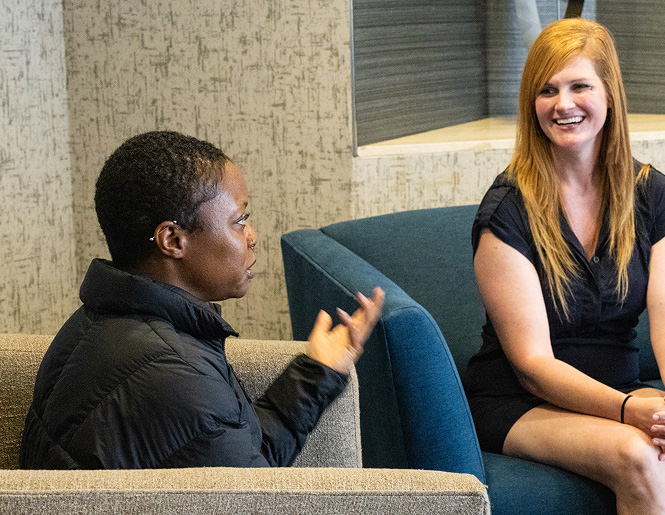
The study of counseling is a recognition of our undeniable and shared need for support, empowerment, and connection. Understanding that the health of the mind has a profound impact on the body and an increasing acceptance of the need for counseling professionals have positioned this field as a powerful tool to wield against the ongoing mental health crisis. Individuals, communities, and corporations are swiftly reimagining counseling as a key component to not only mental health, but productivity, physical health, and more. Counselors inspire individuals to overcome challenges, bring harmony to chaotic times, achieve personal evolution, and manage addictions, trauma, and life transitions. Through this essential endeavor, we can heal, strengthen, and empower communities and societies, one individual at a time.
What Can You Do With a Counseling Degree?
Many of our counseling graduates use their degrees to bring specialized counseling techniques into their careers in therapy, research, and education. Some launch their own counseling, wellness, or holistic health centers, while others dedicate themselves to educating and innovating the next generation of counselors.
Our counseling graduates have enjoyed success in a variety of career roles and organizations.
Career Settings
- Health care
- Education
- Social services
- Corporate environments
- Private practice
- Wellness facilities
- Rehabilitation centers
- Military and veterans services
Frequently Asked Questions for the Online Counseling Program
What kinds of counselors are there?
For those interested in the field of counseling, you can work as a mental health counselor, substance abuse counselor, social services counselor, or rehabilitation counselor, to name a few. As a counselor, there are many different career settings to pursue, including health care, social services, education, private practice, veteran services, corporate environments, or even wellness facilities.
Are all counseling programs available online at Saybrook?
Both our Ph.D. and M.A. in Counseling programs are available online. All coursework is completed online, but both programs require an in-person Residential Learning Experience, which is a five-day interaction that occurs twice a year—in spring and fall— in California.
Is clinical training required for any of the counseling programs?
Yes. There is clinical supervision in the CACREP-accredited M.A. in Counseling program because it meets the requirements to apply for licensure as a Licensed Professional Counselor (LPC), Licensed Professional Clinical Counselor (LPCC), or Licensed Mental Health Counselor (LMHC).
How much do mental health counselors make?
According to the U.S. Bureau of Labor Statistics, the average salary in the U.S. is $59,190 a year.
How long does it take to complete a degree in counseling?
The average length can differ by program; the Ph.D. in Counseling takes about four years to complete. The M.A. in Counseling takes about three years to complete.
Why You Should Apply for a Counseling Degree Program
Our counseling students have a deeply connective experience, one that prepares them to understand interconnectivity and relate to others with responsibility and curiosity as future counselors and educators.
Our humanistic approach to counseling combines distance learning with community and connection, allowing you to learn at your own pace without sacrificing opportunities to form lifelong friendships and professional relationships with classmates, faculty, and institutional partners.
Counseling Career Outlook
According to U.S. News & World Report, mental health counselor is one of the top 10 best social services jobs. The Bureau of Labor Statistics indicates counselors are in high demand and the job outlook is expected to grow by 19% from 2023 to 2033, which is much faster than the average job outlook. Expected salary and job demand can vary depending on the state and employer.
UNBOUND: Counseling
Discover the unique ways counseling students, alumni, and faculty apply their education to help individuals and communities improve their mental health and well-being in the latest from UNBOUND, our online magazine.
Saybrook Learning Model
Our graduate counseling programs offer an enriching, asynchronous online experience with occasional synchronous elements that bring us together as a community for connection and collaboration. Although most of your time will be online, in-person attendance may be necessary at a University Learning Experience depending on your counseling program’s requirements. Visit the Saybrook Learning Model page to learn more about University Learning Experiences.