Menu

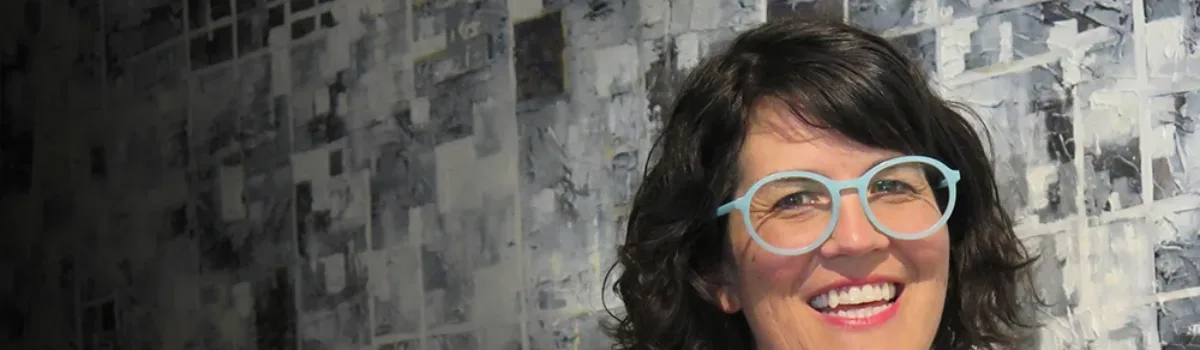
Nina Narelle

Nina Narelle
Ph.D. Managing Organizational Systems, 2012


“Saybrook showed me I could do organizational change work in any kind of organization and find it rewarding. That was a great thing to discover.”


Team Builder

“There are a lot of smart people in the world who can solve technical problems, but there are not a lot of people in the world who can solve complex humanistic problems. My hunch was that Saybrook would help me develop that capacity, and I was correct.”

Nina Narelle built a nonprofit career in organizational change the old-fashioned way. But a “hunch” that the Seattle-based LIOS Graduate College of Saybrook University could give her work a humanistic edge pushed Narelle out of her comfort zone and into one of the most transformative experiences of her life.

“I had to break through my own mental models of how the world works,” explains Narelle, adding that her time at LIOS inspired her love of self-expression through doodles and blogging. “LIOS showed me I could do organizational change work in any kind of organization and find it rewarding. That was a great thing to discover. Now I work at a consulting firm where we work with Global 2000 for-profit companies, big complex corporate systems, and I love it.”

Using principles of co-creation, visual thinking, and people-centered design, Narelle’s work at the XPLANE strategic design consultancy firm reflects the humanistic values she learned at Saybrook. The challenges within the organizations she works with are complex, often revolving around organizational alignment or strategy activation. Her expert solutions focus on bringing people together—the human touch.

“A big part of our philosophy is that we don’t solve the problem for you. We help you solve the problem,” she says. “We design experiences for them so they can figure out the solution. We are very sensitive to the idea of facilitating a human-centered, co-creative process that enables people solve really complex problems from inside their organization.”

Narelle is grateful to LIOS and Saybrook for opening her mind to a more human approach in her life’s work.

“This is real-time learning. You apply your skills directly, not just in theory,” she adds. “You cannot get through the program without having some kind of evolution in your behavior—both in how you move through the world and in how you can impact change within that world.”

CIMHS webinar available online: Can ACA improve the status of the U.S. healthcare system?

[arve url=”https://youtu.be/gvTc7Lk5HBM”/]

The College of Integrative Medicine and Health Sciences now presents an online webinar on the topic:  “The Affordable Care Act: Can It Improve the Status of the U.S. Healthcare System?”

This webinar is part of the YouTube series: “Saybrook University Webinars on Integrative Medicine.”

This presentation discusses the current status of the U.S. healthcare system and key elements of the Affordable Care Act (ACA) that may help to improve it.  The discussion includes information about world health care rankings, a summary of key elements of the Affordable Care Act, and a review of what has happened with the ACA since March 2010 in terms of results, issues, and attitudes.

Presenter One:  Lindsay Johnson Chang, MA, is a 2nd-year student in the Healthcare Systems track of the CIMHS program.  She currently works for VOX Telehealth as Vice President of Program Management, where she develops online platforms to enhance patient engagement, education, and compliance in high-cost areas such as orthopedic surgery and palliative care.

Presenter Two:  Luann Fortune, Ph.D., is a member of the faculty in the College of Integrative Medicine and Health Sciences at Saybrook University.

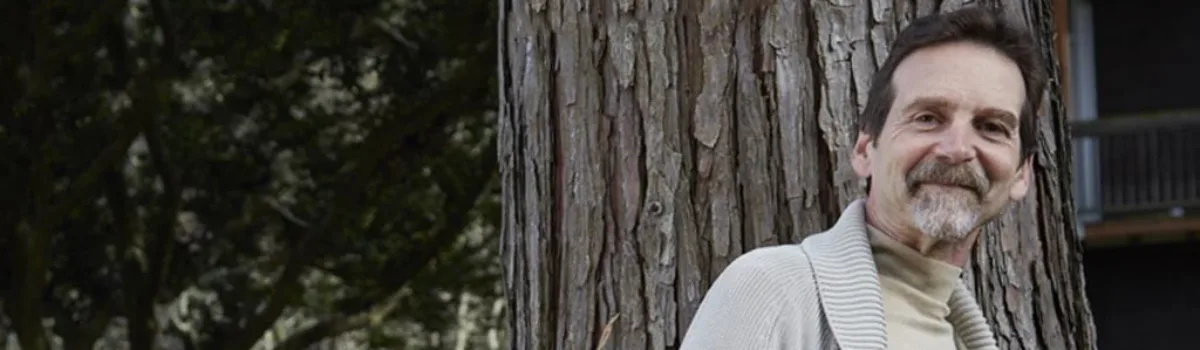
Kirk Schneider, Ph.D.

Kirk Schneider, Ph.D.
Clinical Psychology


“Saybrook is the flagship graduate school for the new and expanded existential humanistic vision, which now encompasses an integrative, multicultural, and spiritual dimension that is at the cutting edge of psychology today.”


Minding The Movement

Saybrook University Professor Kirk Schneider’s relentless journey to understand the world through a human lens, and his early work with humanistic luminaries such as Dr. Rollo May, has made him the leading scholar for contemporary existential-humanistic psychology.

The walls of Saybrook University Professor Kirk Schneider’s office in San Francisco’s Cow Hollow are something of an existential-humanistic psychology museum—a carefully curated scrapbook of all the people, places, and artifacts the Saybrook legend has collected and carried for nearly four decades.

There are paintings by Dr. Rollo May, drawings and illustrations from his patients, and a charcoal sketch of the professor at work. These keepsakes are kept close to honor the people who informed his existential path, which began at the age of 3.

“My 7-year-old brother died suddenly, and there was a shattering that took place,” explains Dr. Schneider, who received a Ph.D. in clinical psychology from Saybrook in 1984. His brother’s passing prompted a lifetime of humanistic exploration and scholarship. Along the way, he was fortunate to work with many great existential scholars—from his studies at Saybrook University with Dr. Stanley Krippner and Dr. James Bugental, to a life-changing conversation with Dr. May himself, at his iconic home in Tiburon high above the San Francisco Bay.

Not only did Dr. May, the father of existential psychotherapy, agree to become an advisor for Dr. Schneider’s Saybrook dissertation, he also invited the young doctoral student to co-author “The Psychology of Existence: An Integrative, Clinical Perspective,” a textbook on existential psychology.

“These kinds of experiences are what made Saybrook a watershed experience and the launch pad to my work on behalf of the existential-humanistic ways of life,” he says. “But none of it came easily or instantly. Saybrook challenged me and countless others to be self-learners and self-initiators—life-long skills that have helped me many times.”

Today, as the author of more than 100 articles and 10 books, vice president of the Existential-Humanistic Institute, and long-time adjunct faculty at Saybrook, Dr. Schneider carries the torch to move the existential-humanistic psychology movement boldly into the 21st century.

“Saybrook faculty and students are consciously attempting to draw upon the existential humanistic core that founded the school and advance that perspective to a new level of relevancy to the contemporary world,” says Dr. Schneider, who recently published a paper about “resetting psychology on its rightful existential-humanistic base” in the Journal of Humanistic Psychology.

“In the wake of current events, such as the prevalence of mass shootings, I feel very strongly that we need to bring a focus on the person back to major sectors of our society,” he says. “The long-term remedy, I believe, is to bring depth-humanistic principles to child-rearing to educational settings, to work settings, to religious and spiritual settings, and even to the government.”

Just as Dr. May, Dr. Carl Rogers, and other humanistic psychology pioneers paved the way for a university like Saybrook to flourish, Dr. Schneider would like to see the modern humanist movement inspire a task force—with principles that can be shared with activists and community leaders to impact change on a global level.

“It’s really become a movement about helping to reset psychology on an existential-humanistic basis,” he explains. While his office embodies the past and present of his involvement in this movement, Dr. Schneider believes Saybrook can embody its future.

“Saybrook is the flagship graduate school for the new and expanded existential humanistic vision, which now encompasses an integrative, multicultural, and spiritual dimension that is at the cutting edge of psychology today,” he says. “It is a joy to teach the next generation of inquirers.”

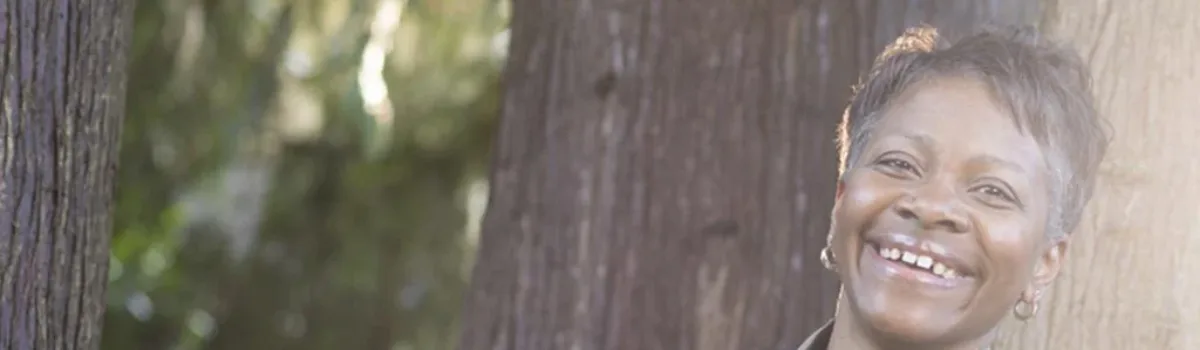
Kelly Hudson

Kelly Hudson
Ph.D. Psychology, 2010, M.A. Psychology, 2005


“I wanted my research to help the community where I live and work.”


Empowered

After a troubled childhood, Dr. Kelly Hudson’s experience at Saybrook University—and the support of a beloved mentor—helped her realize her potential. Today, she’s helping children develop a more authentic, affirming life. 

When Dr. Kelly Hudson calls herself a “work in progress,” she does so with pride. After all, she didn’t get to Saybrook University or build a successful career as a professor, author, and co-owner of Precious Little Ones Development Academy by being “finished.”

And yet, the story of her childhood makes this “work” all the more meaningful. “We were dirt poor, living in a wooden house with no indoor plumbing. Not to mention the mental and physical abuse ever present,” explains Dr. Hudson, who completed both a master’s degree and later, a Ph.D. in psychology at Saybrook. “I grew up thinking I wasn’t smart enough, and I never thought the life I have now would have been possible for me.”

She credits the Saybrook experience—and the mentorship of Saybrook Professor Dr. Theopia Jackson in particular—with helping her realize her full potential. “Theopia taught me what it means to be authentic, and showed me that education is empowerment,” she says.

Under Dr. Jackson’s guidance, Dr. Hudson integrated the work she was already doing with young children at her Precious Little Ones Academy with an individualized specialty in early childhood development at Saybrook. Her dissertation included research about the role of the child care provider in the social-emotional development of young children, a subject she had devoted her career to since 1994.

“I wanted my research to help the community where I live and work,” says Dr. Hudson, explaining that the children she serves are from multi-culturally diverse families. “What we are doing is very different, incorporating high-quality social-emotional development.”

Serving a small, select population, Precious Little Ones has built a reputation on creating customized curriculum tailored to the individual child—a fulfilling endeavor that allows Dr. Hudson to give babies and toddlers the affirming start in life she was lacking as a little girl.

Similar to the Montessori theory of education, there are no labels in Dr. Hudson’s child care center. Every child is an individual, and they are educated with a program that specializes on helping them reach their potential.

“I had one student who wanted to learn cursive by the time he was 4 years old,” she says. “So we worked with the family and created a program for him. I am very proud of the work we are doing here. Children need authenticity—something that Saybrook reinforced in me.”

In addition to her accomplishments at Precious Little Ones, Dr. Hudson has held a series of teaching roles and co-authored a book, Online Instructor Sanity: Stories & Self-Reflection to Bring Joy to Your Online World.

“I entered Saybrook lacking confidence, but walked off of the stage on graduation day with my head held high, knowing I had worked fearlessly alongside some of the greatest professors in the world,” she says.

So yes, Dr. Kelly Hudson may still be a “work in progress.”

“But with confidence,” she says, “and on the shoulders of those that came before me.”

Dr. Demetry Apostle

Dr. Demetry Apostle
Ph.D. Psychology, 2017, M.A. Psychology, 2013


“My experience and ongoing connections to Saybrook have been transformative in ways I could never have imagined.”


Pride

Chicago native Dr. Demetry Apostle is using the humanistic psychology principles he learned at Saybrook University to serve the LGBTQ community—with an increasing focus on counseling transgender children and their families.

As a gay teen coming of age in 1970s Chicago, Dr. Demetry Apostle lived through an era in LGBTQ history when the very idea of “gay pride” was as novel as a city-wide parade to celebrate it—an era where after decades of oppression and injustice, the road to LGBTQ equality was just being paved.

Being openly gay at that time meant being different; it meant pushing boundaries and forcing society outside of its comfort zone. That perspective on the world led Dr. Apostle to be more than a witness to the movement—inspiring a personal quest that ultimately landed him at Saybrook University.

“My experience and ongoing connections to Saybrook have been transformative in ways I could never have imagined,” says Dr. Apostle, who credits Saybrook’s “affirming, person-centered” training for helping him actualize his potential as an advocate for LGBTQ individuals and their families.

He came to Saybrook from law school, eager to change careers and start an M.A. program in psychology. From there, Saybrook faculty connections led Dr. Apostle and his partner to a life-changing opportunity to work in Melbourne, Australia while still completing his graduate studies.

In 2008, by the time he completed his master’s degree and started a Ph.D. program, Dr. Apostle was working as a staff therapist at the Victorian AIDS Council, providing therapy to LGBTQ individuals and couples. He and his partner also became the first same-sex couple to adopt a child in the region—a tremendous legal victory he says was possible by the support he received from the community he built through Saybrook.

Today, Dr. Apostle is back in the San Francisco area with his family. In addition to a staff position at United Behavioral Health-Optum and his work providing psychotherapy in a private practice setting, Dr. Apostle serves an emerging segment of the LGBTQ population that was virtually unseen 40 years ago—children and teenagers who identify as transgender.

While some of the children Dr. Apostle assesses and counsels have the love and full support of their parents, others do not—which causes the same atmosphere of stigma and oppression gay teens experienced a generation ago.

“I recently worked with a 7-year-old who has been gender expansive from birth and comes from a divorced family,” he says. “One parent is on board and supportive. The other parent is not and the result has been a lot of distress for the child. Together, we are working through the issues raised, so that he can feel comfortable in his own skin, and comfortable in the world around him.”

Dr. Apostle, who completed his Ph.D. in 2013, was recently asked to co-author a book chapter for an American Psychology Association publication about co-occurring disorders in gender non-conforming and transgender children and adolescents. He never imagined himself helping children work through their gender identity. But his work is the natural evolution of his journey as an advocate, and is as critical to the future of LGBTQ health and well-being as the gay rights movement was in the 1970s.

“It’s amazing to be a part of this point in history,” he adds. “Saybrook’s humanistic tradition has offered me a philosophical perspective that continues to enhance and enrich my life and work. It’s been truly remarkable.”

Bob Flax, Ph.D.

Bob Flax, Ph.D.
Transformative Social Change


“I’ve always sought to help people and respond to human suffering. That took me on a journey that began working with individuals, then large systems, and finally helping to create global solutions to global problems.”


Transformer

From counseling men on San Quentin’s death row to tackling social justice concerns on a global scale, Saybrook University Professor Bob Flax has always been guided by inquisitiveness and a desire to positively enhance the human experience.

The undeniable leitmotif of Saybrook University Professor Bob Flax’s personal and professional narrative is transformation.

“I’ve always sought to help people and respond to human suffering,” Bob Flax, Ph.D., says. “That took me on a journey that began working with individuals, then large systems, and finally helping to create global solutions to global problems.”

His research and experiences on this journey give Dr. Flax, who received a Ph.D. in Clinical Psychology from Saybrook in 1992, sought-after expertise in the field of transformative social change.

One formative chapter came during the 16 years Dr. Flax spent working in the California Department of Corrections and Rehabilitation. For two of those years, he got up every day to counsel men who were awaiting execution.

“I was the first psychologist in the state of California assigned to work on death row full time,” Dr. Flax says. “San Quentin State Prison had more than 500 prisoners on death row at the time. Many prisoners had undiagnosed mental disorders, which became exacerbated under the circumstances.”

While his assignments working in the prison system included managing inmate rehabilitation programs and working in an experimental “boot camp,” death row duty was tough. In addition to the fate the men faced, the conditions in the facility were grueling and primitive.

It was during this time that Dr. Flax booked a trip to Tanzania that would change his life in ways he never expected.

“I climbed Mount Kilimanjaro, went scuba diving in the Indian Ocean, and joined a safari,” he says. “Along the way, I witnessed indescribable poverty, tribalism, and other social ills. When I returned, I began to see more clearly the injustice and human suffering the prison system was perpetuating—no matter what side of the bars you were on.”

Dr. Flax developed a passion for change on a large systems level—marking a profound shift in his journey. He began working for prison reform, as well as taking courses and networking with people about how systems work and what they need to be transformed.

From this chapter came another unexpected leap into what is now the third phase of Dr. Flax’s career. Through his work with large systems, Dr. Flax discovered and began working with the World Federalist Movement, an international effort that began after World War II to find peaceful, humane answers to the world’s problems. After years of involvement, Dr. Flax is now on the board of directors of three World Federalist organizations: The Democratic World Federalists in San Francisco; Citizens for Global Solutions in Washington, D.C.; and the World Federalist Movement—Institute for Global Policy in New York City.

“I’m very proud of the work we do to solve global problems,” Dr. Flax says. “For example, in 1998 the World Federalist Movement brought together 120 nations and nonprofit organizations to form the world’s first International Criminal Court, which holds individuals responsible for mass atrocities around the globe.”

In addition to teaching, Dr. Flax is the co-director of Saybrook’s Office of Research, and is also developing new curriculum for Saybrook’s Transformative Social Change program. He says Saybrook’s influence continues to shape the work he does to create impactful transformation in the world.

“My life’s journey has been about addressing human suffering,” he says. “As individuals, it’s easy to feel powerless. But one individual, with the passion to correct the injustices we all face, can have a huge impact in the world.”

Haley Lowe

Haley Lowe
M.A. Psychology, 2012


“With intervention, young people are able to stay engaged in their goals and remain in school, work, and other activities that give their lives meaning and purpose.”


Breaking Barriers

A fateful camping trip with a group of Saybrook University students pointed Haley Lowe, a one-time high school dropout, on a path to an impactful career in children’s mental health.

Growing up in a blue collar logging town in the Pacific Northwest, Haley Lowe was keenly aware of the connections between class and race, power and privilege. As the daughter of a hairdresser and a one-time high school dropout herself, her dreams for her future were limited. Growing up, work ethic was prioritized,  while education was never part of equation. She went on to see how access to education and health care created distinct disadvantages for some groups, and privileged other groups. She wanted to be part of the solution to address these disparities but didn’t quite know how.

A fishing trip on the Yakima River with a group of like-minded humanistic scholars from Saybrook University became her turning point, leading her on a journey of discovery, self-awareness, and transformation.

“They had a language—a way of talking about the world—and it made me want to be a part of whatever it was they were doing.”

Inspired by what she heard about the Saybrook experience, Lowe went on to become the first person in her family to go to college, graduating with an M.A. in Psychology from Saybrook in 2012. Today, working with the state of Washington’s Division of Behavioral Health and Recovery (DBHR), she is providing critical services to young people suffering from early psychosis.

“Without this intervention, the outcome for a young person experiencing psychosis was often a lifetime of disability, homelessness, substance abuse, and even suicide,” says Lowe, explaining that The First Episode Psychosis Project is part of the state’s ground-breaking efforts to increase early psychosis identification and intervention. “With intervention, young people are able to stay engaged in their goals and remain in school, work, and other activities that give their lives meaning and purpose.”

Now Lowe finds herself confidently speaking the same “language” she heard that night around the campfire—a language of light, mindfulness, and purpose being put into action with the young people in her charge.

“It sounds lofty and idealistic, and yet this approach has given me a career using my talents to truly impact positive change,” says Lowe, who also earned a specialization in Systems Counseling. “This awakening allowed me to see systems more clearly, develop genuine relationships, and bring my authentic self to all that I do.”

Lowe is now hard at work helping to launch her agency’s first-ever Early Psychosis Initiative (EPI). Aiming to improve the long-term trajectory of those experiencing schizophrenia, the EPI calls for an intervention plan and the creation of a system that provides appropriate levels of evidence-based delivery to patients.

“Large system work requires having the right people at the table,” she says. “This is where I feel my greatest strengths are—bringing the right people to the table to advance our efforts with maximum efficiency.”

Lowe has come a long way since that night on the Yakima River. She broke through the barriers of privilege by going to college. She shattered the myth of her blue collar culture by pursuing dreams once thought impossible. And she has done so with grace and courage.

“I left Saybrook a life-long learner with a commitment to contributing to the greater good,” Lowe says. “Saybook taught me how to respectfully challenge the status quo and engage in difficult conversations. The world is hungry for the type of engagement Saybrook encourages in its students every day.”

Saybrook announces long-term contract with new hotel for residential conferences

Robert Schley, Saybrook’s Conference Director, confirms that contracts have now been signed with the Hyatt Regency Monterey Hotel and Spa in Monterey, California, for the residential conferences starting in January 2017 through August 2019. All of Saybrook’s residential conferences, along with the annual graduation ceremony, will then take place at the Hyatt. The conferences will continue to be held at the beginning of the Fall and Spring semesters each year, in August and January, and will also include the Residential Orientations for new students. Seattle residential students will have their first RC each semester with the other students in Monterey and then continue the rest of the semester in Seattle.

The Hyatt Hotel is located on the historic Del Monte Golf Course run by the Pebble Beach Management Company. With 550 rooms, the hotel is large enough to accommodate all of Saybrook’s students, faculty and staff in one place, and with more than 43,000 square feet of meeting space, indoors and out, it should prove to be an ideal location for the residential conferences. It is spread out like a university campus in more than 20 small buildings only three stories tall. There are numerous lounge areas and informal meeting spaces available for faculty/student interaction, and several outdoor venues like fire pits and swimming pools for recreation and just hanging out. A conference center in the center of the complex contains most of the meeting rooms, but quite a few small hospitality suites and parlor suites can be found in the nearby residential buildings that will be perfect for small classrooms and breakout sessions. The hotel is only eight residential blocks from a beach on Monterey Bay, offering great opportunities for walks and fresh air breaks.

The hotel is very near the Monterey Regional Airport, which offers flights on regional jets to numerous cities in the West, including San Francisco, Los Angeles, Las Vegas, San Diego, and Phoenix. The Hyatt also participates in a regular shuttle service to the San Jose Mineta International Airport.

Monterey and its neighbor communities of Carmel, Pacific Grove and Seaside form a wonderful community with spectacular scenery along the Central Coast of California. Famed for the Pebble Beach Country Club and the 17-Mile Drive, along with Monterey’s Cannery Row of Steinbeck’s notoriety and the world-renowned Monterey Aquarium, this area is ripe for exploration and fun!

Following are all the confirmed dates for Saybrook’s Residential Conferences going forward:

2015-2016 Academic Year

Fall 2015

  • College of Integrative Medicine and Health Sciences – August 14-18, 2015, Cedarbrook Lodge, Seattle Washington
  • College of the Social Sciences – August 22-26, 2015, Westin SFO Hotel, Millbrae, California
  • CSS Leadership and Management Program – August 22-25, 2015, Cedarbrook Lodge, Seattle, Washington

Spring 2016

  • College of Integrative Medicine and Health Sciences – January 13-17, 2016, Cedarbrook Lodge, Seattle, Washington
  • College of the Social Sciences – January 23-27, 2016, Westin SFO Hotel, Millbrae, California

2016-2017 Academic Year

Fall 2016

  • College of Integrative Medicine and Health Sciences – August 22-26, 2016, Cedarbrook Lodge, Seattle, Washington
  • College of the Social Sciences – August 20-25, 2016, Westin SFO Hotel, Millbrae, California

Spring 2017

  • College of Integrative Medicine and Health Sciences – January 21-25, 2017, Hyatt Regency, Monterey, California
  • College of the Social Sciences – January 21-25, 2017, Hyatt Regency, Monterey, California

2017-2018 Academic Year

Fall 2017

  • College of Integrative Medicine and Health Sciences – August 26-30, 2017, Hyatt Regency, Monterey, California
  • College of the Social Sciences – August 26-30, 2017, Hyatt Regency, Monterey, California

Spring 2018

  • College of Integrative Medicine and Health Sciences – January 20-24, 2018, Hyatt Regency, Monterey, California
  • College of the Social Sciences – January 20-24, 2018, Hyatt Regency, Monterey, California

2018-2019 Academic Year

Fall 2018

  • College of Integrative Medicine and Health Sciences – August 25-29, 2018, Hyatt Regency, Monterey, California
  • College of the Social Sciences – August 25-29, 2018, Hyatt Regency, Monterey, California

Spring 2019

  • College of Integrative Medicine and Health Sciences – January 19-23, 2019, Hyatt Regency, Monterey, California
  • College of the Social Sciences – January 19-23, 2019, Hyatt Regency, Monterey, California

2019-2020 Academic Year

Fall 2019

  • College of Integrative Medicine and Health Sciences – August 24-28, 2019, Hyatt Regency, Monterey, California

  • College of the Social Sciences – August 24-28, 2019, Hyatt Regency, Monterey, California

Eastern versus Western psychology

“Life ceases to be problematic when it is understood that the ego is a social fiction.” — Alan Watts


Because the general orientation of Western psychology has been toward the observation, categorization, and alteration of observable behavior, this has led to a therapeutic attitude limited to the diagnosis and treatment of psychopathology. The general assumption seems to be that drug therapies and techniques that lead to behavioral change will also initiate change in mental processes and states. Until the advent of cognitive, existential, phenomenological, humanistic, and transpersonal perspectives, little effort was devoted to the rigorous study of inner mental states and processes and embodied cognition.

Most Eastern psychologies, in contrast, concentrate on the exploration of the function and operation of the mind as well as methods to free the individual from suffering. Since Eastern psychologies are inwardly focused, they may appear to be narcissistic or nihilistic. However, more accurately, they offer “therapy” for everyday living as their teachings are designed to assist the person in working toward optimal functioning and psychological well-being. Through inner development, the individual comes to see his or her place in the larger context as a part of the whole, which can lead to improved relationships with self, others, and the environment.


What is Western Psychology?

Western science has relied on methods for reducing processes to their most elemental level and investigating them in isolation as single variables.

Reductionism, while useful in certain applications, is not helpful in understanding the person. Humans are intersubjective beings interacting with other people and environmental factors in a constant state of flux. Clearly, human beings cannot be reduced to parts but must be understood within the context of the whole.

While Western psychology seems to reflect an attitude that the individual must be “helped” from without, by another person, Eastern attitudes are quite the opposite. Eastern, holistic perspectives recognize the interactive nature of reality, similar to the views of general systems theory. Life is a universal process in which every individual is an essential part. Eastern systems acknowledge that the individual has to decide first to seek change and help her or himself through inner exploration—restructuring and cultivating mental processes, although the guidance of others who have experienced the process may be sought.

History of Eastern Psychology

The approaches of Buddhism, Taoism, Vedanta, or yoga are not easily comparable to religious or philosophical systems as we understand them in the West.

For Western psychology, according to Alan Watts, “The psychotherapist has, for the most part, been interested in changing the consciousness of … disturbed individuals. The disciplines of Buddhism and Taoism are, however, concerned with changing the consciousness of normal, socially adjusted people.” In the five decades since these words were written, Western psychology has become increasingly interested in aiding “normal” individuals to reach their maximum psychological potential. In the Eastern view, we are all in need of “therapy” (normal or disturbed alike) since few of us are functioning free from the influence of delusions, projections, or uncurbed desires.

Eastern psychologies maintain that, as a result of social and self-conditioning, our ambitions, beliefs, desires, expectations, preconceptions, and views of the nature of reality are illusory. Since we think and act in accordance with these illusions, we invariably suffer (i.e., experience disappointment, frustration, and pain). However, through the process of meditation and mindfulness, we are able to examine the inner workings of our mind and come to understand the nature of illusion and how it arises. We then come to experience a profound change in attitude and perspective. We begin to see things as they truly are, unfettered by illusions, social mandates, or our own projections. Thus, we come to a more authentic and genuine view of reality.

Difference Between Eastern and Western Psychology

Eastern concepts of the ego differ from Western concepts.

In the West, the ego (regardless of the various ways in which theorists define it) is seen as central to identity and personality. From Eastern perspectives, however, the ego is a social fiction. This illusion becomes apparent during meditation when the practitioner recognizes that there is no “I” that can be identified. There is rather an awareness attaching itself to passing thoughts, judgments, and so on, erroneously assumed to represent the ego. Since these thoughts and judgments are ever-changing, there exists no permanent structure that can be called the ego.

Eastern traditions teach that everything is impermanent. Like the breath rises and falls or the seasons come and go, all things are seen as being in a constant process of arising, forming, and dissolving. For example, in Taoism, through wu wei (the attitude of noninterference with the nature of things) one learns to live and act in harmony and go with the flow of events and situations. They’re not passive observers; they are active participants in life, selecting actions in harmony with nature.

Terms such as nirvana, satori, realization, awakening, and enlightenment denote the highest state of spiritual and psychological development and transcendence. Our illusions and distortions, caused by our belief in a fictional ego bent on fortification and justification of a self, prevents us from recognizing the underlying harmony and unity that pervades all of life.
Updated: May 31, 2023

—

Learn more about Saybrook University
If you are interested in learning more about the community and psychology programs at Saybrook University, fill out the form below to request more information.

Henry Murray’s personology

In Henry A. Murray’s “Explorations in Personality,” dedicated to Morton Prince, Sigmund Freud, Lawrence Henderson, Alfred N. Whitehead, and Carl G. Jung, he asked:

“What propels man? With what environmental objects and institutions does he interact and how? What occurrences in his body are most influentially involved? What mutually dependent processes participate in his differentiation and development? What courses of events determine his pleasures and displeasures? And, finally, by what means can he be intentionally transformed?”

Murray’s multivariate study of 51 men sought “experimental evidence for the validity of certain general intuitions about human nature, which operated in everyday existence.” His psychology of personality attempted to “get below the social derm of personalities… in the search for covert springs of fantasy and action.” He believed that “personalities constitute the subject matter of psychology, the life history of a single man [or woman] being a unit with which the discipline of psychology has to deal.”

While the prevailing custom in psychology is to study one aspect of an episode at a time (i.e., perception, emotion, intellection or behavior), Murray, instead, selected representative or existentially significant events within an individual’s life for analysis and interpretation. He spoke to the importance of historical narrative in psychological science, the mythic and visionary dimension of personality, and the study of the person at multiple levels of complexity.

Personology: Dynamic organismal theory of personality

Murray envisioned a study of the person or Personology as:

“The branch of psychology which concerns itself with the study of human lives and the factors that influence their course which investigates individual differences and types of personality… the science of men, taken as gross units… encompassing “psychoanalysis” (Freud), “analytical psychology” (Jung), “individual psychology” (Adler) and other terms that stand for methods of inquiry or doctrines rather than realms of knowledge.”

He proposed that the profession of psychology construct a scheme of concepts for portraying the entire course of individual development, providing a framework into which any single episode within a person’s life, natural or experimental, may be fitted. Personology was thus based on the organized collection of facts pertaining to the long course of complex events from human conception to death contained in case histories based on observations of behavior and the subject’s memories and introspections.

Murray’s proposal for a “dynamical organismal” theory of personality took into account all speculations that referred to impelling forces, passions, appetites, or instincts as a “rationalized elaboration of the perception that a human-being is a motile discriminating, valuating, assimilating, adapting, integrating, differentiating and reproducing temporal unity within a changing environmental matrix.”

Ontogeny recapitulates phylogeny?

In Murray’s model, the passage of time was marked by the rhythms of assimilation, differentiation, and integration. There was learning, and there was maturation. Thus new and previously precluded combinations came into being. With the perishing of each moment, the organism was left a different creature, never to repeat itself exactly. No moment was typical of the whole. While there were orderly rhythms and progressions that were functions of the seasons, age, and sex, and established cultural practices, life was an irreversible sequence of non-identical events.

And, there was an “eternal return” (spiral evolution) in which the child was father to the man. Murray believed that these phenomena made the study of biography imperative. Repetitions and consistencies were due in part to the fact that impressions of situations left enduring “traces” (images) in the organism, which may be reactivated by the appearance of situations that resembled them; so that some of the past was always alive in the present.

Unconscious regnant processes

During a single moment, only some of the regnant processes had the attribute of consciousness, therefore, “looking at the matter from the viewpoint of introspective awareness,” Murray believed, “it was necessary to postulate unconscious regnant processes.” Regnant processes were those exercising power and authority; mutually dependent processes that constituted dominant configurations in the brain (a unitary temporal segment of brain processes; the totality of such processes occurring during a single moment).

Regnancies were the results of external press, freshly aroused emotional needs (id), conscious intentions (ego), accepted cultural standards (superego), and customary modes of behavior (habit system) in varying proportions. The relative strength of these influences determined what tendencies would be objectified. Regnant processes stood between one’s inner and outer world.

As Murray explained, a person was time-binding; he or she related to the past and the shadowy preconception of what lay ahead, making for continuity of purpose. Murray’s unconscious regnant processes provided a time-space frame for conscious events having unconscious influence in his multivariate study of the person and Thematic Apperception Test.

The study of experience, needs, and drives

For Murray, desire and drive were two aspects of the same thing, thus he professed that psychologists use introspection to reveal the possible internal relations of drives. Given that every need was associated with traces representing movement, agencies, pathways, and goal-objects, taken together, they constituted a dynamic whole and a need to integrate—exhibiting itself as a fantasy that depicted a possible and expected course of events. The term “need,” a momentary direction of regnant processes in the brain region, and “drive,” the direction of activity, did not denote an observable fact. Murray was much more interested in drives as field forces within the brain and conflicts between rival tendencies in the inhibition of emotion. Emotion, as a hypothetical concept, stood for an excitatory process in the brain (interbrain; thalamic region that manifested itself subjectively or objectively, or both).

An emotion occurred without the subject’s being aware of it (unconscious). The subjective manifestation being that quality of the experience, which was generally designated as emotional (excited). The objective manifestation was a compound of autonomic disturbances and the intensification of disorganization of effective behavior (motor and verbal). While a drive was a force in the brain that excited a flow of images or objects once perceived in conjunction with the activities of that drive, Murray argued:

“Experience seems to show that a certain desire may sometimes give rise to a dream or fantasy and at other times promote overt activity. Without the concept of an underlying drive one could not adequately represent the obvious relationship between fantasy and behavior.”

For more information on Henry Murray, click here.