Creativity through art, movement, and imagination opens paths for healing and can guide the next generation of humanistic psychologists.
BY LORI S. ALCALÁ
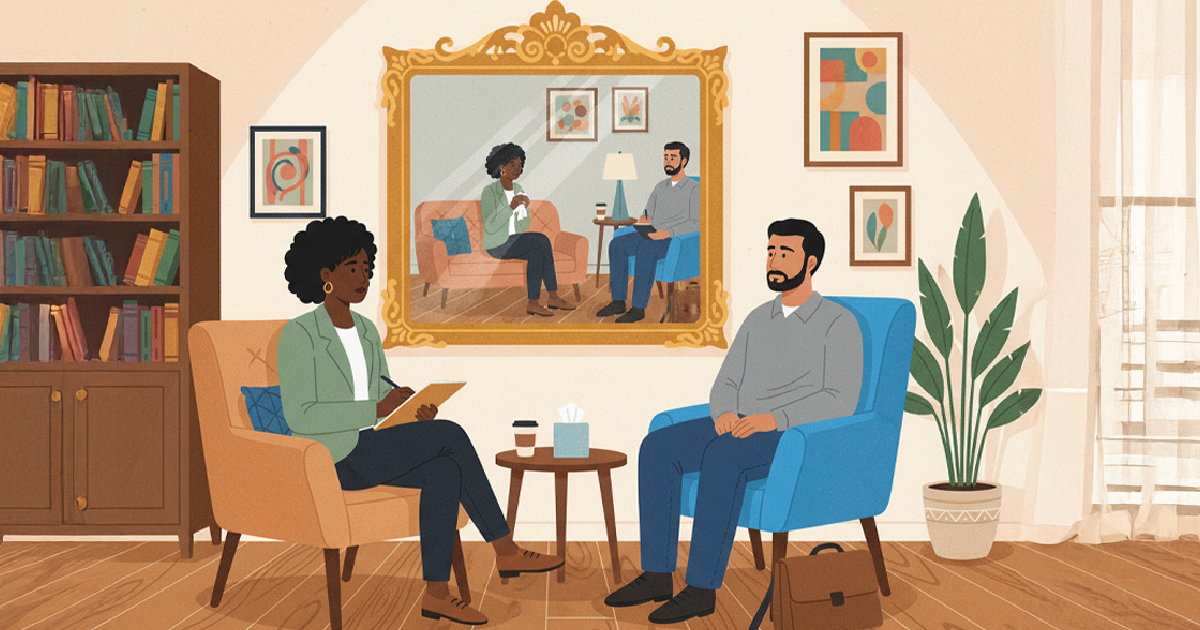
From the moment clients set foot into the therapy room of Theopia Jackson, Ph.D., they feel welcome. Soft light, a warm smile, and an assortment of small objects that invite curiosity await them.
Thinking back on the handmade pieces she’s collected over the years, Dr. Jackson recalls one item in particular from a trip to Costa Rica: three buckets stacked on a ruler that tipped one after another as a pebble dropped through. “I can’t tell you how many adults, parents, and caregivers used that toy when we were meeting, even when there were no kids in the room,” she said. “They loved it so much that it wore out one day.”
Simple gestures, like setting a toy in motion, often become a starting point for expression.
“Sometimes trauma doesn’t have language,” says Dr. Jackson, chair of the Humanistic Clinical Psychology Department at Saybrook University. That’s why humanistic psychology invites people to engage their whole selves—mind, body, and spirit—rather than relying only on talk, she added. When therapy welcomes that kind of presence, creativity can emerge naturally, for both client and practitioner. Dr. Jackon’s approach reflects the belief that creativity lies at the heart of humanistic psychology.
Rather than an add-on to therapy, Dr. Jackson sees expressions of creativity, such as movement, sound, or even a self-created language, as ways to help clients find meaning and connection through experience.

Building Creativity Into Clinical Practice
Dr. Jackson’s philosophy of creativity and wholeness is woven throughout Saybrook’s Ph.D. in Clinical Psychology program, particularly in the Creativity, Innovation, and Leadership (CIL) Specialization. Here, students learn how creative and humanistic approaches can deepen therapy, research, and leadership in mental health care.
Robert Cleve, Ph.D., core faculty, director and creator of CIL, says the program grew out of Saybrook’s long-standing Creativity Studies tradition. “When I came to Saybrook, we decided to include innovation and leadership because they help explain how creativity moves into the world,” he says. “Creativity is the idea, the aha moment. Innovation is how we bring that idea to life, and leadership is how we share it with others.”
For clinicians, that approach means finding new ways to connect when language falls short. “It’s about bringing in imagery, sound, music, or movement when words don’t capture the experience completely,” Dr. Cleve explains. “It allows connection to happen on a different level.” In practice, that might mean exploring grief through painting or guided movement or using music and rhythm to rebuild a sense of presence after trauma.
Dr. Cleve shared an example from one of his doctoral students who is researching the concept of awe for her dissertation. Her work explores the bond between therapists and their play-therapy animals—specifically her dogs—and how that relationship can help children express themselves through creative activity. “She works with children through expressive arts like painting, poetry, writing, and movement,” Dr. Cleve says. “It’s this wonderful connection that doesn’t always require language to express an idea, especially with kids.”
Finding Strength in the Process
Dr. Cleve believes creativity is essential to modern psychology. “Everyday creativity is the idea that we all use creative problem-solving daily,” he explains, referencing the work of Saybrook scholar Ruth Richards. Recognizing this, he added, helps people see their own resilience. It reminds them that they’re capable of transformation.
Dr. Cleve believes that awareness gives both therapists and clients a sense of energy and stability, a way to stay grounded in their work and connected to their purpose. “When people see how creativity can be integrated into their own growth, it gives them a sense of accomplishment,” he says. “It becomes something they can bring to their clients with confidence.”
For Dr. Jackson, creativity’s power extends beyond helping people recover from trauma. “We can’t always ‘heal’ trauma,” she says. “Sometimes the work is learning to live with it in a way that still feels whole.” That philosophy shifts the focus from treatment to possibility. “I want my clients to feel they can live meaningfully,” Dr. Jackson says. “That means finding ways to grow, even with the residuals of trauma.”
Creativity, Dr. Jackson explains, helps people reclaim agency and connection. She notes that creative expression can take many forms, from writing to spiritual practice, each offering a way for people to reconnect with who they are.
Teaching Therapists To See Themselves
At Saybrook, Dr. Jackson encourages students to look inward as they learn. “I’m always curious about who the therapist is as a person,” she says. “Students can learn new interventions or theories anytime. What’s harder is learning how to use oneself authentically as an instrument in the work.”
She explains that the program is designed not only to teach foundational clinical skills but also to create time and space for students to explore their own meaning-making: “We’re still exposing students to all the typical basic information any clinician or practitioner should be exposed to, but we’re doing it in such a way that they come to know themselves, so they can truly be there for others.”
During case presentations, for example, students are asked to describe their clients and reflect on their own reactions. Dr. Jackson explains, “When a student says, ‘My client is resistant,’ we ask, ‘What’s going on for you?’ Maybe the client isn’t resistant. Maybe something in the relationship needs to shift.” These moments of reflection help students link theory to self-awareness. “We want our students to understand that therapy isn’t separate from who they are,” Dr. Jackson says. “It’s an extension of their humanity.”
The Power of Shared Expression
Dr. Jackson’s clinical work often weaves creativity into moments of closure and connection. With children facing chronic illness, she learned that honoring their work was just as important as doing the work. “We’re initially trained to make sure a therapy room, especially with children, is protected so the child knows I’m here for them and nothing else,” she says. “But working with young people dealing with chronic illness, I learned the opposite was important.”
Instead of ending therapy with a simple goodbye, she began asking, “How do we want to honor the work we’ve done here?”
“It’s a creative invitation,” she explains. “I’m not simply saying, ‘How do we end therapy and celebrate your success?’”
Many children chose to leave notes for others, writing messages of encouragement that captured their pride and progress. One child wrote, “It feels good to be here.” Another wrote, “You’re not alone.” Dr. Jackson explains, “It mattered to them that someone else could see those messages and feel less isolated. That’s the power of creativity. It connects us.”
One young girl with sickle cell disease wanted to reach other children who were going through the same experience. She created a short video for others so they wouldn’t feel alone. Dr. Jackson still shares the video with new patients who come in. For Dr. Jackson, these gestures capture the essence of creative work. “It awakens our humanity, sense of civility, and responsibility to ourselves and one another,” she says.
A Humanistic Approach to the Future
At Saybrook, the commitment to creativity extends beyond therapy rooms and classrooms. Faculty and students are exploring new ways to share research through art-based inquiry—creative approaches that make complex ideas more accessible.
Instead of limiting findings to academic journals or book chapters, Saybrook scholars present their work in forms that engage audiences on a more human level, through storytelling, visual art, and experiential learning.
For Dr. Cleve, this evolution reflects the university’s core values. Humanistic psychology, he explained, is about respecting people with all of their strengths and challenges. And remembering that connecting with others is what keeps that legacy alive.
In many ways, the same principle carries through from Dr. Jackson’s welcoming therapy room to Saybrook’s classrooms and research labs. What begins with a gesture, a color, or a sound becomes a model for how creative expression can transform care—one moment of connection at a time.
A Humanistic Vision for the Next Generation of Psychologists
At Saybrook, creativity lives in how we think, connect, and help others heal. If you’d like to learn more about Saybrook’s Ph.D. in Clinical Psychology program, complete the form below or apply today through the Saybrook University application portal.