Menu

Providing Care at the Intersection of Biology and Psychology

Explore the close relationship between mind and body and discover how to unlock a person’s optimal performance in our online Master's in Psychophysiology degree program.

Biology affects psychology, and vice versa. Our online Psychophysiology Master's degree program trains you to recognize the biological basis of behavior and accurately connect behavioral dysfunctions to their underlying biological causes. Understanding this connection will help you design and implement personalized interventions using common psychophysiological techniques such as biofeedback, relaxation training, hypnosis, and neurofeedback.

The online M.S. in Psychophysiology program is the perfect springboard for our Ph.D. in Applied Psychophysiology program. Current Saybrook students in certain master’s programs can generally transfer all relevant master’s degree credits to the Ph.D. program, but some exceptions may apply. Contact the Psychophysiology Department chair or visit our academic catalog to learn more about transitioning from the online psychophysiology master’s degree program to the Ph.D. program.

The Optimal Performance Specialization applies psychophysiological principles to athletic, artistic, and high-stress professional performance and covers the same core areas as a sports psychology master's program: mental skills training, biofeedback, and performance intervention.

Coursework includes goal setting, imagery, self-talk, and arousal regulation, along with the biofeedback and neurofeedback methods used to identify and correct psychophysiological barriers to peak performance.

Online Master's in Psychophysiology Job Outcomes

Upon graduation of the M.S. in Psychophysiology online degree program, you will possess psychophysiological skills and techniques that apply across a broad range of careers, giving you the opportunity to impact lives in industries such as:

  • Professional and collegiate sports
  • Performing arts
  • Higher education
  • Business and corporate performance settings
  • Military and government agencies
  • Exercise, health, and wellness centers
  • Private practice

According to the U.S. Bureau of Labor Statistics, the median annual wage for psychologists, the closest classified occupational category tracking related biological-behavioral work, was $94,310 as of May 2024.

Employment in this category is projected to grow 6% from 2024 to 2034, faster than the average for all occupations, with about 12,900 openings projected each year. Actual compensation and job titles for psychophysiology graduates vary widely depending on specialization, certification, and industry.

Other Online Psychophysiology Programs

Interested in another Psychophysiology degree program? We offer multiple online graduate degree and certification options that may align more closely with your goals.

Graduate Programs

Certificate Programs

What Is a Psychophysiologist?

A psychophysiologist studies the relationship between biological processes and psychological or behavioral outcomes, using tools such as biofeedback, neurofeedback, and physiological monitoring to identify and address the biological basis of behavior.

This M.S. in Psychophysiology trains students in these techniques across two specializations:, Optimal Performance and Science and Research.

Graduates who go on to practice biofeedback professionally typically pursue certification through the Biofeedback Certification International Alliance (BCIA), the only entity recognized worldwide for certifying biofeedback and neurofeedback practitioners. This master's degree does not itself confer clinical licensure or biofeedback certification.

Due Dates and Deadlines

SPRING 2027 SEMESTER

Start January 4, 2027
Apply by December 17, 2026

Learn More

Program Components

Admissions Requirements

Applicants for the M.S. in Psychophysiology degree must submit the following documents:

  • An official transcript from an accredited university demonstrating successful completion of a bachelor’s degree with a 3.0 GPA or better
  • Professional resume or CV
  • Personal statement
  • Faculty interview

Invest in Your Future

Saybrook University remains committed to keeping higher education affordable and accessible. Our Financial Aid Department is ready to offer guidance and support in determining suitable financial assistance tailored to your needs, including potential scholarship opportunities, grants, and more.

Finance your future.

Cost

Saybrook wants you to have the information you need to make an informed decision about your academic and career aspirations. Our cost calculator provides an estimated cost of attending Saybrook to earn your M.S. in Psychophysiology degree.

Cost Calculators

Sample Courses

Essentials of Bioscience

This course teaches you the fundamentals of electronic circuitry, biochemistry, human electricity, math, and human physiology as used in professional psychophysiology. You will learn about psychophysiological recording devices and how they function, the structure of major neurotransmitters, hormonal feedback cycles, and much more.

Psychopathology for Psychophysiologists

This course provides a strong introduction to the essential knowledge of psychopathology. You will use evolutionary lens to examine pathology relevant to behavioral medicine and psychophysiology. You will also be introduced to fundamentals of diagnostic principles, learn about evolutionary causes for common behavioral traits, and learn how those traits relate to disorders as described in the Diagnostic and Statistical Manual of Mental Disorders (DSM).

Psychophysiological Recording, Assessment, and Interventions

This course continues from the fundamentals of psychophysiology course to provide in-depth material leading to an understanding of the physiology and methodology underlying common psychophysiological recording techniques used in behavioral medicine. The course emphasizes environmental recording and assessment techniques for work-based situations in support of athletes, musicians, soldiers, etc. who need to perform optimally in a variety of situations. Techniques emphasized include breathing evaluation, startle responses, ERPs, P300s and other brain responses to stimuli, pheromones, methods of assessing stress responses, etc.

Catalog

Please refer to our academic catalog for more information on the M.S. in Psychophysiology program.

FAQs

Is it required to choose a specialization to complete the online Psychophysiology master’s degree?

Yes. A specialization is required to complete the Psychophysiology degree program. These include a science and research specialization for students interested in learning psychophysiological research techniques and who want to continue in basic science and research programs. There is also the optimal functioning specialization which is a practice-oriented program addressing the need for optimal performance specialists in sports, performing arts, and other areas. Each of these specializations consists of 34 credits.

What does a psychophysiologist do?

A psychophysiologist studies how biological processes, such as heart rate, muscle tension, and brain activity, relate to psychological and behavioral outcomes.

They use tools like biofeedback and neurofeedback to help clients recognize and manage the physical patterns underlying stress, performance issues, or behavioral dysfunction, applying these skills in fields such as sports, education, business, and the military.

Practicing biofeedback professionally typically requires certification through the Biofeedback Certification International Alliance (BCIA), which requires a minimum bachelor's degree in an approved healthcare field and periodic recertification

What length of time does the M.S. in Psychophysiology degree take to complete? 

Completion time for the Psychophysiology online degree is typically two to three years, with 34 earned credits. The benefit of the master’s in Psychophysiology degree is the self-paced nature of the coursework, allowing you to adjust class schedules on a situational basis.

What industries can a graduate of the M.S. in Psychophysiology degree apply their skills in?

This Psychophysiology degree is extremely diverse in its application post-graduation. Graduates from the online Psychophysiology program have gone on to affect lives in fields and industries such as sports, education, business, and the military.

What applicable skills will students in the M.S. in Psychophysiology degree program develop?

This Psychophysiology master’s degree program equips graduates with many applicable skills. They include comprehension of the fundamentals of bioscience, biofeedback, and neurofeedback and assessment and intervention tactics for underlying psychophysiological illnesses.

Is the M.S. in Psychophysiology degree 100% online?

While the coursework for the Psychophysiology master’s degree can be completed online, the Psychophysiology degree program does require attendance at one five-day, in-person Residential Learning Experience (RLE) per year. 

Do I need certification to practice biofeedback after this degree?

This M.S. in Psychophysiology program does not itself grant a professional license or certification.
Most practitioners who apply biofeedback or neurofeedback clinically pursue certification through the Biofeedback Certification International Alliance (BCIA), which is endorsed by the Association for Applied Psychophysiology and Biofeedback (AAPB) and the International Society for Neurofeedback and Research (ISNR).

BCIA certification requires a minimum bachelor's degree in an approved healthcare field, completion of accredited coursework, mentored clinical hours, and a passing exam score; recertification is required every four years.

Does the Optimal Performance specialization cover sports psychology?

Yes. The Optimal Performance Specialization within the M.S. in Psychophysiology program applies psychophysiological methods, including biofeedback, neurofeedback, and mental skills training, to athletic, artistic, and high-performance professional settings.

This includes techniques such as goal setting, imagery, self-talk, and arousal regulation for athletes, performing artists, and military personnel.

×

University Learning Experience

Our M.S. in Psychophysiology program is 100% online. While most coursework is completed asynchronously, students participate in required synchronous sessions through our Virtual Learning Experiences (VLEs). These take place during the first week of each fall and spring semester.

Students may also choose to attend the in‑person Community Learning Experience (CLE). The CLE is offered in odd‑numbered fall semesters, is entirely optional, and is not required for program completion.

University Learning Experience

Applied Psychophysiology Faculty

Saybrook’s Applied Psychophysiology faculty are practitioner-scholars dedicated to advancing their field through continued practice and comprehensive instruction. Meet some of our faculty members below. 

Cynthia Kerson
Director, Applied Psychophysiology
  • Vice president of the Board of Directors for the Behavioral Medicine Research and Teaching Foundation (BMRTF)
  • BCIA certified in biofeedback, neurofeedback, and heart rate variability
  • Holds certification as a Diplomate in QEEG, and mentors applicants for all certifications
  • Co-editor of “Alpha-Theta Neurofeedback in the 21st Century” and “Joe Kamiya: Thinking Inside the Box”

UNBOUND: Psychophysiology

Bridging the gap between psychological and medical science, you will explore the close interconnectedness between the brain and body as part of our psychophysiology degree programs.

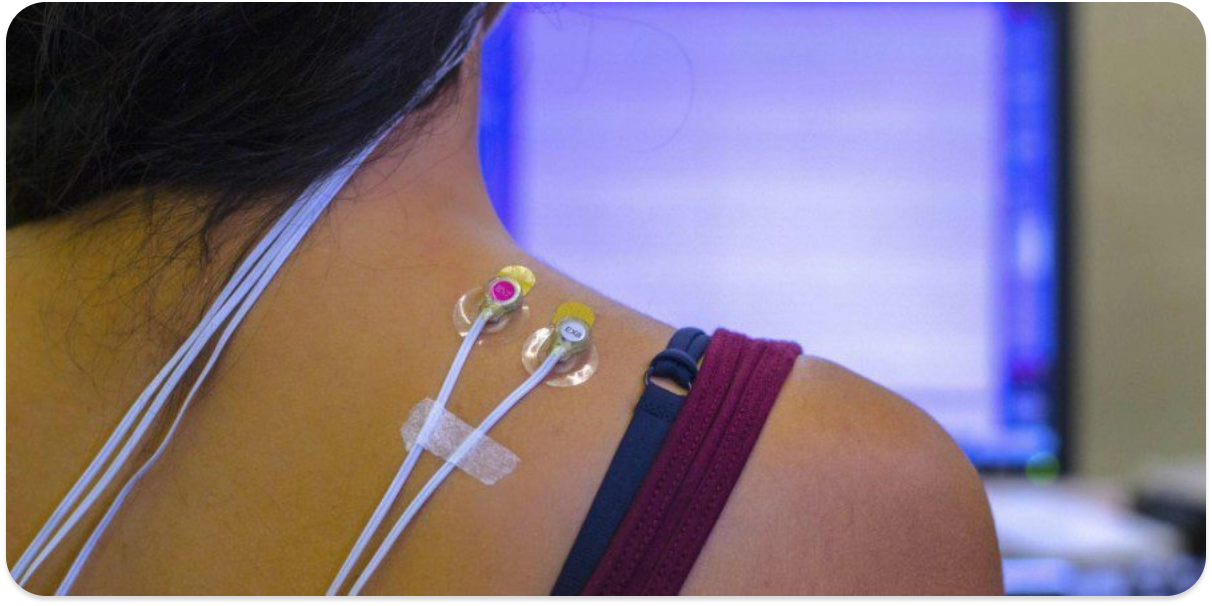
monitor nodes attached to woman's shoulder
Career Resources

Exploring Psychophysiology Careers

As medical technology and academic studies advance, more medical fields have become deeply specialized, allowing patients to get priority treatment optimized for their hyper-specialized needs. The world of psychophysiology, biofeedback therapy, and neurofeedback medical practice are prime examples of this evolution of the medical field. In psychophysiology, doctors study the relationship between the mind and […]
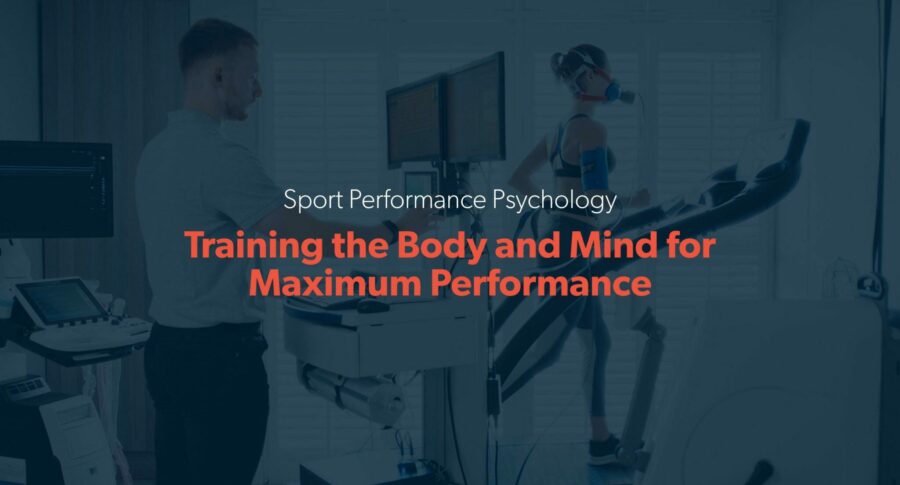
training the body and mind for maximum performance
Nutrition & Wellness

Sport Performance Psychology: Training the Body and Mind for Maximum Performance

Ready to Take the Next Step?

Submit an inquiry and one of our admissions specialists will connect with you to answer your questions and guide you through next steps.

Connect with Admissions

Request Info