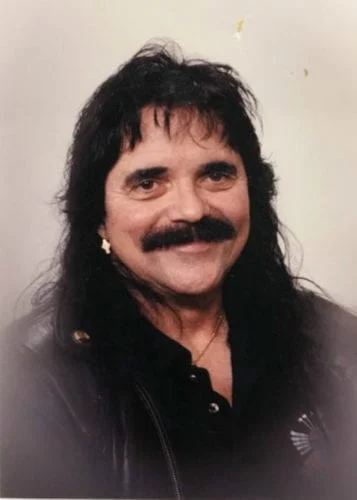
Artist’s statement: I met the man portrayed in Corporate Dropout on the streets of Sante Fe on one of my many travel adventures. We got into a deep conversation where I discovered he was formerly a top executive at a major U.S. corporation. He was an absolutely fascinating man and I felt inspired to do a painting of him. Even though my real life relationship with him, like others I’ve met along my journeys who have inspired my portraiture, was a brief one, the painting process has a unique way of enabling a kind of psychological intimacy. There’s nothing like getting lost in the creative, artistic process to provide a comforting refuge from the craziness of our current world.
Unbound Posts
From Armistice Day to Veteran’s Day – And Back Again
A hundred years after the Armistice of 1918, we reflect on peace and war on what is now Veteran’s Day.

By Kelly Wadsworth
As I stepped off the C-130 into the sweltering desert heat, the sergeant next to me leaned over and said, “We carry this burden and fight this fight so our children won’t have to.”
It was 2008 and after months of preparation, my National Guard unit had finally landed in Balad, Iraq, for a 12-month tour as part of the Global War on Terrorism. Like the sergeant, a keen sense of idealism had taken root in me, bolstering my survival instincts and providing fuel for the long days ahead. I participated in the Iraq War with the hope that my role would shelter the next generation from having to do something similar. What I could not have known then, but understand now, is that even my loftiest dreams had a darker side.
The war to end all wars
Early in the 20th century, H.G. Wells penned the phrase “the war to end all wars” to describe how World War I would bring about lasting peace. A short time after this, at the 11th hour on the 11th day of the 11th month, the fighting of World War I ceased with the armistice of Nov. 11, 1918. It was ratified on June 28, 1919, when the Treaty of Versailles was signed in France. In order to prevent such a global nightmare from happening again, a number of international measures were enacted including the League of Nations whose mission was to maintain world peace.
Armistice Day to Veteran’s Day
On June 4, 1926, Congress passed a resolution for the annual observance of Armistice Day
“Whereas the 11th of November 1918, marked the cessation of the most destructive, sanguinary, and far reaching war in human annals and the resumption by the people of the United States of peaceful relations with other nations, which we hope may never again be severed, and
Whereas it is fitting that the recurring anniversary of this date should be commemorated with thanksgiving and prayer and exercises designed to perpetuate peace through good will and mutual understanding between nations; and
Whereas the legislatures of twenty-seven of our States have already declared November 11 to be a legal holiday: Therefore be it Resolved by the Senate (the House of Representatives concurring), that the President of the United States is requested to issue a proclamation calling upon the officials to display the flag of the United States on all Government buildings on November 11 and inviting the people of the United States to observe the day in schools and churches, or other suitable places, with appropriate ceremonies of friendly relations with all other peoples.”
You can almost feel the optimism that another world war would, in fact, be prevented and that the pain of one generation would be redeemed by peace in the next. As we sadly know, this did not happen. World War II broke out 20 years later among the very same countries, leaving another 60 million dead. The next decade would see the Korean War followed by Vietnam, with wars in Laos, Lebanon, Thailand, Dominican Republic, Bolivia, Cambodia, Grenada, Libya, and Panama following shortly after. I cannot help but wonder if those who went before me believed as I did, that their participation would somehow save the next generation from the anguish of battle.
After the end of World War II and at the urging of veteran service organizations, Armistice Day was amended to become Veteran’s Day. I wonder, why the change? Had we given up on keeping the peace? Was Armistice Day too painful of a reminder that with nearly 100 million lives abruptly lost in the span of 30 short years, peace had utterly failed on our watch?
Lie exposed
As we stand on the 100th anniversary of the World War I armistice, we can no longer pretend that any of the wars we fight will be the instrument by which we “end all war.” Nor can we continue with the idea that violent conflict is the mechanism by which we secure our children’s future and shelter them from the horrors of combat. Warfare as perpetual and unavoidable appears to be the lesson we have brought with us into the 21st century and this cup of nihilistic despair affects us all. We have each, in our own way, taken a sip. The narrow belief of war as inevitable is just as hopeless as the naïve belief of peace as easy. We must begin to understand in a new way that many of our conflicts, maybe even all of them, are rarely based on the deep principles of our highest convictions.
As we approach this remembrance, I am fully aware of the human impulse to wage war. However, the compulsion toward destruction and the legacy of mass warfare does not actually relieve me from my duty to engage in the “exercises designed to perpetuate peace.” If goodwill and mutual understanding do in fact pave the way by turning foe into friend and nation into neighbor, then let peace begin with me and let it begin today.
__
About the Author
Rev. Dr. Kelly Wadsworth is the pastor of West Seattle Contemplative Church in Seattle, WA. She served as an Army Chaplain from 2001-2011 and is a veteran of the Iraq war. She received her PhD in Psychology from Saybrook University in 2018 and can be reached at [email protected].
Removing the masks of mass incarceration
A Saybrook Presidential Fellow and alumnus are teaming up to explore the collective traumas associated with mass incarceration, recidivism, and other issues.

The U.S. is “the land of the free,” while simultaneously incarcerating more people per capita than any country in the world.
According to data from the Bureau of Justice Statistics, there were more than 6.5 million people “under the supervision of U.S. adult correctional systems” and more than 2 million people behind bars at the end of 2016. And the issue is of particular concern among communities of color, with African-Americans and Hispanics comprising more than 50 percent of all incarcerated people in the U.S.
But these statistics only help to further motivate 2016 Saybrook University Presidential Fellowship recipient Shaka Jamal Redmond and 2017 alumnus O’Dell Johnson, Ph.D., who are teaming up to work on a documentary about these issues.
The impetus for this project was Dr. O’Dell’s work with Research Institute for Social Equity (RISE). The mission of RISE is to change how people think about criminal justice by developing a higher level of awareness surrounding the health and well-being of those experiencing incarceration and consider the mental health impact incarceration has on the individual psyche.
“Before it was RISE it was Midwest Diagnostics and Resource Institute, and I was providing biofeedback services to black youth in the foster care system to help them reduce the amount of medication they were taking,” Dr. Johnson says, adding that he needed to step away as his focus turned toward graduate school. “Being at Saybrook helped me fine-tune and really identify what I want to do with my degree. So I came back to it and changed the organization to RISE, which is more focused on criminal justice reform and research because we have a big issue and a problem with mass incarceration relates on as it to criminal justice.”
During one of Saybrook’s Residential Conferences, Dr. Johnson was introduced to Saybrook Presidential Fellow Shaka Jamal Redmond, a culturally innovative artist and filmmaker from Oakland whose work has been showcased both nationally and internationally, on television, and in numerous film festivals. As the two discussed Dr. Johnson’s mission with RISE, Shaka Jamal realized there may be some overlap with his own work—as a certified yoga instructor he was working in Oakland Community Center’s juvenile halls.
“He’s from San Francisco. I’m from Oakland. And he needed a way to tell the story of his work through media and film,” Redmond recalls. “I figured we can do a little 60-second thing to run on Instagram or Facebook. But then we went a little deeper and discussed doing a longer piece, more like a short documentary, so people could get to know not only what he does but more so what is the motivation behind doing it.”
Together, the pair is hoping to tell a story that will move and touch people across the U.S.
In addition to examining Dr. Johnson’s work with RISE, the documentary plans to explore the collective trauma associated with modern-day incarceration practices, specifically within the African-American community.
“I just want to be able to vocalize that the criminal justice system, as it is, has so much abuse that goes unnoticed and is not talked about,” Dr. Johnson says. “And there’s a lot of advocacy out here that’s only really more or less socializing incarcerated and formerly incarcerated citizens to accept what’s happening to them as a normality. But it’s not normal. It’s just dehumanization for a lifetime. So, our goal is to uncover the many reasons why masks of incarceration exist and all the entities and communities who benefit from them economically.”
As Dr. Johnson and Redmond’s work continues, there is already a glimmer of hope. While incarceration rates in the U.S. still lead the world, they have actually declined consistently over the past decade since their peak in 2008 and are currently at their lowest level in the past 20 years.
But there is still much work to be done, and Dr. Johnson and Redmond plan to do their part while hoping to inspire others to join the fight.
“I think that a lot of our people locked in prisons and jails, they don’t deserve to be there. They deserve to be somewhere else. I think we can provide services for them whereby we can get them to get back on track and effectively address whatever is causing them to commit crimes,” Dr. Johnson says. “I want this to become a national movement. Over the last decade, there have been an emergence of criminal justice reform organizations started to fight against social injustices. However, many are led by former lawyers whose primary focus centers on policy change, and rarely consider the mental health impact incarceration has on the mind, body, and spirit. My goal is to start a collective movement based on lived experiences of the voided voices most impacted, which are people of color. On this platform, we can all march on Washington and shout out loud to our government officials, ‘Let our people go, because they deserve a chance to strive and live again.’”
The pair hopes to start on their documentary in early spring and will follow formerly incarcerated individuals who are positively impacting the community and living crime free. In addition. Additionally, Dr. Johnson is developing a film project showcasing the day-to-day life of formerly incarcerated individuals who are managing Porta Pottie’s in downtown San Francisco to keep their communities clean and safe, all while rebuilding their own lives.
Revered Saybrook alumnus passes away, leaves lasting impact
Royal Alsup, Ph.D., Saybrook alumnus and adjunct faculty member, passes away, teaching many the importance of understanding and love.

Saybrook alumnus and former adjunct faculty member Royal Alsup passed away peacefully on October 10, 2018 at 78 years of age. Loved and admired by many, Dr. Alsup was a true family man and passionate advocate for African American and Native American children, as well as an educator and psychotherapist. He is remembered fondly by his family and those whose lives he impacted with kindness and compassion.
Dr. Alsup served as an adjunct faculty member at Saybrook University for many years, and left an enduring impression on his students and colleagues.

“He was a beautiful soul,” says Kirk Schneider, Ph.D., Saybrook adjunct faculty member and friend of Dr. Alsup. “A tireless advocate of social justice, Martin Luther King’s liberation theology, and Native American rights and culture, among other just causes.”
Dr. Alsup was raised in south central Los Angeles. His passion for social justice and equality was ignited in childhood, when he was often the only Caucasian child on his community baseball teams. As a kindergartener, he staged a sit-in outside of the principal’s office after witnessing the mistreatment of an African American classmate. His intolerance for racism and prejudice continued on into adulthood.
From 1957 to 1966, Dr. Alsup served in the United States Marine Corps until he was honorably discharged as a sergeant. Although he later went on to become a scholar, Alsup was not always an academic person. He left high school after his freshman year and earned his GED during his time in the service. He then utilized the G.I. Bill to continue on to higher education. After earning his bachelor’s and master’s degrees, Dr. Alsup found his way to Saybrook University where he earned his Ph.D. in Humanistic Psychology in 1975. At the time, Dr. Alsup was one of very few people in the world to have earned a degree in this relatively new field.
Dr. Alsup dedicated much of his professional life to serving underrepresented populations. As one example, Dr. Alsup was able to prevent more than 300 Native American children from being taken away from their homes and families, and aided many Native American students in earning their master’s and doctoral degrees. His efforts also gave rise to the Mental Health Department at United Indian Health Services. Additionally, Dr. Alsup served as the Director of Education at the Indian Action Council and as a consulting psychologist to Humboldt County Mental Health.
He also practiced psychotherapy with his wife, Patricia, for 27 years. Their commitment to helping others left a powerful and unforgettable impact on the lives of those they treated.
One community he focused on in particular was survivors of gun violence. Courtney Weaver suffered a gunshot wound to the head, yet survived. Dr. Alsup was her counselor while she worked to overcome the emotional and psychological turmoil of such an event.
“He helped me through one of the most difficult years of my life,” Weaver says. “He even saw me for free when my insurance for such counseling ran out. He was truly a wonderful man.”
Loved by his family, friends, students, colleagues, and those he treated, Dr. Alsup showed many the importance of acceptance and selflessness. His legacy is one that won’t soon be forgotten.
“He was such a loving person,” Dr. Schneider says. “He had such a big-heartedness, warmth, and empathetic nature toward not only those who are oppressed, but also colleagues. He was a tireless warrior for humanism.”
Ease Stress by Getting Curious
It is generally understood that one’s effectiveness and productivity are paramount to organizational success in the workplace. A key factor undermining effectiveness and productivity is stress, the feeling that the demands you face exceed the resources you are able to mobilize in response. When stress goes unchecked, it can turn into burnout—the sense of emotional, mental, and physical exhaustion that lowers your motivation and job performance while increasing your negativity toward yourself and others. Stress also erodes your productivity and engagement while increasing your risks for substance use, absenteeism, and turnover.
Developing a practice of curiosity can help ease your stress and anxiety, potentially helping you avoid burnout. This article outlines four ways that curiosity can diffuse stress, and provides practical exercises to encourage curiosity in your work.

What is curiosity?
Organizations such as Google, Aetna, and Johnson & Johnson offer mindfulness training to leaders and employees to improve stress management and productivity. As of 2015, over 12,000 Aetna employees participated in company-sponsored mindfulness programs. The company reported an average of 62 minutes per employee per week of enhanced productivity, yielding $3,000 savings annually per employee.
Although these benefits are promising, implementing a company-wide mindfulness program is not always possible, especially given the executive sponsorship, infrastructure, and training dollars required to do so. An easier, more cost effective, and yet highly potent intervention is promoting a practice of curiosity.
Curiosity is generally defined as the recognition, pursuit, and desire to explore novel, uncertain, complex, and ambiguous events. A study by Merck KGaA highlighted four central components of curiosity:
1. Inquisitiveness: Exploring unfamiliar or complex situations to figure out what is really happening.
2. Creativity: Challenging current understandings of a situation, allowing ideas to cross-pollinate, and composing new solutions.
3. Openness: Accepting and suspending judgment for new ideas. Being open helps us to notice subtleties others may miss and use these to spawn novel ideas.
4. Disruption tolerance: Being able to entertain ideas that advance the organization, even if they seem unconventional and somewhat risky. Disruption tolerance is particularly needed when we are prone to reach for low-risk, non-creative solutions that may offer little if any benefits.


Four effects of curiosity
Effect 1: Makes challenges more surmountable
When people practice curiosity, overcoming obstacles is reframed as stimulating. Individuals may more readily mobilize to acquire the requisite resources for dealing with a given situation and consequently believe there is a possibility of gain. When people perceive situations in these ways, it helps to reduce stress. Curiosity helps them frame challenges as ways to gain valued experience―whether negative or positive―which strengthens their commitment to work through novel, complex, and uncertain situations.
Effect 2: Increases self-directed regulation
Research has indicated that inner-directed or self-determined people recognize, pursue, and flourish in challenge, excitement, and pleasure. Curious individuals tend to be more inner-directed, meaning they view their behaviors as being inspired by their values and interests rather than being directed by external forces such as external rules or social pressures. When individuals are curious, they are less likely to revert to self-preservation or survival behaviors, those non-adaptive behaviors that can impair sound decision-making and diminish effectiveness. This is because non-adaptive behaviors are informed by preconceived notions or false understandings, which can trigger higher levels of stress.
Effect 3: Lowers defensiveness
As a result of increased self-directed regulation, curious individuals faced with challenges are less likely to use defensive and avoidant responses that seek to circumvent failure. They’re also more likely to use active, adaptive coping. Active coping styles involve a perceived lower potential for loss and less negative self-perceptions, which means they are able to encounter the experience without feeling threatened or having to defend themselves. Accordingly, curious individuals not only have less need for survival behaviors but are typically more resilient because of their adaptive coping capabilities.
Effect 4: Activates mindfulness
The non-defensive openness to experiences that are associated with curiosity reflects a state of mindfulness. The degree to which an individual is mindful reflects the degree to which he or she is sensitive and aware of what is presently occurring, both internally and externally, in a relaxed and nonjudgmental manner. People who exhibit mindfulness tend to collaborate better, sustain higher levels of performance, and navigate stress more effectively.

Author’s contemplation of her curiosity

As I consider the role curiosity has played in both my personal and professional life, I have experienced first-hand the catalyzing nature of my curiosity which has led to my continuous self-evolution and self-expansion. Without curiosity, I do not believe I would have been able to integrate or digest both successes and failures in a way that fostered a growth mindset.
On the personal side, my pursuit of a doctorate in the Mind-Body Medicine program at Saybrook is in large part driven by my intrinsically motivated quest for knowledge, and for traversing the unknown by connecting seemingly disparate sources of research to generate potentially novel insights to deliver a meaningful scholarly contribution. Within this process, I must remain disciplined in staying open to what emerges and set aside my bias, preconceived notions, and assumptions as well as embrace the feedback from my dissertation committee without getting triggered into an anxious, defensive, or reactive mindset.
In my professional career, I recently departed the familiarity of my intrapreneurial corporate executive identity and into the uncertain entrepreneurial founder role building my consultancy. This year of transition has been fraught with ambiguity and uncertainty. It has required that I, for example, network and collaborate with people in a range of diverse industries in which I had no previous relationships, reframe delays or setbacks on potential consulting engagements, and consistently employ mind-body practices to transmute anxiety and fear.
Change, disruption and growth are uncomfortable. On the other hand, there is no growth in comfort. Curiosity fuels the exploration of and engagement with the new terrain I am now traversing, and to stay with the unfolding through the peaks and valleys.

Putting curiosity into practice
The following exercises may help you access and develop your curiosity.
- Using a current business challenge or issue, facilitate a team meeting in which the team explores the questions listed below. Defer your own judgments and refrain from answering the questions until all members have individually contributed to each question:
- What are five potential solutions to the issue?
- What assumptions are you making based in current reality instead of past experiences?
- What information do you still need?
- What resources could you use to get the information?
- Consider a situation in which someone has offended you or you felt excluded. Apply the four attributes of curiosity to consider how you could reframe the situation. As suggested by author Ryan Niemiec, could you reinterpret the situation to see the other individual as someone who needs positive growth?
- At the end of each day, write down how you used your curiosity in ways that contributed to a positive or productive outcome. After two weeks, review what you wrote each day. What patterns do you see? How can these insights help you in the future to more successfully navigate challenging situations?

Cultivating curiosity
Stress is a growing concern in organizations that erodes effectiveness and productivity of executives and employees alike. By cultivating curiosity, specifically the attributes of inquisitiveness, openness, creativity, and disruption tolerance, you may find your stress level decreasing as challenges become more achievable.
—
About the author
Alison Horstmeyer, M.S., MBA, is currently a student at Saybrook University where she is working towards her Ph.D. in Mind-Body Medicine. Her research at Saybrook and fellowship at the USC Center for Third Space Thinking focuses on curiosity and evidence-based motivational constructs. She is a former Fortune 500 corporate executive and currently works as an executive consultant, certified coach, certified -EQ inventory facilitator and humanistic researcher. She can be reached at [email protected]
Alternative treatment options for chronic stress, inflammation, anxiety, and more
Saybrook alumna Carolyn Trasko, Ph.D., shares how her research and work in the areas of stress prevention and self-care has also become a journey of self-discovery and renewal.

I often ask myself, “How do I continue to make a difference in the field of behavioral health?” For the past 28 years, this question has prompted me to tune into the needs of my clients and has guided me to do my part to change the narrative of how behavioral medicine is performed.
My professional evolution began with my first job in the field in 1990, during the historic time of de-institutionalization with those experiencing chronic mental illness. I learned immeasurably from these individuals who were struggling to transition to life outside of a psychiatric hospital. They desperately wanted to function more independently, though many lacked the skills of everyday life.
Discovering the link between stress and chronic diseases
From the start, I was fascinated by the circumstances that many of my clients appeared to share. And seeing their determination and resilience set me on the path to learning more about mental health, substance abuse, and physical illness.
For many of these clients, the following factors seemed to serve as common denominators of their experience:
- Early childhood trauma
- Substance abuse problems
- Chronic physical illnesses, including inflammation
- Ongoing stress
- Social and emotional attachment issues
- Dissociation, including mind-body disconnection
Throughout the course of my career, I have continued to explore the potential links between chronic stress, early life adversity, inflammation, and the development of diseases. My overall goal has been to identify ways to effectively treat and manage these types of conditions that are often chronic for some people. It has been a driving force for me to help these individuals empower themselves to heal.
Polyvagal theory and sensorimotor psychotherapy
I realized that for treatments to be the most effective, it would be necessary to combine allopathic medicine and lifestyle interventions in some meaningful way. A pivotal turning point for me occurred while attending an international trauma conference in Boston in 2008. I attended a workshop focused on affecting regulation, attachment, and trauma. During that workshop, the presenters discussed Dr. Stephen Porges’ Polyvagal Theory and Dr. Pat Ogden’s Sensorimotor Psychotherapy.
Polyvagal theory provides an explanation for the physiological changes that occur in response to trauma. This theory emphasizes how the vagus nerve serves a central role in our social engagement system and highlights how this system is intricately linked to our overall survival. The autonomic nervous system (ANS), consisting of the sympathetic (SNS) and parasympathetic (PNS) nervous systems, works together as part of the down-regulation process in response to cues of safety or danger from our internal and external environments. The ANS is responsible for many automatic bodily processes, including breathing, heart rate, and digestion. The SNS prepares us for fight-or-flight while the PNS fosters rest and rejuvenation.
Sensorimotor Psychotherapy (SP) is a body-centered method designed to treat the somatic and emotional symptoms of unresolved trauma. SP draws from neuroscience, attachment theory, cognitive, and somatic therapies. Up to that point in my career, I had never heard anything like this before, and it was mind-blowing to me. I called my colleague during the conference break and said, “I feel like I have just heard the answer, but I haven’t learned what the question is yet.”
I came to realize that the question was actually something I had been asking myself all along: “How do I continue to make a difference in the field of behavioral health?” For me, the answer has been to continue to identify the potential underlying mechanisms that often manifest as depression, anxiety, substance use issues, physical illness, and disease while exploring various mind-body practices that might best treat these issues.
How Mind-Body Medicine became a major influencer
My passion to deeply understand the mind-body connection led me to Saybrook University in 2013. At the first residential conference for the College of Mind-Body Medicine in San Diego, California, one of the facilitators welcomed all of us who “heard the call.” From that moment on, I knew I had found my tribe. At Saybrook, I was given the opportunity to deepen my knowledge and hone my research interests.
Throughout the academic process, I was encouraged to allow my curiosity to serve as a guide to refine my thesis and research question. Ultimately, I wanted to find out if relaxation techniques could affect the stress response and impact immune function in those who suffer from chronic health conditions, specifically autoimmune disorders.
My professional and personal transformation has recently culminated in the completion of my doctorate in Mind-Body Medicine with a specialization in Integrative Mental Health. My research focused on measuring the effectiveness of diaphragmatic breathing, along with guided imagery, on mood, immune function, and heart rate variability in a small sample of adult women with thyroid disease. The findings showed that a short practice of these relaxation techniques demonstrated significant results for my study participants. Clinically, these findings lend support for the promotion of lifestyle interventions that can be easily taught and learned as part of everyday self-care practice.
Five everyday ways to support wellness
Simple strategies that can be practiced with relative ease are often the most effective tools to manage stress. Here are five things you can do every day to help support your wellness goals:
- Pause to ground yourself in the present moment by feeling your feet on the ground.
- Focus on the “low and slow,” in-and-out motion of belly breathing.
- Engage in some type of physical activity (e.g., dancing, walking, exercising, etc.).
- Leave a small amount of space each day to express your creativity (e.g., draw, color, journal, play music, cook, etc.).
- Spend a moment with someone that brings you joy. Social relationships, including with pets, are an important part of health and wellness.
The field of Mind-Body Medicine is still in its emergent phase. We at Saybrook, who have “heard the call,” are positioning ourselves as thought leaders in this ever-changing landscape. This allows us to play a pivotal role in shaping the future of medicine that emphasizes client-centered care and consists of a multidisciplinary, integrative, foundational core that focuses on both prevention and intervention for health and disease management.
__
Are you interested in learning more about mind-body medicine programs at Saybrook University? Fill out the information below to request more information or visit the mind-body medicine program page here.
Peaceful Flow
Student in the Ph.D. Mind-Body Medicine program
Saybrook University

Artist’s note: I believe art is a magical way to reach peace in my mind, especially when I have a mental meltdown from anxiety and depression. I like to take walks and let the Universe surprise me with a secret garden. As I walked through the woods, I came up on this spot. Around it was desolate, but when I framed this view, it was the the most peaceful space. Painting totally dumps my worries out of my head. In the battle of healing versus worry, healing will always win if space painting is a facto
The Price of Art
Adjunct faculty in Creativity Studies
Saybrook University

The tree clings to the hill, giving shade and home to birds.
Seizes sunlight, sends its strength below the earth,
Where roots grope along the rocky slope.
It waits for rain, breathes a deep damp arbory breath.
It contracts in winter, huddling in the cold,
Waiting for the warmth of spring.
A man approaches, eyes the tree with calculation,
Unshoulders his axe and strikes. It groans, tips, falls.
He cuts the branches into lengths, into bundles,
Hauls them down the hill. The trail widens.
Other men with like burdens are in sight ahead.
The road leads to Achaia,
Where fires for sculptors’ forges burn without ceasing.

Poet’s note: When I remembered that bronze sculptures are made with melted metal, I thought sadly of the trees that were sacrificed to make the fires for heating the bronze. Now, thousands of years after the high point of Grecian artistry, we have the art. I wanted the commemorate the trees.
Her Rainbow
Creativity Studies
Humanistic-Existential Psychology
Saybrook University

For our kitty Mimi
It is afternoon. Dark early, I think,
Splatters on pavers, and geraniums
gratefully receiving raindrops
on their purple petals. Kumquats glisten
in orange skins, and guavas in green,
washed clean for the squirrels.
Then it happens: that strange yellow gleam,
rainbow light just after the rain. And there she is
Rainbow in her glorious stripes of indigo and red,
arching her back above The Santa Monica
Mountains, over the neighbor’s house, finally,
meeting my eyes, she blesses this house
with her presence.
She spreads herself magnificently,
bursting, now fading, fainter
and fainter so quickly. Souls rise
to her arch, Souls rise all over the Earth,
like heat misting from hot sidewalks, cooled
by rain. With them is our Mimi,
our sleek, black cat who must have lain still
in her favorite spot under the lemon tree,
waiting for Rainbow to take her up.
Away her soul flies like a gliding bird.
Rainbow strokes her gently with a brush,
blending her colorful stripes into black fur.
Welcomed by the clouds fluffing themselves
to envelope Mimi, to welcome her in.
Rainbow‖s colors warm her soul, bathed
in rain and light on her flight to the heavens.
A rainy afternoon evaporates, as the sun peeks
out. She is gone with Rainbow. I hope to see her
again soon, every time I see Rainbow.
Goodbye Mimi
Poet’s note: This poem and photo illustrate nature’s construct of a rainbow. It’s so amorphous that it glows, then fades as quickly as it comes—just as life does, whether a cat like Mimi or a human like those of us reading this poem.
Gayle Byock was a university administrator with positions such as an assistant vice chancellor of research and assistant dean. At age 70, she returned to earn her Ph.D. in Humanistic Psychology and Creative Studies, particularly poetry. She is developing a project using poetry to promote self-acceptance and self-empathy for women her age and older.
Learning to actually ‘live’ before I die
Dr. Grojean tells the story of a breakdown, surrender, and an existential pilgrimage away from the modern world to find her true self.

In 2014, I came to grips with the fact that I’d grown dissatisfied with my life. Self-help books, conversations, and spiritual literature just weren’t sufficient for the changes I wanted to make. I wanted to delve deeper into change, paying more attention to my inner beliefs. In a momentary leap of faith, I jumped into the world of academia at Saybrook. And then I literally took a trip around the world, which fueled inspiration for my book Transcending the I.
When I stopped pretending to have a ‘meaningful’ life
I remember one day sitting in a circle at a workshop where we went around the room asking the person to our left the question “What do you pretend?”
The answers to this question became deeper and more vulnerable for each participant. Eventually the round came back to me, and I found myself responding:
“I get up every morning. I get ready for work and the kids off to school. I spend 10-plus hours sitting at a desk or in meetings, inside four walls, not even aware of the weather outside let alone life. I find myself believing it’s the end of the world if I don’t get my way in an argument, no matter the subject. Then I come home late―usually too late for dinner with the family. I plop on the couch in front of the TV with a big glass of wine to decompress so I can sleep. I pretend this is a meaningful life.”
The response I got from that statement was somewhere between shock, awe, and confused admiration. I knew I was living a life socially constructed by others’ judgements. My life was one big, existential void. I started wondering if I was passing on these same traits to my children.

Recommended Read: “Successfully embracing growing older and wiser“
Taking steps to change for the better
I had to change. My first behavioral act of shedding my old self was to cut off 14 inches of my long, blond hair with a snip of scissors. I also stopped wearing makeup and vowed to live one year in which I had no external definition of myself from my prior life. No hair, no makeup, no job, no title, no salary. Ancient Chinese philosopher Lao Tzu said, “A journey of a thousand miles begins with a single step.” I had just taken my first step.
I decided my second step would be to take a walkabout, a pilgrimage away from the world as I knew it to discover something greater about myself and the world I live in. I was drawn to go somewhere that held a spiritual calling for me, somewhere I would walk the land, be in nature, and live among people of a different culture. No hotels or spas.
I wanted to get back to the basics of life and strip away everything from the world I had created. In February 2014, I chose Nepal and Bhutan in which to spend six weeks trekking, camping, and immersing myself in Mother Nature. Little did I know at this time that this single act was not just six weeks but was the beginning of a four-year journey to the edges of the world outside of me and to the depths of the abyss within me.
From Nepal to Bhutan: The lessons I learned from my kids
In Nepal, from the first moment I began walking, I knew this is where I needed to be. My soul sang, and my eyes couldn’t take in enough of the beauty. If past lives do exist, surely this is where I come from. Arriving in Gorkha for our first night, we pitched our tents just over the hillside from Gorkha and made dinner. What I noticed right away were the village kids all running around playing with whatever ball or dirt piles they could find―and they were having a blast. They had no electricity, no indoor plumbing, no iPad, Xbox, or TV. They didn’t even go inside their small huts until they had to when darkness enveloped the sky. Yet they were having tons of fun and running around, getting dirty, and living life.
I struggled at the simplicity of their existence and the joy in their eyes. This was all I had ever wanted in my life. If it was so simple to achieve, why did I work so hard for so many years? I began to see the pain my children must have in their souls, being locked inside of our house, addicted to video games or texting with friends, unable or unknowing how to spend time outside and be happy despite our privilege. How can we all collectively keep denying our interconnectedness and the beauty of our world that we are simultaneously destroying in our pursuit of more?
Learning how to “live” before I die
By design, life is an ongoing identity crisis of the self to define and redefine who we are as we go through many of the major transitions and upheavals experienced over the course of being alive: adolescence, adulthood, parenting, divorce, middle age, retirement, loss of job, death of loved ones, and more.
In psychologist Daniel Levinson’s The Seasons of a Man’s Life, he discussed how each period is marked as being a stable period―until it is not and becomes a transitional period. A transition in life is a tremendous opportunity, when acknowledged, for self-redefinition and inner reorientation of who you are from who you once were. Throughout our lives there are equally important transitions, as well as life events, that are also worthy of recognition and require our attention. The stable period is the time when a person makes crucial choices in life, builds a life structure around these choices, and seeks goals within the structure. The transitional period is the end of one stage and the beginning of a new one.
I quickly learned on my journey that my worst fear is not death but discovering I haven’t really “lived” before I die. For me to continue searching externally for what is already within me, within all of us, only serves to continue my suffering and attachment to my ego mind. Awakening isn’t some enlightenment I am going to find “out there,” which will enable me to lead a blissful life forever after. Awakening is my journey toward interconnectedness. It is my awareness of being one and yet nothing altogether. My deepest awakening will come not from grasping or searching for something out there, pilgrimaging if you will, but merely from just letting go of what I hold onto most inside myself.
About the author: Carol A. Grojean, Ph.D., specializes in the areas of organizational effectiveness, project management and transformational change. She is also a Saybrook graduate with an M.A. in Applied Behavioral Science in Leadership and Organizational Development and a Ph.D. in Existential Leadership Transformation.
Are you a Saybrook University alumna or faculty member who is interested in submitting a blog post for potential publication on Unbound? You may do so by submitting your finished piece or pitch on the right-hand side panel of Unbound pages.

Would you like to learn more about Dr. Grojean?
Meet her in person at Saybrook University’s Residential Conference:
Time: 3:30 p.m. to 4:30 p.m. CST/1:30 p.m. to 2:30 p.m. PST
Date: Saturday, Sept. 1, 2018
Place: Hyatt Regency in Monterey, California
Or, talk to her virtually during her upcoming webinar:
Join the upcoming “GLOBE Talks: Dr. Carol Grojean, Saybrook Alumna of Change”
Time: 3:30-4:30 p.m. CST/1:30-2:30 p.m. PST
Date: Saturday, Sept. 1, 2018
Online: GoToMeeting (Click here) to join from your computer, tablet, or smartphone.
Or, call: United States (Toll Free): 866-899-4679
United States: 646-749-3117
Access Code: 184-872-589
Joining from a video-conferencing room or system?
Dial: 67.217.95.2##184872589
Cisco devices: [email protected]
First GoToMeeting? Complete a quick system check here.