Menu

Green burials, home funerals: Closure for end-of-life care

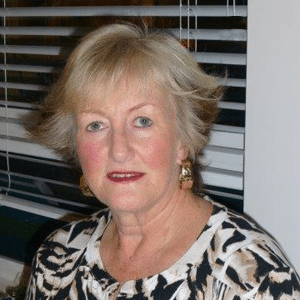
Diana Johnson, a Transformative Social Change degree student at Saybrook, grew connected to the aging process and caregiving early in life. Her mother was a volunteer caretaker. But instead of going into the medical field, Johnson wanted to learn more about the social aspects of aging, including end-of-life care. This summer, Johnson attended a training on green burials and home funerals taught by end-of-life-doulas. She left with new ideas to make end-of-life care “more intimate and meaningful.”

As a Saybrook student, I’d like to create a space for us to delve into considerations surrounding aging and the end of life, without looking at death solely as a medicalized event. Home funerals and green burials are options that align with an intimate and sustainable approach, facets of end-of-life considerations that I find central to transformative social change.

As part of the Saybrook community, we dedicate our lives to bettering the human condition. Our collective work spans the life course from supporting the youngest among us to comforting our elders through palliative care. We promote sustainable ways of being, devoting much of our time to work that positively impacts others and the planet. So how can this work continue even after we are gone? Have we considered how we might continue this legacy in death? Green burial and home funerals provide options in line with these values.

Why the sustainable option of a green burial is in line with my mission

What we choose to do with our bodies, after they have served us for a lifetime, is one way we can continue this legacy of conscious sustainable service. Current burial practice in most of our nation’s cemeteries requires a cement vault for internment. Cement vaults, in addition to nonbiodegradable caskets, perpetuate a burial system that is not sustainable. Cremation offers a more environmentally friendly option but still requires the use of natural gas and may release harmful chemicals. Some cemeteries have set aside space dedicated to green burial practices, and there are also burial grounds dedicated to preserving the land and local wildlife. Green burials do not include embalming, an invasive practice, which uses cancer-causing chemicals, harmful to workers and the environment. Rather, a body in its natural state is buried in a biodegradable casket, or shroud.

While participating in the Green Fair this summer, I was surprised that even among the socially and environmentally conscious, most people were unaware of these options. However, each person stated that they would prefer them now that they had more information.

There’s no place like home … funerals

Home funerals are an option that often precede a green burial. It is standard practice for funeral homes to require embalming, which would rule out a green burial. Historically, people have cared for their own loved ones after death. It was only after the Civil War, and the invention of embalming, a practice created to get fallen soldiers home to their families, that our modern death care industry was born. Death care eventually became big business, and a symbol of status—the grander the display, the better.

Home funerals provide space to create an intimate experience. Families can either pre-educate themselves in after-death care, or hire a support person (ex. end-of-life doula) to provide guidance. Over the course of a number of days, family and friends can stop in to honor their loved one. There is the option to partake in the healing power of art, ornamenting the casket. Sometimes people chose to paint on, color, or otherwise decorate the biodegradable casket. Children can be a part of the process at their level and comfortability.

There are no set standards for a home funeral, but this is the beauty. Time and presence are afforded to create an intimate and personalized experience with the potential for ceremony, healing, and closure. This is a family-led time, with the option to bring in a celebrant, or someone experienced in guiding the process.

Preplanning is essential for home funerals. Some barriers exist, but each state does legally allow you to care for your loved ones in your home. They don’t have to be taken somewhere else. The end-of-life doula that I worked with provides guidance on how to care for a deceased family member’s body within the home. This includes washing the body, dressing the body, and laying them out at home rather than a traditional funeral home. Family and friends come to the home to sit and honor their loved one, similar to a traditional memorial service, but from the comfort of the deceased’s home (or caregiver’s home).

Why sustainable end-of-life practices matter in my Transformative Social Change studies

I strongly believe that attention and resources need to be directed toward the oldest among us, and as a Transformative Social Change student, this is where my passion lies. There is an intergenerational disconnect that I believe leads to our current death-denying culture. I hope to be a part of the bridge that leads us back to ourselves and our awareness that our time here is finite. Death is indeed a sensitive topic. However, we will all eventually be faced with the death of a loved one, and one day, our own mortality as well.

The gift of time can be honored in so many ways. We can take time to consider, discuss, and record our own wishes for what we would like done when “our time” comes. We have the option of giving our own time and attending to our loved ones during and after this sacred transition, within the home environment we chose.

And finally, as we consider the ultimate resting place of our own body, the body that has been the vessel in helping us serve humanity and the natural world, we can choose to honor this lifetime through the sustainability of green burials. If we are able to look at ourselves as aging beings, we will be that much more cognizant and helpful at addressing the challenges and wishes of the loved ones around us.

__

Interested in exploring degree programs available at Saybrook University? Fill out the form below to request more information.

Connecting ancestral healing and psychological health

Dr. Daniel Foor, a Saybrook University alumnus with a Ph.D. in Psychology, has guided trainings throughout the United States since 2005 focused on ancestral and family wellness. This experience inspired him to write his new book, “Ancestral Healing: Rituals for Personal and Family Healing.

Daniel Foor

From 2005 to 2009 at Saybrook, my doctoral research focused on the use of shamanic healing in clinical mental health settings. During this period and in the years since my public teaching and work with ritual arts has focused on ancestral and family healing. The result of my studies, my book Ancestral Healing: Rituals for Personal and Family Healing, is a guidebook connecting blood lineage to healing ancestral trauma and self-empowerment. The excerpt below gives some context for this offering:

Healing Ancentral Trauma

Everyone knows there are certain physical and psychological realities to being dead. However, most people on Earth also believe in some sort of afterlife or continuity of consciousness after physical death. Belief itself is a tricky thing. One might adopt a certain perspective and then have experiences that reinforce those views. Other times, new experiences challenge our ways of seeing the world. For me, it was a mixture of both. I was not raised with an awareness of my family or lineage ancestors. However, through personal experience, clinical training in mental health, and two decades of immersion in diverse lineages of spiritual practice, I came to experience them as an important source of relationship and support for the ancestral healing process.

As I engaged with this work, it became clear that it was beneficial and healing on several levels. On a personal level, research confirms that relating in conscious ways with one’s ancestors supports physical and psychological health by boosting intellectual performance and confidence (1), raising awareness of family predispositions, including behavioral health risks, to encourage beneficial life choices (2), and finding forgiveness, a common component of family healing that promotes greater physical and mental health (3). Ancestral healing work also encourages introspection and greater clarity about life’s purpose, which in turn creates more personal satisfaction and a sense of meaning in life. In getting to know and love my family ancestors, I feel more confident, supported, and comfortable in my skin. Moreover, I maintain a sense of healthy pride in my roots and culture of origin, which helps in my journey to healing generational trauma.

Healing as a Family

On a family healing level, sustained ancestor work can help heal intergenerational patterns of family dysfunction. By working with spiritually vibrant ancestors, one can start to understand and transform patterns of pain and abuse, and gradually reclaim the positive spirit of the family. I’ve seen situations time and again where one person engages the ancestors, and it creates a ripple among living family members, who may suddenly reconcile after years of disagreement or restore overlooked blessings. When you engage your loving ancestors, you can catalyze healing breakthroughs in your family, including establishing appropriate boundaries with living relatives. Also, when you make yourself available for the ancestral healing to take place, the recently deceased are in turn more able to help living family members navigate their journey to become ancestors after death.

The Psychological Effects of Generational Trauma

Finally, on a collective level, the ancestors are powerful allies in transforming historical and generational trauma relating to race, gender, religion, war, and other types of collective pain. Recent findings in epigenetics are showing that in a very real way, the pain of our ancestors can endure through generations. In a landmark 2013 study on the biological transmission of trauma, a team of researchers in Jerusalem showed that the children, as well as grandchildren and further descendants, of Holocaust survivors, are especially prone to depression, anxiety, and nightmares. This tendency is tied to a biological marker in their chromosomes that is absent in those not descended from Holocaust survivors (4). This transgenerational transmission of trauma is a new field of study. In many ways, it overlaps with the ancestral healing process I present in Ancestral Medicine: Rituals for Personal and Family Healing.

When we reconcile with ancestors who experienced different types of persecution or who enacted violence and oppression, we make repairs in our personal psyches and family histories that, in turn, mend cracks in the larger spirit of humanity. This supports us in moving beyond identifying with victim/victimizer consciousness and in embodying what is beautiful and helpful from the past. Transforming generational trauma and cultural pain also frees us to draw upon the support of our loving ancestors for prosperity in our vocation and service in the world.

It’s Time to Start your Ancestral Healing Process

Ancestral Medicine grew out of my training with human teachers, my relationship with the ancestors, and my experience in guiding others in ancestor work. My goal was to offer a practical guide to understanding and navigating relationships with the spirits of those who have passed. My experience tells me that anyone who is psychologically stable has good intentions, and is willing to listen to their intuition can cultivate an empowering relationship with their loving ancestors. We all have loving and supportive ancestors and can draw upon these relationships for greater clarity about life purpose, increased health and vitality, and tangible support in daily life. Start your family or ancestral healing process today. If you want to learn more about psychology, check out the various psychology degree programs at Saybrook University.

(1) Fischer, Sauer, et al., The Ancestor Effect, 11–16.

(2) National Society of Genetic Counselors, Your Genetic Health

(3) Luskin, Forgive for Good

(4) Kellerman, Epigenetic Transmission of Holocaust Trauma

Daniel Foor, Ph.D., is a licensed psychotherapist and a doctor of psychology. He has led ancestral and family healing intensives throughout the United States since 2005. He is an initiate in the Ifa/Orisha tradition of Yoruba-speaking West Africa, and has trained with teachers of Mahayana Buddhism, Islamic Sufism, and different indigenous paths, including the older ways of his European ancestors. He lives in Asheville, North Carolina. For more information, visit his website.

San Francisco Bay Park, Dusk

Adjunct faculty, Creativity Studies Program
Saybrook University

For my friends at Saybrook University

Pink clouds camp out along the far shore.
They are the homeless ones, who live here.

Roots of trees ripple the path, trunks roiled
at the base, as if with great cancer. They lift

their thin arms overhead, and survive.
Egrets bury their bony beaks in wet sand.
 
Gulls prance near the water line, tracing
the squiggles and bends. They have grown

used to the rolling thunder of planes,
which slide through the clouds like pages

of a fairy tale, turning in the leaf-light
breeze.  Here and there, planted markers
 
denote public shore, reminding us
each one is free to be here, each

free to travel to a new world. Inside
a grand hotel, rafts of students gather
 
to begin their journey, protected,
for now, from uncertain winds.

They are flying visions, faint as first
stars. They are massaging dreams

in rooms where teachers listen, pause,
laugh, and cry, circling the heart’s compass.
 
When they touch their fingers together
like the partnered bridge of Virginia Reel

memories swell — the seventh wave,
sudden, full. Now they are breakdancing
 
twists and turns of the mind. Already,
visions are dressing themselves

in clay or silk, blue feathers, or beads.
This is a place of launch.  Few here

call this city home. We have dropped
our moorings, let the waves be guides. 

We have come from the everglades,
from long winters in Kansas, the fog
 
of Seattle lights, the high desert
where Coyote howls at the moon.

We have come knowing there is no
return, only the moment

when the curled bark of an old
madrone peels itself loose

and the tree and the seeker are one.

 This poem was originally published in Forage.

Saybrook psychologist questions the normalcy of eating meat

Dr. Melanie Joy didn’t become a vegan until her 20s. But during her psychological studies at Harvard and Saybrook University, she pondered what it is that makes humans think it’s normal to kill and/or eat animal products. And why it is that so many vegans and vegetarians have a tough time holding onto relationships with nonvegans after their perspective on animal agriculture changes. In her third book, which releases the last week of November, she tackles these topics and more.

“Every day we engage in a behavior that requires us to distort our thoughts, numb our feelings, and act against our core values,” Joy, a Saybrook alumna, said during a TEDx Talk she gave in February 2015.
That “integral, human behavior” Joy is speaking of is eating and wearing animal products. The author of three books—Strategic Action for Animals: A Handbook on Strategic Movement Building, Organizing, and Activism for Animal Liberation and Why We Love Dogs, Eat Pigs, and Wear Cows: An Introduction to Carnism, and a November 2017 release Beyond Beliefs: A Guide to Improving Relationships and Communication for Vegans, Vegetarians, and Meat Eaters—has traveled to 39 countries on six continents to speak about this topic: carnism.

According to her nonprofit organization’s official site, Beyond Carnism, carnism is defined as “the invisible belief system, or ideology, that conditions people to eat certain animals. Carnism is essentially the opposite of veganism, as ‘carn’ means ‘flesh’ or ‘of the flesh’ and ‘ism’ refers to a belief system.”

Her second book Why We Love Dogs, Eat Pigs, and Wear Cows emerged from her Ph.D. dissertation in psychology.

“When I found the Saybrook program, which had a focus on Social Transformation and also Ecopsychology, I was very interested in the courses,” Joy says. “That’s what made me go to Saybrook. I had not developed my theory of carnism. I was just interested in how it was possible for compassionate, rational people to turn away from atrocities that are carried out toward humans and also nonhumans.”
Joy became a vegetarian at the age of 23 and a vegan a few years later. In her recent TEDx Talk in 2015 and at speaking events, she’s received “a tremendous positive response” via emails and social media comments regarding the topic. Through one of Beyond Carnism’s programs, Center for Effective Vegan Advocacy, people can attend trainings and workshops to learn more about the nonprofit and effective communication for animal activism. However, Joy is aware that not everybody may be as open to hearing about animal agriculture and carnism, specifically when it comes to seeing graphic imagery.

“It is important for people to be aware of what’s happening to animals,” Joy says. “And it’s important to share graphic material. However, how this material is shared matters very much, and so there are certain situations and events in which it would be less appropriate to show it. If the event was organized as kind of a get-together where people are casually eating and talking about veganism, that may not be the place to do so.

“It’s important to get people’s consent before sharing graphic imagery with them. Otherwise people can get traumatized by the imagery and become angry with the vegans who showed them the imagery rather than get angry at the companies that are exploiting animals.”

And if that happens, the larger goal to educate attendees about carnism may fall by the wayside.

On Joy’s international tour, she also takes into account cultural differences when presenting her messages on carnism. When her second book Why We Love Dogs, Eat Pigs, and Wear Cows: An Introduction to Carnism” released in Hebrew, it was well-received by the Israeli public. But because Israeli people as a whole do not eat pork, the title was tweaked to The Cow in the Room.
“Although the type of animal consumed changes from culture to culture, with carnism, people have a similar experience regarding eating animals,” Joy says. “Some animals are meant to be food in their minds, and some animals are meant to be friends or family. And what I found is that the title of my book gets people to question why that is.”

In addition to violence against animals, Joy’s studies at Saybrook explored why people commit violence overall, including person to person.
“Why is it that atrocities happen in the world?” Joy asks. “Why is it that good people turn away from atrocities and enable them to continue? I was asking this question, thinking about wars and genocides for example. And also obviously about the environment and what’s been happening to animals under carnism and speciesism. What I found was the same psychological mechanisms that enable us to carry out violence toward humans enable us to carry out violence toward nonhumans, which is probably not surprising to most people. The goal of my book and the goal of my work has not been to tell people what they should or shouldn’t eat, but rather to talk about why we’re conditioned to see some animals one way and other animals another way.”

In Joy’s new book though, her goal is to help improve the relationships vegans and vegetarians have with nonvegans.

“Many vegans and vegetarians find themselves unable to communicate effectively with the nonvegans in their lives,” Joy says. “They feel that their relationships have become compromised. This kind of an ideological difference can put a tremendous strain on relationships. So the book is basically a how-to guide—what are the principles of a healthy relationship, and specifically for people in veg/nonveg relationships: how to navigate conversations and potential conflicts so that you can strengthen your connection and communicate more openly and effectively.”

Joy, who has resided in Germany since 2014, will have a book launch in Los Angeles on August 8. For more information about Beyond Carnism or her other books, visit her website.

__

Interested in exploring degree programs available at Saybrook University? Fill out the form below to request more information.

Mindfulness or McMindfulness: Can we learn from the West adopting Asian cultures?

The first entry in a multi-part series of blogs, Saybrook alumna Dr. Tamami Shirai speaks to her experiences merging Asian and Western techniques in her own professional practice. In part 2, she discusses “Relax, release, rebuild through silent meditation” and in part three “The importance of ‘checking in’ after silent meditation.”

In many ways, the cultural divide between Asian and Western cultures can be illustrated with their respective approaches to mindfulness. Mindfulness has long permeated Asian daily life and culture, and the West has been gradually adopting facets of it over the last half-century. Recently, this gradual adoption has skyrocketed as mindfulness is being explored in everything from health care and wellness to pop culture. While many are pushing back against the Western approach—calling it “McMindfulness”—I think there is still so much that both the East and West can learn from each other.

Growing up in Japan

I’m originally from Tokyo. Growing up, mindfulness was a constant part of my life, and I was immersed in it from a very early age. My home had both a Butsudan and a Kamidana—a Buddhist alter and Shinto altar. Also, I attended a Buddhist kindergarten (inside of a temple) and a Shinto-related private school from junior high school through college. You might say I grew up in a daily environment soaked in Buddhist and Shinto ideas.

When I made my way to the United States, I witnessed my first meditation practice. I was taken aback when the instructors used Buddhist singing bowls as the beginning and end of a short meditation. In Asia, when singing bowls are used, it is for religious purposes. Moreover, large singing bowls are only for priests; others are not even allowed to touch them.

While many religions practice mindfulness in various ways, much of what the West has adopted seems to be rooted in Buddhist traditions. Though, while they are using a few Buddhist techniques, many in the West are practicing only a very small part of what makes up Buddhism.

Mindfulness and McMindfulness

Mindfulness has been gaining momentum in the West for decades. Western philosophers and psychologists, including Alan Watts and Terrance Mckenna, have espoused the benefits of mindfulness. Indeed, much of what they discussed was adopted with the peace movement in the ‘60s. Although much of it seemed to go below ground during the ‘80s, ‘90s, and early 2000s, mindfulness has resurfaced in the last 10 years or so and, arguably, become even more mainstream. Mindfulness even recently made the cover of Time magazine.

In fact, mindfulness has permeated the mainstream to such a significant degree that you’ll find its concepts emerging in nearly every medium of pop culture—from podcasts dedicated to “being present” to books about incorporating meditation into corporate consultation. Unlike its emergence in the ‘60s, mindfulness doesn’t seem to be limited to a social movement based off of peace and love. Today, you have doctors who incorporate mindfulness techniques into their health care practices. UCSD also starts mindfulness courses for medical students as a mandatory course this year.

Many religious scholars, anthropologists, and cross-cultural psychologists have pushed back against this adoption, calling it “McMindfulness.” They note that this movement is only taking small parts of certain religious practices and using them for something other than their original intent.

Having grown up immersed in religions that embrace mindfulness, I certainly can sympathize with this point of view. However, I feel that something can be learned here—from both Asia and the West.

Asian Society of Lifestyle Medicine (ASLM)

Mindfulness and meditation concepts have long permeated Asian daily life and culture. So much so, in fact, that they have become second nature.

Recently, I was invited to present at the inaugural conference of the Asian Society of Lifestyle Medicine (ASLM) in Taipei, Taiwan. An affiliate of the American College of Lifestyle Medicine, ASLM is an umbrella group for Asia-based professional medical organizations dedicated to advancing lifestyle medicine.

My presentation focused on my practice experience leading a meditation class at a cardiac pulmonary rehabilitation center in San Diego. I have provided this mindfulness-based meditation class since 2013 and have had over 300 patient interactions thus far.

Many participants in the conference presentation were physicians and healthcare professionals from various Asian countries, including India, Philippines, Malaysia, and Japan. When we started discussing the use of Western notions of using mindfulness in a medical or clinical setting, I discovered something surprising. None of the conference participants from Asian countries admitted to having experienced mindfulness or meditation in a medical setting.

One may think that because mindfulness is so ubiquitous in Asian culture that they would be quick to adopt these practices in providing care to patients in clinical settings. However, I sense that Asian health practitioners are still a bit confused about how to apply “Western-made” mindfulness and meditation ideas into their medical practice. They haven’t yet figured out how to take something that they’ve been surrounded by all of their lives and apply it in a clinical setting.

At least not yet.

In defense of McMindfulness 

In the past, Asian physicians have not adopted these practices in clinical settings because they haven’t thought of mindfulness as a technique. Recently, however, there has been a significant shift in thinking. Today, they encounter Western ideas of mindfulness and meditation as something different or new and therefore perhaps beneficial to their patients.

The research should be more rigorous about mediation and mindfulness—something that the U.S. National Institutes of Health (NIH) agrees with me on. Whatever people label it—Buddhist, Orientalism, or hippy culture—Western-made mindfulness and meditation ideas are still useful tools and can be implemented in Asian health care practices.

On the other side, the West may be able to benefit by recognizing the cultural and spiritual significance of mindfulness. In Asian cultures, meditation and similar techniques are not just tools to accomplish one single goal; they are integrated into our daily lives. And through that, Westerners may be able to find some spiritual or health benefits.

Whether it is intended to seek spirituality, serenity, or just to look cool, using mindfulness techniques have a proven track record of benefiting the human condition. Given that, why wouldn’t we use them to benefit ourselves and our patients?

Dr. Tamami Shirai

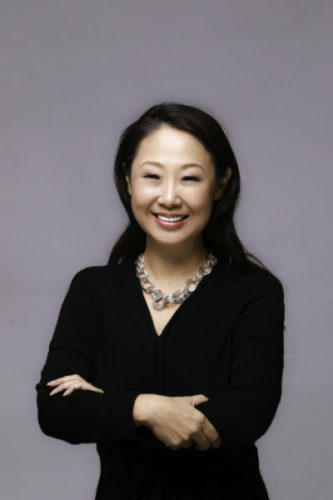
Dr. Shirai is a postdoctoral researcher at School of Medicine, University of California San Diego. She is a researcher, educator, and advocate of lifestyle medicine, and a facilitator of meditation class at a cardiac pulmonary rehabilitation in San Diego. She is originally from Tokyo, Japan.

How one psychologist didn’t let the fear of striking out hold him back

Dr. Drayton Patterson

Drayton Patterson knew he needed a backup plan. His parents advised him that even though he had achieved major accomplishments in baseball, there was always a chance of getting injured, which did end up happening. After getting his doctorate degree, Mr. Smoke became “Dr. Smoke” Patterson.

As with any professional sport, an athlete in his 30s usually starts looking for other jobs because he knows his time is limited. In Patterson’s case, his baseball career ended early due to sports injuries—a torn rotator cuff, supraspinatus tendinitis, knee surgery, and back surgery.

“I couldn’t throw at all, but fortunately I could hit so I was still able to play in high school and I still played semi-professionally,” says Patterson, who played during the late ‘70s and ‘80s. “I think I played my last semi pro-game in 1989.”

But by that time he’d already shied away from putting all his eggs in one basket. Patterson became a school psychologist in 1984, was a part-time scout for the Major League Scouting Bureau (MLSB) for the next five years, and then a scout part-time for the Texas Rangers, while working on his doctorate degree at Saybrook.

“I knew that my baseball days had passed,” Patterson says. “You hear people call that Cubs player Grandpa Rossy, and he’s only 39. After baseball, I had to figure out what was I going to do. My bachelor’s degree was in psychology and pre-dentistry from the University of Illinois. My parents always stressed to me to have a good education as a backup plan in case I was injured. And Saybrook had the humanistic, holistic approach that fit my needs and that I strongly believe in.”

His mother, who was a teacher and psycholinguist, played a major part in increasing Patterson’s interest in the mental health field. Although he was initially a mental health therapist who focused on pediatric, adolescent, and adult units pediatrics at Ridgeway (now Hartgrove Hospital) in Chicago, he found himself focusing on what was making so many young kids need to be hospitalized so often.

“I wondered what was going on in the school system,” Patterson says. “But after working as a clinical therapist in a psychiatric hospital for three years, I knew I didn’t want to work in a clinical setting anymore. I disliked putting patients in full leather restraints and working with patients with hardcore psychiatric difficulties. I wanted to work on the prevention end. I wanted to work more with elementary schools, high schools, and even colleges to help pinpoint a mental health issue before it got so harmful that it ballooned out of control.”

Patterson admits that he has dealt with his fair share of students who were resistant to any type of therapeutic counseling.

“There are kids who say, ‘I don’t want to be seen with him,’” Patterson says. “They don’t want to be considered ‘crazy,’ something that their peers may accuse them of. However, the same thing can happen with adults. Now I’m an independent sports psychologist, and I’ve seen the same hesitancy from athletes. I would describe our relationships as clandestine because a lot of players don’t want to be seen with me because many people know Smoke Patterson. They recognize me from my baseball career and my best-selling book. As soon as they see me, they’re asking what player am I working with.”

Patterson has had to go as far as meeting athletes at different hotels to protect their privacy. And then a cab would be arranged for the two to meet.

“I hate to say it, but there’s still that stigma associated with psychology,” says Patterson, who was a sports psychologist for the Texas Rangers and the Toronto Blue Jays. “On the upside though, I am seeing that in baseball there are more teams that are making mental conditioning skills more acceptable and available to the players.”

As “the first Ph.D. psychologist to manage, coach, and sign players’ contracts in professional baseball,” his next feat was “focusing on enhancing the self-esteem and self-concept of others to help them to realize their goals, dreams, and aspirations.”

“When I was injured and went to rehab, I was wondering what I was going to do next,” Patterson says. “I did a lot of soul-searching, and learned about the inner and outer sources of self-esteem. I had to personally know what my strengths were, what my weaknesses were, and feel comfortable with that. That was the focus of my doctoral dissertation at Saybrook, along with my experience with children. I also discuss this in many of my speeches and seminars.

Dr. Drayton Patterson and Jack Canfield

And that dissertation is what led him to adding author and public speaker to his resume. Referring to Jack Canfield as a “self-esteem, self-concept guru,” Patterson wrote about the author in his own dissertation.

“I think many of the ills in our world today are strictly from a lack of self-concept and self-esteem,” Patterson says. “Some people will see successful people and try to emulate them. Others will see a successful person, get jealous, and then try to tear that person down. I saw so many kids in my practice who felt poorly about themselves, and it was one of the reasons that I decided to read Jack’s book 101 Ways to Enhance Self-Esteem. In my dissertation, I used a blurb from that book.”

His agent took notice of the Canfield reference and asked him if he’d be interested in writing a chapter for an upcoming book. It turned out that Canfield was searching for thought leaders from around the world to collaborate together and work on a book about the road to success. Patterson agreed to write a chapter for the book, “The Road to Success, Volume 1,” about mental conditioning, goal setting, self-esteem, and self-concept.

His author credits also include a foreword for bodybuilder Ava Diamond’s book “Unchain Your Brain: Interviews & Insights to Transform Your Career with Purpose, Passion, and Power.” Patterson is noticeably proud that both books ended up ranking No. 1 and No. 3 on Amazon’s best-seller’s list in Direct Sales. Along with being affiliated with two books that help people unearth positive self-esteem and self-concept, he has since retired as a full-time school psychologist after 30-plus years, and is now a full-time professional speaker and independent sports psychologist.

“My biggest goal is to help people maximize their potential through goal setting,” Patterson says. “I want people of all ages to learn why positive self-talk is so important. Not enough people do it, but no matter the profession or experience, understanding self-talk can put a positive twist on a tough situation. Speaking professionally is a joy because it allows me to share my experiences to help to empower others to overcome adversity, learn how to set goals appropriately, make good decisions, learn ways to manage the stressors in their lives, and learn specific ways to enhance their self-esteem and self-concept.”

To contact Dr. Patterson directly, email him at [email protected], or visit reachdrp.com and draytonpatterson.theroadtosuccessbook.com.

Nature’s Escape

Faculty, College of Integrative Medicine & Health Sciences
Saybrook University

There are many traps in our lives. We can be trapped in the classroom, trapped in our offices, even trapped in our our minds, or in our moods. I took this photo on Higgins Lake in Michigan to remind myself of the necessity of escape, the power of nature, and the simple joy of a summer’s day. I was 3 months old when my parents first brought me to this lake and about 8 years old when I got my first camera. My oldest grandson is now 8 years old and he can still enjoy the crystal clear waters of Northern Michigan. I hope that all who see this photo will find an occasional escape to their own Higgins Lake. 

Student-centered philosophy

College of Social Sciences
Faculty, Saybrook University

This sketch captures the ideas that resonated for me as I listened to colleagues share their ideas about student-centered learning — something that has been at the core of Saybrook’s educational philosophy since its founding. It was comforting to know that Saybrook belongs to a family of higher education institutions that share this humanistic principle.

The obsolete office

Up until the 21st century, people sat side-by-side or back-to-back as telemarketers, typists, word processors, file clerks, and more. Give or take a family photo, cubicles were designed to be a carbon copy of the next person’s work space where workers would complete the same (oftentimes) monotonous jobs. Even in some outdoor work, such as toll workers, one booth worker collected the same dollar bill as the next one. The only difference in their days were the cars that drove by.
Around the ‘80s, Corporate America’s advancement in technology and communication began to blossom. Cloud-computing software took on the duties of printouts in file cabinets. Email, texting, and social media took tasks away from the mailroom. Desktop computers with the Commodore 64 metamorphosed into notebooks, laptops, and tablets. And online faxing cleared real estate in the supply rooms away from 4- to 5-foot fax machines.

Technology has not only helped with convenience, timely responses, and real-time results. Along the way, it has also opened up opportunities to expand today’s work opportunities and outcomes—creating room for entrepreneurs, co-workers, clients, and customers to brainstorm and create with partners scattered throughout the world.

“What’s happening is that leaders are mobilizing their teams and virtual networks,” says Ahmad Mansur, a Saybrook presidential fellow and managing partner of Consilient EdVentures. “Instead of requiring a team to be located in a certain place, leaders may gather their teams from City A and City B into co-working spaces such as WeWork or The HUB.”

Today’s business meetings are a free-for-all, operating in more collective spaces such as coffee shops, delis, libraries, home offices, and more.

Creating a virtual world for business decisions and leadership

“One thing that’s really neat is companies are joining with other companies and other networks to solve different types of business challenges,” Mansur says. “There are virtual spaces such as InnoCentive that allow companies to huddle together for problem-solving tasks, and they have access to use an entire global platform of professionals to get that problem solved. This is more of a crowdsourcing model to allow multiple stakeholders to be part of the experience.”

However, even with a broader network, global leaders are tasked with creating satisfying and consistent working relationships locally, nationally, and beyond.            

“One of the things that I research and teach to business professionals is how to develop quality leadership and management quality skills, and be able to work in what we call a distributed organization,” says Charles Piazza, Saybrook’s director of the College of Social Sciences (CSS) Leadership and Management program. “Global business leaders can use these techniques to establish and lead organizational networks that support knowledge sharing and innovative, sustainable solution building for today’s complex business environments, no matter where they’re located.” 

A little under two years ago, he was asked to design and help launch the M.A. in Management with a specialization in Global Workforce Collaboration and the Ph.D. in Organizational Systems at Saybrook. For 17 years and counting, he has helped to expand leadership competencies for business professionals navigating in a virtual world.

“For me, being in a physical space and a virtual place is no different. If I’m going to have a team, I have to consciously work at facilitating that team to build relationships and to communicate just like I would in a regular, co-located work environment. We have to create a mindset that you and I are actually colleagues in the same place—even if it’s virtual. From my research, without this mindset being built into your organizational culture, people will stumble.

“Then you need to have various types of collaborative processes. You need to have good technological infrastructure, bandwidth, and the right tools to work effectively. You also need to be able to build working relationships. Something as simple as saying, ‘Hi, how are you doing?’ should be as common as planning meetings, in order to build a healthy working rapport.” 

Chasing millennials, creating an open work environment

Leaders are recognizing that when work can be accomplished from anywhere, traditional work environments would be better positioned as inviting, comfortable spaces. This is evident in a casual browse at job postings in today’s economy. It is by no mistake that tidbits about yoga retreats, dog friendly offices, game rooms, couches, and free beer are added onto job postings. Casual Fridays are old news. 

Kathia Laszlo, a Saybrook faculty member in the Organizational Systems program, has a strong stance about why physical offices have decided to change the feel of their offices.

“Some companies are going to the extreme with their amenities,” Laszlo says. “It’s gotten to the point where you went from assembly line work to never even having to leave the work environment at all. You can sleep on the company couches. There are snacks and meals provided. Get a massage, practice Tai Chi, or hang out in the playroom during your breaks. But even with everything at their disposal, some workers are still disconnected. In order to have productive work, employees need to be healthy.”

Companies such as Cisco have done away with assigned desks altogether to use the office as an open space for collaboration. Now the trend is an open-office layout, but the change in architecture still hasn’t tricked employees into forgetting where they are: work.

“It’s not like this is a retreat,” Laszlo says. “You are supposed to be contributing value to the company, and what you get in return is beyond your paycheck. You need to feel connected, engaged, and productive.” 

For many workers today, the job is to ‘create’ as opposed to ‘do.’ 

According to Forbes, open-office workers still aren’t satisfied with these amenities. While the layout may have broken down barriers between teams, approximately 40 percent were dissatisfied with sound privacy and tended to have superficial conversations to avoid disturbing other co-workers who were closer and more visible to them. Accessibility may have created a more welcoming environment, but some would still argue the pendulum may be swinging too far.

The future of the workplace

According to Laszlo, companies have already come to terms with the fact that good health insurance and stability just isn’t enough to stay invested in the jobs of the future. Neither are “these kind of theme park experiences to attract the new generation.” Businesses are taking on more of an employee-centric scope, chasing talent as much as talent is looking out for new employment opportunities, including independent contracting.

“Employers are increasingly utilizing platforms to grab talent from all over the world,” Mansur says in reference to contract work from companies such as Upwork, Fiverr, and PeoplePerHour. “Before, there was a need to have workers come into the office. When you look at the future of work right now, millennials by 2020 will make up 50 percent of the workforce. And then by 2025, they’re going to end up being 75 percent of the workforce. Their concept of work is completely different.
“Deloitte did a survey on millennials and found that they don’t like cubicles; they don’t like to commute; and they don’t like to use legacy technologies, or enterprise resource planning technologies such as PeopleSoft or SAP. Companies are now moving more toward the technologies that their employees are using, such as Facebook, Google apps, and Microsoft apps for work functions.”

For many workers today, the job is to ‘create’ as opposed to ‘do.’ 

For many workers today, the job is to “create” as opposed to “do.” Job functions for a creative class revolve around the creation process, inventing new ways of doing and being in the world. Two examples of creative workplaces where the duties may be different everyday include “makerspaces” and “hackerspaces,” which help build everything from software to coding to 3D printing in a project development culture.
This shift in employee outcomes also necessitates leaders and management systems that understand how to inspire productivity, loyalty, and results from their employees. It is LinkedIn that Mansur thinks companies should really take a long look at—a company where employees are given the tools and encouragement to create a personalized “learning plan and employee experiences.”

“One of the first questions that they ask you is how can they co-create a worker experience where by the time an employee leaves the company after a certain time period, that employee’s talents and goals have been met,” he says. “More companies should operate this way to help employees develop their skills and assist them to get into ideal roles that may or may not be within that company. Of course by doing this, the assumption may be that all workers won’t work for LinkedIn forever. However, by default, LinkedIn has branded itself as a company that develops talent, which helps them continue to recruit and retain more talent.”  

Instead of the usual “opportunities for advancement” within the organization, companies such as LinkedIn are helping innovative leaders to advance their own destinies from start to finish. Instead of following the direction of a few higher-ups, the skillsets they are building help to customize their professional paths and create a partnership of peers. An additional way to develop these kinds of skills is through post-secondary education, including distance learning schools.
“Everyone needs some type of post-secondary training or skill,” Mansur says. “But there’s a difference between saying ‘you must go to college’ solely for financial gain versus going to develop some skills that give you value within this economy. I tell people to use the power of networking platforms to give recognition to their skills.” 
And with this larger platform and network, leaders in the global economy are also tasked with having a broader mindset. According to Piazza, that includes “cultural sensitivity, being socially minded global corporate citizens, and acting in a responsible manner that is in the best interest of the people of the world, not just one company or country.”

More than a thousand words

The group felt a mix of emotions stepping into Traglufthalle Asylum Shelter in Berlin, Germany on the first night. Would it mirror the coverage they’d heard from the media? Would they be able to connect with refugees despite a language barrier? How could atrocities of this magnitude, forcing millions of people to flee their homes for the unknown, still happen in today’s world?

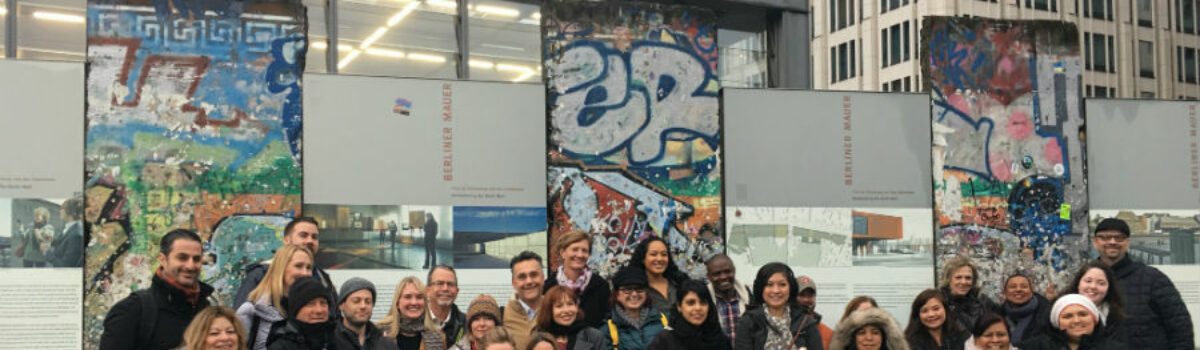
Saybrook President Nathan Long, Dean of Social Sciences Kent Becker, and three students traveled to Berlin as part of the first-ever, cross-institutional, cross-disciplinary course “Immigration in Context: Examination of Germany” in December 2016. After spending eight weeks online discussing immigration through the lenses of law, psychology, health care, advocacy, and human development, the group converged halfway across the world to see the real-life implications of immigration policy as evidenced in Berlin.

There was little way to prepare yourself for that level of immersion, but that’s part of the power and purpose of a program like this. 

“There was little way to prepare yourself for that level of immersion, but that’s part of the power and purpose of a program like this,” Dr. Kent Becker says. “I told the students early on that our goal was ‘compassionate presence’—not to go into the refugee shelter and do, but go in and just be.”

Over the course of five sessions, Saybrook students guided shelter residents to share their personal stories through photography—an advocacy tool for self-expression and discovery called PhotoVoice that Dr. Becker has utilized in communities nationally and across the globe.

In the photos below, Dr. Becker and Saybrook doctoral student R. Paul Johnson, share their Berlin experience using the same PhotoVoice method. 

Dr. Kent Becker: This is the refugee shelter of Berliner Stadtmission. As part of the course, faculty and students facilitated a PhotoVoice project with residents who wanted to share their stories through their images and their words. As a group, they shared a powerful range of experiences about their journeys, fears, family, and hopes for the future. 

It was particularly poignant and challenging that while we were in Berlin getting to know these phenomenal residents, visiting historical sites, and enjoying the city at the height of Christmas season, a young man plowed into one of the largest Christmas Markets with a truck, killing 12 people.

It was a reminder that, sadly, too many people do not come home at the end of their day. Our time with the newcomers from the shelter was a strong reminder of this fact. Across time, and today, too many people are victimized, traumatized, and marginalized.

Dr. Kent Becker: Personally, these experiences and the on-the-ground connections are what made this course so rich and meaningful. This was an important experience where we could learn together and speak candidly about our views on immigration and the refugee crisis. While we may not have always agreed, we were able to share something special collectively and individually, personally, and professionally.

Ideally other groups in their own homes, even those who don’t share the same connection as our group through education, would be willing to peacefully have the kinds of conversations we had. Whether from the east or west coast, Republican or Democrat, citizens or immigrants, or from a spectrum of races, our communities should agree to have a shared sense of responsibility and a commitment to learn more about each other.

R. Paul Johnson: One of the supplemental activities we did as a group was to visit the Oranienburg Concentration Camp just outside of Berlin. When we got there, the weather mirrored my mood: discomfort. It wasn’t just that the weather was cold, misty, and wet. I focused on the outside wall of the memorial camp and guard tower, thinking of the countless people that had been imprisoned there during frigid winters and threadbare dress. The same bare, old trees that looked down on me had seen these victims, and recognized their fear and helplessness. Anger and fear set in while I watched our reflections go past the same windows and the same paths that they were on, knowing we would be safe on the other side while others had not had the same fate.

Dr. Kent Becker: These “snapshots” capture the security and safety we felt with each other, and the community we built across affiliates, disciplines, etc. We shared meals, family, and community stories, educational experiences, painful feelings, hopes, and fears. I believe this was demonstrated and tangible after the truck attack. Individually and as a group, we were all determined to find each other, see each other, and know that we were all safe. We congregated in the hotel lounge, texted each other and our loved ones, and breathed a collective sigh of relief as each member of our community came “home.”

R. Paul Johnson: We needed a place to escape the heaviness of all we’d learned. That salvation came from our time at the WeihnachtsZauber Gendarmenmarkt (Christmas Market). Even though the weather was still gloomy and damp, our group was joyous and full of laughter. But still, I stood amongst the masses pondering on whether any of us were thinking about those who came before us, those who suffered at the hands of war-mongering dictators.

My experience in Berlin has caused me to pause at nearly every step and ask myself how I can make a difference, both as a psychologist and a human being. The trauma that the “newcomers” endured has multigenerational implications, and we need to have a better understanding of not only why this is but how we can help break this cycle. When our group’s discussion transitioned into the sadness and despair of the past, we pondered on ways to make sure something like this never happens again. Even though I am now at home, I will always remember the spirit of the Christmas Market.

Dr. Kent Becker: On our final night in the shelter, faculty, residents, and students shared their PhotoVoice projects. Throughout the process and each session, I had been so nervous and excited. It was not until the last night, during the community display, that I allowed myself to slow down and witness what had unfolded. While the photos and stories were amazing and powerful, it was the relationships between students and residents that warmed my heart and brings a tear to my eye even today. Through the activity, people found those magical points of connection. They experienced the humanity of the “other.”

This experience and the PhotoVoice project reminded me that to you have to first show up in order to make a difference. We had some challenging moments throughout the process, which included some doubt about whether the project would work. I was reminded that we do not have to have all the answers and that we can lean on each other for support. The important thing is that we must keep showing up–even on the tough days. For me, this project was what community is all about. We added, albeit small, to the positive side of life. As a group, we made a contribution.