A doctoral student shares how personal loss led her to Mind-Body Medicine and a career advancing whole-person maternal and perinatal healthcare.
Tamara Thrasher is a doctoral student in Saybrook University's Ph.D. in Mind-Body Medicine program. In this essay, she shares how personal experiences led her to pursue graduate study at Saybrook, the challenges of balancing family, work, and education, and how her studies are shaping her work in maternal and perinatal healthcare.
I had not planned on returning to school in my 50s, and I didn’t intentionally seek out universities with programs in mind-body medicine. Saybrook University found me, and I think that is the most meaningful part of my story.
During the COVID-19 pandemic, I faced several traumatic life events. The Institute for Spirituality and Health at the Texas Medical Center offered scholarships to the local community for mind-body medicine sessions. I was desperate for coping tools, so I applied.
Those sessions, some of which were facilitated by Saybrook faculty, were my first introduction to mind-body medicine. They were the catalyst for profound self-discovery and healing, and they changed the course of my life.
What started as a means of personal survival became a profound professional calling. With mind-body medicine, I discovered not just ways to cope and regulate my nervous system; I found healing. I was determined to understand the science behind it and to bring it to others.
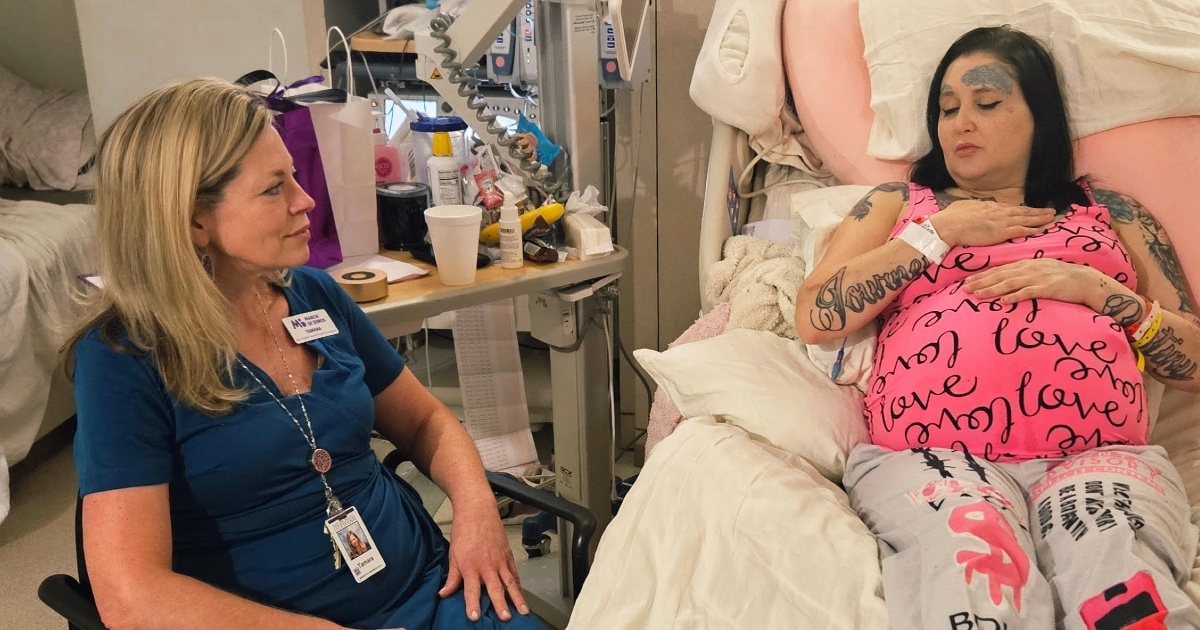
I specialize in family-centered healthcare, patient engagement, and perinatal bereavement. I am a hybrid employee for two large organizations. One is nationally recognized in research and advocacy for maternal and infant health; the other is a large tertiary pediatric hospital that partners with a renowned maternal-fetal medicine center and is home to a large-level IV NICU. It is demanding, sacred work, and it requires every tool, every ounce of knowledge, and every bit of grounded presence that I can bring.
My mind-body practices are not separate from my professional life. They are the foundation of it.
While I love what I do, the journey has not been easy. I am a single mother, raising young twins while also helping to support my mother following the recent unexpected loss of my father. I work demanding hours in a high-acuity environment where loss and trauma are daily realities. There have been times when I questioned my decision to pursue a Ph.D., moments when the weight of it all felt like too much to carry, but I continue to move forward, much to the credit of Saybrook University.
My professors at Saybrook have both challenged and supported me. They embody the very qualities that define Saybrook University: kindness, compassion, and unwavering academic rigor. They have helped me deepen my knowledge, refine my skills, and grow into a scholar.
I initially was an International Relations Specialist, but my career pivoted after the birth and death of my first child. I have been working for the past 20 years to advocate for and implement programming for whole-person, patient-centered healthcare. What draws me to this work is simple: I have lived it. After losing my first two children from complications of birth defects and suffering numerous miscarriages, I spent eight months on extended bedrest during a high-risk pregnancy with triplets. I am intimately familiar with the emotional weight women carry through complex pregnancies, navigating the NICU, and the postpartum period, and I know how much is possible when women receive support in mind, body, and spirit during the challenging seasons of life.
The perinatal period can be one of the most vulnerable times in a woman’s life, but integrative approaches remain largely on the margins of mainstream maternal-infant care. I am committed to helping change that. Saybrook has given me the academic foundation to pursue my work with rigor and intention. In the fourth year of my doctoral studies in Mind-Body Medicine at Saybrook, I completed my Integrative Wellness Coaching certification, and I am currently studying hypnosis, building a multifaceted, evidence-based toolkit that enhances my work in the maternal and perinatal care settings. When expectant mothers receive holistic care, outcomes improved for them and their babies. This is not supplemental care; it is essential care, mutually beneficial for patients and for healthcare providers and organizations.
For others interested in mind-body medicine, Saybrook University is a remarkable place to begin your exploration. The faculty members are not only scholars but practitioners who embody their work with integrity and heart.
I hope that my story resonates with other women, particularly mothers, during their own challenging seasons, questioning their futures and whether they have what it takes. I see you. I am you. I am a single mother in my late 50s raising young twins, helping care for an aging parent, working full time in one of the most demanding clinical environments imaginable, and pursuing a doctoral degree. It’s demanding. It takes sacrifice and determination. But for every woman who is finding her way through something that feels impossibly hard, I offer this: it is worth it. It matters. I want my children to see a woman who believed in something so deeply that she was willing to do the hard, unglamourous work of becoming. That, more than any credential, is the legacy I hope to leave them.
I am so grateful for the community that Saybrook has given me and the knowledge I am gaining at the university. I am grateful for every rigorous assignment that pushed me further than I thought I could go, grateful for every professor who saw in me what I was still learning to see in myself. Saybrook found me when I needed it most. Chances are that if you are reading this, Saybrook has found you too.
To learn more at the programs at Saybrook University, please fill out the form below.