The mental health benefits of playing sports are well-documented across age groups and skill levels. Athletes and amateurs alike have felt the impact of regular participation on stress reduction, mood improvement, cognitive enhancement, self-esteem, and mental toughness. Regular participation in sports, healthy competition, and other active recreation can lead to surprising benefits to mental health and well-being.
Sustaining these benefits and keeping players on the field (or court, rink, stage, etc.) can be a challenge, especially as competitive sports and their demanding leagues become a larger part of the American childhood. Sport and performance psychologists dedicate their careers to helping athletes, performers, and amateurs maximize their potential so they can continue to receive the mental health benefits of playing sports.
Playing Team Sports Can Improve Children’s Mental Health
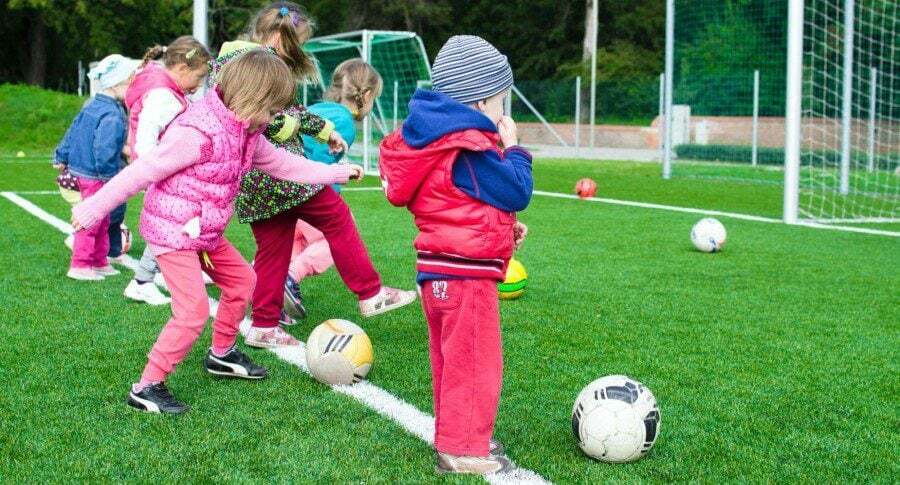
A 2022 study published in PLOS One that explored how playing team sports can improve mental health of children and adolescents found remarkable results. Participation in organized team sports leads to the following changes among the study’s 11,235 children aged 9 to 13:
- 10% lower anxious/depressed scores
- 19% lower withdrawn scores
- 17% lower social problems scores
- 17% lower thought problems scores
- 12% lower attention problems scores
In addition, the study found a 20% lower rule-breaking-behavior score in team sport participants compared with children with no participation in sports. Playing team sports helped children become more confident, social, inquisitive, respectful, and engaged. Working to achieve a shared goal combined with physical activity instills at an early age the values of teamwork, camaraderie, and fitness.
Conversely, participation exclusively in individual sports, such as tennis or wrestling, can lead to more mental health challenges for children. While the physical benefits remain, the pressure to succeed and the depression of losing fall completely onto the shoulders of a single child rather than a collective team whose members can support and uplift one another after a disappointing day.
Sport and performance psychologists are uniquely qualified to help children—especially children who do not play team sports—better respond to disappointment or depression when they fall short of their own expectations. Through mental skills training, performance preparation strategies, and focusing techniques, sport psychologists can ensure their patients are well-prepared for the challenges they may face on the field or beyond.
Healthy Competition in Sports Can Help People Focus
According to a study published in Frontiers in Psychology that examined the effects of competition on effort and memory, the presence of a competitor during physical activity can result in faster reaction times, an indicator of increased attention.
The study also found that competition had the opposite effect on nonphysical memory tasks. While physical reaction times increased with competition, memory recall and retention were damaged when facing a human competitor.
As the study shows, healthy competition, even on simple or menial physical tasks, can help us be more direct with our focus and attention. Sport and performance psychologists can help their patients translate that increased focus to nonphysical activity, sustaining those benefits long after the patient steps off the field.
Professionals who work at this intersection, between athletic performance and psychological well-being, typically train through graduate-level programs in sport and performance psychology. Saybrook's M.S. program is grounded in psychophysiology and prepares practitioners to apply evidence-based mental skills training with athletes, performers, and teams at all levels.
Life Lessons From Sports
The mental health benefits from playing sports can be converted into life lessons that will assist athletes in navigating the working world and life’s other challenges. For example, playing team sports instills a sense of cooperation and respect that can lead to tighter social bonds outside of athletics. The breathing techniques a basketball player uses at the free-throw line to calm their nerves can also be used before making a presentation at work or school. And learning how to accept defeat with grace builds mental fortitude and can help overcome other disappointments that may weigh someone down otherwise.
Those who stick with sports through high school and college also learn how to balance multiple responsibilities at once, and they develop better mental toughness as competition becomes fiercer. Because of this discipline in sports, former student-athletes consistently score higher on well-being indicators, including purpose, social connections, and thriving, than non-athletes who attended the same schools, according to a Gallup study of more than 30,000 college graduates.
Support Mental Health in Sports With a Sport and Performance Psychology Degree
Saybrook University offers an integrated health care education that uses an evidence-informed approach to wellness and mental health in sports. The Sport and Performance Psychology degree programs can be the gateway to a rewarding career helping patients flourish in and out of sports settings.
Grounded in psychophysiology, our M.S. in Sport and Performance Psychology program helps students gain a comprehensive understanding of how the brain and body work together to influence human behavior and how those interactions can affect overall performance. They will learn the crucial skills in areas that make up the backbone of effective sport and performance psychology:
- Biofeedback: Using physiological data to train athletes to regulate stress, arousal, and focus in real time.
- Psychopathology: Identifying and addressing mental health conditions that affect athletic performance and overall well-being.
- Optimal functioning: Helping athletes reach consistent peak performance through evidence-based psychological strategies.
- Athletic counseling: Supporting athletes through injury, identity transitions, career endings, and high-pressure competition.
- Professional and ethical issues in sports: Navigating the unique ethical landscape of working with athletes, coaches, and organizations.
Sports play an important role in the growth and development of children, athletes, and amateurs and the professionals who support their mental health make those benefits sustainable over time
Saybrook University's M.S. in Sport and Performance Psychology prepares graduates to work with athletes, performers, and teams using evidence-based mental skills training, biofeedback, and psychophysiological methods. The program is fully online, designed for working professionals, and grounded in Saybrook's humanistic approach to integrated health care.
Those interested in a broader mental health practice can also explore Saybrook's M.A. in Counseling.
How Team Sports Support Mental Health in Adults
The mental health benefits of playing sports don't stop at graduation. Research consistently shows that adults who maintain participation in organized sports or recreational leagues report lower rates of depression, higher social connectedness, and better stress management than sedentary peers.
For working adults in particular, team sports provide both the physical activity and the structured social contact that modern routines often eliminate. Adults who play team sports also tend to show greater self-efficacy, the belief in one's capacity to manage challenges, a quality that carries directly into professional and personal settings.
Frequently Asked Questions: Mental Health and Sports
What are the most significant mental health benefits of playing sports?
Research consistently identifies five core mental health benefits to playing sports: reduced anxiety and depression, improved mood through endorphin release, stronger self-esteem, enhanced cognitive function (including focus and attention), and greater social connection through team participation.
A 2024 study published in Scientific Reports helps explain the exact psychological mechanisms behind these benefits. Tracking 400 middle school students, researchers found that the positive impact of physical activity on mental health is entirely driven by a "chain mediation" effect involving two crucial skills:
- Self-Efficacy: Consistent physical activity builds an individual’s belief in their own capability to navigate challenges and achieve goals.
- Stress Self-Management: That elevated confidence naturally leads to better, more adaptive strategies for handling daily stressors rather than avoiding them.
Does it matter whether someone plays individual or team sports?
A 2022 study published in PLOS One found that children who played organized team sports showed 10% lower anxious and depressed scores, 19% lower withdrawn scores, and 17% lower social problem scores compared to non-participants.
According to the research, team sports are associated with stronger mental health outcomes than individual sports, particularly among children.
Team participation distributes the psychological weight of competition wins and losses, which buffers the impact of defeat on any single athlete. Individual sports offer physical health benefits, but the lack of a support network can heighten pressure and isolation, particularly for young athletes.
Sport psychologists are trained to work with both populations, developing individualized mental skills strategies that compensate for the social element individual sport athletes may lack.
What does a sport and performance psychologist do?
Sport and performance psychologists apply psychological principles to help athletes, performers, and active individuals optimize their mental functioning, improving focus, managing pre-competition anxiety, building resilience after injury or defeat, and sustaining motivation over the course of a long career.
They work with youth athletes, professional teams, performing artists, military personnel, and corporate executives in high-performance roles.
The field sits at the intersection of clinical psychology, counseling, and performance science and requires graduate-level training in areas such as biofeedback, psychopathology, mental skills training, and optimal functioning.
What degree do you need to become a sport psychologist?
Becoming a licensed sport or performance psychologist typically requires a graduate degree, either a master's or doctoral degree, in sport psychology, counseling psychology, or a related field.
At the master's level, programs such as Saybrook's M.S. in Sport and Performance Psychology prepare practitioners to apply mental skills training, biofeedback, and psychophysiological methods in athletic and performance settings.
Licensure requirements vary by state, and many sport psychologists pursue additional certification through organizations such as the Association for Applied Sport Psychology (AASP).
Can sports help with anxiety and depression?
Multiple studies support a strong relationship between physical activity, especially organized sports participation, and reductions in anxiety and depressive symptoms. The study published in PLOS One found measurable reductions in anxious and depressed scores among children who participated in team sports.
Another study of 1.2 million individuals, published in The Lancet Psychiatry, found that people who participated in popular team sports experienced a 22.3% lower mental health burden than those who did not exercise; this represents the largest reduction observed across any type of physical activity.
These benefits occur because physical activity triggers endorphin release, improves sleep quality, and creates built-in social structures that buffer against isolation. Together, these physiological and social mechanisms directly drive profound stress reduction and mood improvement.
How do the mental skills developed in sports translate to everyday life?
The cognitive and emotional skills developed through sports, such as focusing under pressure, managing failure, teamwork, and self-regulation, transfer directly to professional and personal settings. The same breathing technique a basketball player uses at the free-throw line can reduce performance anxiety before a presentation.
The mental toughness developed through competitive sport builds resilience that helps athletes navigate setbacks outside athletics.
A publication in the journal Athletic Training & Sports Health Care confirms that these benefits are durable rather than temporary; former student-athletes consistently report thriving across multiple measures of well-being and living more fulfilling lives after college than their non-athlete counterparts
Find Out More
Recent Posts