Saybrook University is a proud member of The Community Solution Education System, a nonprofit system of colleges and universities working together to advance student success and community impact.
Find the field that’s right for you: Counseling, Psychology, Transformative Social Change, Integrative and Functional Nutrition, Psychophysiology, Mind-Body Medicine, or Integrative Social Work.
Online learning fueled by community and connection defines the Saybrook experience. Our learning model is designed to foster this collaboration and connection on a regular basis.
Your success as a Saybrook student is our top priority. These student services are yours to utilize, and they can help you thrive academically and personally in our learning environment.
Saybrook’s academic calendar includes weekly breakdowns of important dates, deadlines, and other calendar events you need to know as a member of our community.
International students enhance our learning environment. Learn more about the additional information you must submit to be considered for acceptance as an international student at Saybrook University.
Before enrolling in the M.A. Counseling program at Saybrook University, Bo Aucoin had to find his way back from a dark and dangerous place in his life. Suffering from addiction and untreated mental illness, the father of two lost a promising career and found himself unhoused, living out of his car in San Francisco. It’s not rare for patients who receive life-changing mental health care to later pursue a career in mental health care and in turn help others. Aucoin is one of their number. Like so many students at Saybrook, he brings hard-won life experience to his training and has found that the faculty is positioned to help him pursue his goals.
“The first thing I noticed about Saybrook is that professors are very approachable, very human, and really want to see us succeed,” Aucoin says.
Given what Aucoin witnessed on the streets and under the fluorescent lights of a residential facility, he not only understands the vital importance of treatment and therapy, but he also has developed deep concerns about the inequities in American society. He believes that, had he been a person of color, he would have ended up in jail or dead.
“I had a lot of ethical questions about becoming part of the system,” Aucoin says, “and I appreciate that Saybrook has always made the space for those discussions.”
After graduating from Saybrook, Aucoin began working as a clinical counselor at a residential substance use disorder treatment facility. He feels a kinship with people in addiction recovery because of his own struggles with addiction. He tells those he has counseled that, while he may have achieved a lot in his life, “There is nothing that I have been through or accomplished in my life that is harder than recovery from addiction.”
Aucoin also sees a lot of the unhealthy mindsets ascribed to addicts as a reflection of our culture. He believes we are all suffering from addiction, whether it is to capitalism, unsustainable consumption, or unbalanced power structures. “We need to learn to let go of these things, and we can learn a lot from those who have overcome addiction,” he says.
Saybrook’s M.A. Counseling, Clinical Mental Health Counseling Specialization trains students to apply holistic and systemic perspectives when working with individuals, relationships, and groups in a range of settings. Aucoin was impressed by this focus on the big picture but wondered if this was just marketing speak. “I was a little skeptical and wondered what that is going to look like,” he says. “What I’ve found is that the professors really are committed bringing others in, to learn how they can grow, and how they can be part of social change.”
Learn more about Saybrook University
If you are interested in learning more about the community and academic programs at Saybrook University, fill out the form below to request more information. You can also apply today through our application portal.
Dr. Michael Mayer: A Journey of Mind, Body, and Spirit
Retraction notice: We have retracted the previous version of this article, which you may have received. The article contained factual errors and was not vetted by the subject before publication. We deeply regret this error. If you have a copy of this past article, please delete it.
American author and educator Joseph Campbell outlines the first step of the hero’s journey as a call to adventure where the hero is lured, carried away, or voluntarily proceeds. For nearly five decades, Saybrook University graduate Michael Mayer, Ph.D., has proceeded on his own journey: to become a pioneer in weaving sacred wisdom traditions and holistic approaches into modern psychotherapy, developing his own method called Bodymind Healing Psychotherapy. To this day, Dr. Mayer’s passion continues to drive him forward, and his journey is far from over.
A Child in the Woods
The son of a prominent attorney, Dr. Mayer grew up in West Orange, New Jersey. In his youth, he spent much of his time in the woods, exploring and looking in awe at the ecosystem that surrounded him, the ecosystem of which he himself was a part. Dr. Mayer’s website describes these early experiences in nature as fundamental to his continued exploration of balancing both ancient and modern considerations of health.
These early experiences motivated Dr. Mayer to earn his master’s in psychology from The New School for Social Research in New York City, where he trained to become a psychotherapist. However, he quickly found the limitations of modern psychology rooted in its entomological definition of the study of the mind. It wasn’t long before his yearning to explore a more expansive understanding of psychotherapy sent him across the country.
A Revolution of Consciousness
Many people are familiar with the cultural revolution of the 1960s and 1970s, but fewer are familiar with the consciousness revolution, a person-centered movement that reexamined the connection between the mind and body and emphasized human potential. This revolution brought Dr. Mayer to the West Coast.
“I came to the West Coast to find a school that could be better at allowing innovative research,” Dr. Mayer says. “At Saybrook you could combine East and West in your doctoral studies and study what was called the consciousness revolution.”
During this time, the founders of Saybrook University were on their own journey, one that would challenge the existing psychology establishment. The Humanistic Psychology Institute was born.
“[At the time] Saybrook was the Humanistic Psychology Institute,” Dr. Mayer says. “The beautiful thing about Saybrook at the time was, basically, you could study whatever you wanted to study. I was able to study various forms of what I call ancient wisdom traditions, including Greek mythology, astrological symbolism, tai chi and qigong, and many other things.”
Saybrook’s approach of encouraging self-discovery ultimately led Dr. Mayer to embark on a 40-night vision quest alone in the woods. Just as he did during his youth, he explored and allowed the elements of nature to inspire him. “My vision quest set the groundwork for my life’s work,” Dr. Mayer says. When he emerged, he penned his doctoral dissertation on ancient traditions of personality description.
Among the first graduates of Saybrook University, Dr. Mayer graduated with his Ph.D. in Clinical Psychology in 1977.
An Integral Approach to Integrative Medicine
A licensed and practicing psychologist, Dr. Mayer employs an integral approach to psychotherapy, considering a range of perspectives into healing. “I co-founded an integrated medical clinic where I worked for 10 years,” Dr. Mayer says. “[There I worked] with a whole team of healers, Western medical doctors, chiropractors, acupuncturists, etc.”
Utilizing his experiences as a psychologist, Dr. Mayer seamlessly integrates tai chi, qigong, and many other traditional and nontraditional techniques into his practice. “I take the essence of those traditions and bring them into my psychotherapy practice, making it grounded for those who may be averse to the esoteric dimension of it,” Dr. Mayer says. “I’ve taken my education at Saybrook and apply it to many things I do nowadays over 40 years later, for example having a humanistic connection with all of my patients.”
Dr. Mayer was a co-founding faculty member at John F. Kennedy University’s Transpersonal Psychology Program where he trained psychotherapists for more than a decade. He pioneered the integration of qigong and psychotherapy, being the first person to train doctoral psychology students in this integration at an accredited graduate school, the California Institute of Integral Studies.
A New Approach: Bodymind Healing Psychotherapy
Inspired by Ken Dychtwald’s classic book, “Bodymind,” Bodymind Healing Psychotherapy continues the consciousness revolution that brought Dr. Mayer to the West Coast and ultimately to study at Saybrook. Specializing in incorporating ancient techniques and wisdom into modern therapeutic techniques, the Bodymind Healing Center offers courses, workshops, certificate programs, literature, sessions, and other resources for those interested in applying traditional forms of healing into practice. Dr. Mayer offers tai chi and qigong classes, which transmit a broader view of cross-cultural, age-old practices, following the Saybrook idea of expanding traditions into a pluralistic endeavor. “After the class, we spend a half hour talking about any topics of interest,” Dr. Mayer says. “They include psycho-spirituality, politics, and even dissertations. Saybrook students are welcome to come to the first class for free.”
Currently, Dr. Mayer is exploring utilizing Bodymind Healing Psychotherapy as an integral approach to working with patients with Parkinson’s disease and other movement disorders. “My brother has Parkinson’s,” Dr. Mayer says. “Whenever something deep and personal is happening in my life, or in those around me, I try to utilize it as an opportunity to further my knowledge of healing.”
To bring others along on his journey, Dr. Mayer is author of more than 20 publications, including peer-reviewed articles, six books, and various audio/video products integrating Western Bodymind Healing methods with ancient wisdom traditions, including his Ben Franklin award-winning autobiography, The Path of a Reluctant Metaphysician: Stories and Practices for Troubled Times. He teaches his integral approach to healing at hospitals, universities, and workshops nationally and internationally.
Dr. Mayer has also spoken extensively at conferences, and continues sharing his integral method to psychotherapy with those entering the field. “I’m grateful that my doctoral years at Saybrook seeded my interest to research a broader dimension of psychology than I would have received at a traditional school,” Dr. Mayer says. “My interest in integrating ancient wisdom traditions with modern psychology continues to this day.”
Additional resources for Bodymind Healing Psychotherapy:
The U.S. spends more per capita on health care than any other country, yet, according to a report by the Commonwealth Fund, average life expectancy is three to five years shorter than similarly developed countries and about 20% higher in preventable deaths each year. How did we get here, and what can be done to reverse this unhealthy inversion?
One hopeful trend is growing awareness among practitioners and patients alike that the American tradition of treating mental and physical health as separate disciplines is outmoded, and health care providers are increasingly pairing psychological services within hospitals and clinics that treat physical illnesses.
As part of this rethinking of health care and treatment, there is a movement to blend this holistic approach with complementary alternative medicine (CAM), which includes techniques such as acupuncture, hypnosis, yoga, and herbal medicines, also referred to as ‘whole health’. As Saybrook University President Nathan Long, Ed.D., explains, “What integrative health attempts to do is to take the best parts of Western medicine, especially Western therapeutic interventions, and merge them with complementary and alternative models of care so that those are coming together to provide the greatest amount of support to individuals.” This support will improve overall healthcare outcomes through multi-modal, person-centered care — a win-win for practitioners and patients.

While some may intuitively understand the link between mental and physical health, recognizing how to apply that awareness to improve patient outcomes across the U.S. population is an enormous challenge. It requires not only rethinking how medicine is practiced today but also reimagining what the future of health care will look like. Dr. Long and his leadership team are leading an effort to promote an approach called integrative health for all. Their goal is to help the public understand the value of these new approaches and the availability of a broader range of services, as well as to address the greater challenge of standing up a network across the country to provide those services.
Dr. Long foresees an effort comprising three complementary steps.
The first step is to call attention to the need for greater healthcare access, including mental health and mind-body wellness, across the U.S.
The second step is to spotlight those hospitals and clinics that are engaging in best practices when it comes to innovation in integrative health.
The third step is to build partnerships among organizations to serve a broader network of integrative health providers.
“The goal of integrative health is looking at the person holistically,” Dr. Long says, offering the case of a theoretical patient who suffers from depression, is a cigarette smoker, a heavy drinker, and suffers from a range of physical ailments that are attendant with that lifestyle. After screening this individual, an integrative care team would develop a course of care. For example, if the person is on antidepressants, the team might augment care through hypnosis, mindfulness, meditation, and cognitive behavioral therapy. Once a plan is developed, the team would go to the patient and say, “You’ve given us your challenges, you’ve identified some long-term goals, and here are options for us to partner together to help you achieve these goals.”
A cornerstone of any successful patient care program is access, which these days means blending telehealth with in-person visits. “An integrative care team works with each person individually, which is very humanistic, and they also look at how we help the patient achieve their maximal goals over a given number of months,” Dr. Long says. “That’s the ideal. If I were to say kind of the gold standard, that would be what it could look like.” Dr. Long points to the Camden Center in Los Angeles as a model for how comprehensive health care might work broadly across the country. Its interdisciplinary care team clinic provides mental health care, medical care, and holistic health care all under one roof to patients who seek it. Nevertheless, the challenge comes down to access and affordability of services, addressing these will also be paramount.
Laying the groundwork for a new understanding of care
Creating care networks that can treat a large segment of the population will require innovation beyond the options currently available. Such an initiative will include improving connectivity among care providers. One possible approach that is gaining traction is using blockchain technology to allow information and file sharing among providers that is secure, decentralized, and efficient.
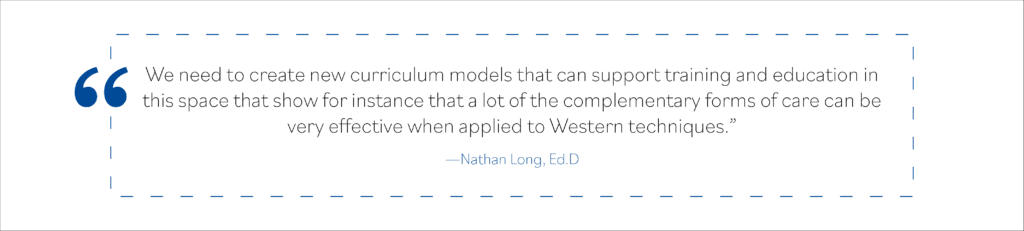
Another necessity is reforming medical and mental health education to prepare the next generation of clinicians for a new integrative reality. Dr. Long points to future psychiatrists in medical school and future counselors in clinical training programs as being an important audience to become future advocates for this new approach to health care. “We need to create new curriculum models that can support training and education in this space that show for instance that a lot of the complementary forms of care can be very effective when applied to Western techniques,” he says.
Additionally, professional societies such as the American Psychological Association and the American Psychiatric Association ought to embrace an integrative model and to collaborate on advancing an understanding of this approach to client-centered care.
Perhaps most important will be educating the public about the increasing range of tools available to them. For example, patients living in areas with limited access to mental health services need information about the telehealth options available to them and how to determine which will best meet their needs. The goal is to bring these services under one umbrella so potential clients can educate themselves and gain early access to the help they need.
“We have a student who’s in rural New York,” says Dr. Long. “There’s one psychologist in her rural county serving close to 15,000 people. There’s way more need than there are therapists. The goal is figuring out how to fill those gaps to support the overall health and well-being of these vital communities.”
What Saybrook brings to the movement
As a leader in health sciences education, Saybrook University is uniquely positioned to be at the forefront of creating integrative health awareness. The institution is developing a growing selection of graduate programs geared toward helping practitioners of traditional medicine using traditional techniques to combine integrative skills with their expertise and expand their range of care.
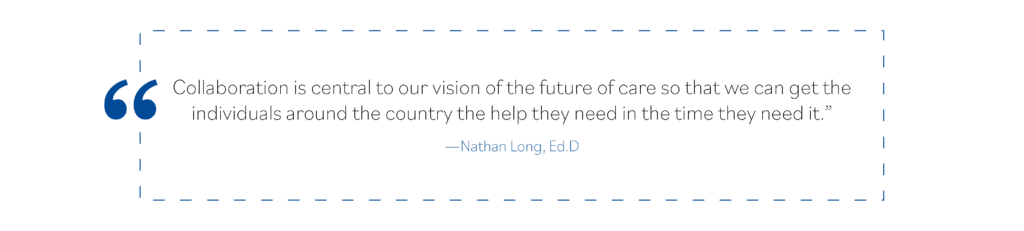
The pressures on the mental health profession have created an urgent need for a new approach to mental health care. “We need to invest at the federal, state, and local level in preventive wellness care, including into mental health,” Dr. Long says. “Preventive care also reduces the cost and the impact in the future. We need to make those investments now so that we see long-term rewards.” Most of all, Dr. Long emphasizes the critical importance of collaboration among all corners of medicine and wellness. He says, “Collaboration is central to our vision of the future to get people the care they need when they need it.”
Learn more about Saybrook University
If you are interested in learning more about the community and academic programs at Saybrook University, fill out the form below to request more information. You can also apply today through our application portal.
Regular participation in sports, healthy competition, and other active recreation can lead to surprising benefits to mental health and well-being. Athletes and amateurs alike have felt the powerful benefits of sports for mental health, including stress reduction, mood improvement, cognitive enhancement, better self-esteem, and mental toughness.
Sustaining these benefits and keeping players on the field (or court, rink, stage, etc.) can be a challenge, especially as competitive sports and their demanding leagues become a larger part of the American childhood. Sport and performance psychologists dedicate their careers to helping athletes, performers, and amateurs maximize their potential so they can continue to receive the mental health benefits of playing sports.
Playing Team Sports Can Improve Children’s Mental Health
A 2022 study published in PLOS ONE that explored how playing team sports can improve mental health of children and adolescents found remarkable results. Participation in organized team sports leads to the following changes among the study’s 11,235 children aged 9 to 13:
10% lower anxious/depressed scores
19% lower withdrawn scores
17% lower social problems scores
17% lower thought problems scores
12% lower attention problems scores
In addition, the study found a 20% lower rule-breaking-behavior score in team sport participants compared with children with no participation in sports. Playing team sports helped children become more confident, social, inquisitive, respectful, and engaged. Working to achieve a shared goal combined with physical activity instills at an early age the values of teamwork, camaraderie, and fitness.
Conversely, participation exclusively in individual sports, such as tennis or wrestling, can lead to more mental health challenges for children. While the physical benefits remain, the pressure to succeed and the depression of losing fall completely onto the shoulders of a single child rather than a collective team whose members can support and uplift one another after a disappointing day.
Sport and performance psychologists are uniquely qualified to help children—especially children who do not play team sports—better respond to disappointment or depression when they fall short of their own expectations. Through mental skills training, performance preparation strategies, and focusing techniques, sport psychologists can ensure their patients are well-prepared for the challenges they may face on the field or beyond.
Healthy Competition in Sports Can Help People Focus
According to a study published in Frontiers in Psychology that examined the effects of competition on effort and memory, the presence of a competitor during physical activity can result in faster reaction times, an indicator of increased attention.
The study also found that competition had the opposite effect on nonphysical memory tasks. While physical reaction times increased with competition, memory recall and retention were damaged when facing a human competitor.
As the study shows, healthy competition, even on simple or menial physical tasks, can help us be more direct with our focus and attention. Sport and performance psychologists can help their patients translate that increased focus to nonphysical activity, sustaining those benefits long after the patient steps off the field.
Life Lessons From Sports
The mental health benefits from playing sports can be converted into life lessons that will assist athletes in navigating the working world and life’s other challenges. For example, playing team sports instills a sense of cooperation and respect that can lead to tighter social bonds outside of athletics. The breathing techniques a basketball player uses at the free-throw line to calm their nerves can also be used before making a presentation at work or school. And learning how to accept defeat with grace builds mental fortitude and can help overcome other disappointments that may weigh someone down otherwise.
Those who stick with sports through high school and college also learn how to balance multiple responsibilities at once, and they develop better mental toughness as competition becomes fiercer. Because of this discipline in sports, former student-athletes tend to report that they live more fulfilling lives after school than their non-athlete counterparts.
Support Mental Health in Sports With a Sport and Performance Psychology Degree
Saybrook University offers an integrated health care education that uses an evidence-informed approach to wellness and mental health in sports. The Sport and Performance Psychology degree programs can be the gateway to a rewarding career helping patients flourish in and out of sports settings.
Grounded in psychophysiology, our M.S. in Sport and Performance Psychology program helps students gain a comprehensive understanding of how the brain and body work together to influence human behavior and how those interactions can affect overall performance. They will learn the crucial skills in areas that make up the backbone of effective sport and performance psychology:
Biofeedback
Psychopathology
Optimal functioning
Athletic counseling
Professional and ethical issues in sports
Sports play an important role in the growth and development of children, athletes, and amateurs and can lead to surprising and powerful mental health benefits.
As medical technology and academic studies advance, more medical fields have become deeply specialized, allowing patients to get priority treatment optimized for their hyper-specialized needs. The world of psychophysiology, biofeedback therapy, and neurofeedback medical practice are prime examples of this evolution of the medical field. In psychophysiology, doctors study the relationship between the mind and the body by examining physiological signals, such as when somebody blushes due to embarrassment or has a panic attack and starts sweating due to internalized anxiety.
This starts with academic and hands-on experience acquired before receiving a Ph.D. Psychophysiology is where you can find a career in various fields, including clinical psychophysiology, biofeedback therapy, neurofeedback therapy, and sports psychology. All four of these prioritize the mind and body wellness of their patients.

What Does a Clinical Psychophysiologist Treat?
After completing a Ph.D. Applied Psychophysiology: Clinical Psychophysiology Specialization, graduates will be prepared for a psychophysiological career in the clinical field, where they will examine a patient’s biological and psychological needs to assess how best to treat them. By treating your patients with a biopsychosocial approach, you can help patients who are suffering from a variety of problems, such as:
Chronic Pain
Hypertension
Trouble Sleeping
Inability to Pay Attention for Long Periods of Time
Examining the patient outside of the traditional lens of Western medicine can offer new solutions and truly address the patient’s needs. It can provide an alternative to medications and address the body as its own entity while ignoring the patient’s psychological needs.
Licensure and Certification: Earning a Ph.D. in Psychophysiology alone will not allow one to practice as a clinical psychophysiologist. Graduates must complete additional licensure requirements and pass related licensure or certification examinations before entering practice. Licensure requirements vary from state to state.
What is the Role of a Biofeedback Therapist?
In a modern and complex world, many people feel that they are in a constant state of stress or anxiety, causes which can result in long-term underlying health issues, both physical and mental. The role of a biofeedback therapist is to help reduce these critical stress levels and make them manageable. This starts with a biofeedback session, which can range from 30 minutes to an hour on average. There are various types of biofeedback, such as using an electrocardiogram machine (ECG) to assess the heart, breathing biofeedback to determine the breathing rate, sweat gland activity to assess nervousness, and much more.
Biofeedback training for therapists is a great way to specialize in a particular field that can do wonders for patients. It gives them a tangible understanding of their symptoms and offers a viable solution to reduce their physical and mental health problems. Those therapists or mental health workers looking to expand their skill set would be interested in the Ph.D. Applied Psychophysiology: Specialization in Optimal Functioning, where biofeedback therapists start a rewarding career in optimal functioning.
Licensure and Certification: Earning a Ph.D. in Psychophysiology alone will not allow one to practice as a biofeedback therapist. Graduates must complete additional licensure requirements and pass related licensure or certification examinations before entering practice. Licensure requirements vary from state to state.
What is the Role of a Neurofeedback Therapist?
Like biofeedback therapy, a neurofeedback therapist assesses the brain waves of patients using non-invasive treatments. The goal of neurofeedback therapy is to offer an alternative to medications used for treating neurodevelopmental disorders such as ADHD without a dependency on medications and behavioral therapy.
Some studies have shown that neurofeedback is associated with significant improvements in people who have ADHD by prioritizing long-term solutions rather than using medications as a short-term solution. By increasing focus, grades, and parental consent from children’s behavior, neurofeedback therapy has helped to reduce hyperactivity.
Licensure and Certification: Earning a Ph.D. in Psychophysiology alone will not allow one to practice as a neurofeedback therapist. Additional licensure requirements for becoming a neurofeedback therapist, such as certification examinations before entering practice, may be required, varying from state to state.
What is the Role of a Sports Psychologist?
Inside the world of sports medicine, a psychophysiology career can be found to help athletes maximize their talents both physically and mentally. A sports psychologist is a type of wellness coach who helps them to prioritize their potential. Studies have shown that sports psychology may have an impact on improving the performance of athletes. During their day-to-day activities, a sports psychologist will walk athletes through their fears and anxieties, recover from injury, and help them develop as individuals and team members.
Teams of all ages can benefit from having a sports psychologist who is constantly improving their skills. The mental-physical connection a sports therapist emphasizes can help an athlete look at their connection with the game and their teammates with a whole new perspective, considering leadership, behavioral patterns, team chemistry, and individual personalities.
How to Start an Exciting Career in Specialized Psychology?
A psychophysiology career starts with a solid academic foundation on which you can continue to develop your skills and knowledge on how to improve the lives of others. Saybrook’s Ph.D. in Applied Psychophysiology focuses on the natural integration of the mind and the body to create a nuanced understanding of how the medical field examines patients and their needs. If you wish to become a part of this fascinating field of psychology, reach out and learn more today.
Saybrook University Student Profile: Derek Kee-Haynes
“Saybrook is different from other schools because there really is a focus on lived experience and human potential,” says Derek Kee-Haynes, MSW, M.A., LCSW, MCAP. “It’s so much more than academics.”
Lived experience is something Kee-Haynes has earned plenty of during his personal and academic journey. While he is now studying for a Ph.D. in Integrative Social Work at Saybrook University, he didn’t pursue social work as a career when he first entered the workforce.
Instead, Kee-Haynes’ first love was fashion, which took him to fashion school in New York City, and he worked for many years in luxury retail sales. He also studied musical theater and danced professionally while he was “figuring it out.”
“This was a whole other lifetime, and I didn’t really start this ‘leg of the tour’ until my late 30s, early 40s,” Kee-Haynes says, referring to his first steps toward pursuing social work.
Despite a circuitous route to his new calling, Kee-Haynes draws a connection between his past pursuits and his current work in that it all comes down to his love of people.
“My ability to listen and hear and hold space and bear witness to people’s lives and stories was something that made me very successful as a salesperson,” Kee-Haynes says. “At the time, I didn’t realize that these skills were related to what I’m doing now, but they really are.”
Kee-Haynes’ personal journey and identity as a Black gay man also cannot be separated from what led him to his current path, and he cites Barack Obama’s election as president of the United States for leading him to reevaluate his life goals.
“It shifted the energy, and I was so proud to be a man of color and so inspired to become a better version of myself and affect change,” Kee-Haynes says. “I thought, ‘I have to go back to school. I have to do more.’ It was so huge for me, and it came in so clear that I wasn’t living my purpose or calling.”
For Kee-Haynes, finding the right purpose and calling meant a change in his core values. “You get to a point in your life when you ask, ‘Why am I here?’” he says. “The answer that came to me is, ‘You need to be serving people and not pursuing money.”
During all of this, Kee-Haynes also met some serious health challenges, leading him to reflect further on the meaning of life and how he should best use his time on this planet. It inspired him to earn his bachelor’s degree as well as two master’s degrees: an MSW and an M.A. in depth psychology with a specialization in Jungian and archetypal studies.
Now working on his Ph.D. at Saybrook, Kee-Haynes expects to graduate in the spring of 2026. He wants to focus his dissertation and research on psychodrama as an intervention for racial trauma. He’s particularly interested in the decolonization of social work, recognizing that social work can’t be a one-size-fits-all system for every identity.
Kee-Haynes applies this approach in his work as the director of Clinical Services at Tranquil Shores, a substance abuse recovery center in Madeira Beach, Florida. “I try to meet my clients where they are,” he says. “They love our diverse modalities and our holistic treatment approaches.”
According to Kee-Haynes, Saybrook facilitates the exploration of different spiritual modalities within the field, and the professors he’s worked with so far have been open and encouraging. “It’s a part of who Saybrook is,” he says, “and I know I belong here because of this.”
Racial trauma isn’t a distant concept tucked away in history books; it’s a relentless storm that many people of color navigate daily. This trauma stems from violent racial incidents, some as overt as police brutality witnessed firsthand or through the media lens. Such events aren’t mere moments; they etch deep scars on both mental and physical health, subtly manipulating behavior patterns.
The saga of African Americans is marred by structural racism, an unwelcome inheritance from the era of slavery, persistently manifesting through health disparities, economic hurdles, and enforced segregation. Racial trauma, or race-based traumatic stress (RBTS), emerges from these incessant encounters with racial prejudice, ethnic discrimination, racism, and the horrors of hate crimes. It’s the disturbing reality for anyone who has faced the sharp edge of racism’s blade, rendering them vulnerable to race-based traumatic stress injuries. In the U.S., this vulnerability is most acute among Black, Indigenous People of Color (BIPOC) whose lives are overshadowed by the sinister cloud of white supremacy.
Moreover, there’s a nuanced form of suffering, vicarious traumatic stressors, that hauntingly parallels the direct impacts of racial trauma. These are the echoes of systemic racism and individual racial aggressions that BIPOC communities endure. Witnessing the brutality of events such as the murder of George Floyd can trigger profound traumatic stress reactions, especially among Black individuals. Similarly, a significant portion of Latinx youth carry the burden of traumatic experiences from migration, while Native American children are vicariously scarred by the prevalent societal maladies of their communities.
Addressing racial trauma necessitates a multifaceted strategy. Stepping away from the triggering environment, though vital, isn’t always feasible. Building a robust support network, taking mental health breaks, and engaging in dialogues with professional clinicians are pivotal steps toward healing and recovery.
Weaving these insights into our narrative underscores not just the historical significance of Dr. Martin Luther King Jr. and Thich Nhat Hanh’s efforts but also the contemporary relevance of their work. Their legacy, characterized by mutual respect, justice, and “love in action,” shines a beacon on the importance of community support, engagement, and the enduring fight against systemic injustices. This dialogue not only enhances our understanding but also stirs a call to action, inviting us to contemplate the enduring power of empathy and collective advocacy for basic human rights amid a backdrop marked by the struggle against racial trauma.
A Story of Dr. Martin Luther King Jr. and Thich Nhat Hanh
In the heart of remembrance, January 22, 2022, holds a mirror to the legacy of Thich Nhat Hanh, a beacon of peace in troubled times. The Buddhist monk’s founding of the Plum Village monasteries worldwide isn’t just a tale of spiritual leadership; it’s a chapter in a broader narrative of compassion and cross-cultural dialogue, especially his relationship with Dr. Martin Luther King Jr. This alliance was born out of their mutual yearning for peace—a theme that, unfortunately, remains piercingly relevant in today’s tumultuous climate.
Their first meeting in May 1966 wasn’t coincidental but a confluence of shared ideals. They discussed the Vietnam War’s devastating impacts and how peace could be nurtured, both within the U.S. and globally. Dr. King, echoing the sentiments of many, expressed his disdain for the conflict and, recognizing a kindred spirit in Thich Nhat Hanh, nominated him for the Nobel Peace Prize. This gesture wasn’t just an acknowledgment of Thich Nhat Hanh’s peaceful pursuits but a bridge connecting two vastly different cultures through shared humanitarian values.
The essence of their relationship is perhaps best epitomized by their meeting in 1967 when Thich Nhat Hanh was running late. Dr. King, in a simple act of kindness, kept his breakfast warm. This narrative, while seemingly modest, reveals profound lessons about mental health, especially within the context of care and community. It underscores the importance of nurturing—in the physical sense with nutrition, housing, and medical care, but also in the emotional sphere, healing the trauma that underpins many mental health challenges.
History paints a vivid picture of the civil rights movement’s reliance on the unseen labor of Black women. They ensured that the movement’s heartbeats, its organizers, and activists, remained fed and focused. The narrative of the Black Panthers further expands this theme, emphasizing community care as a revolutionary act—a model that, while appropriated by the government with the USDA’s formation, started as a grassroots effort within the Black community. This reclamation of history serves not just as an educational tool but as a balm for the collective psyche, healing through the acknowledgment of past injustices.
The term “mutual aid” may have entered mainstream lexicon, but its roots are deeply embedded in Black communities’ resilient fight against systemic oppression. It represents a legacy of proactive solidarity and community-based self-help, developed in response to the enduring mental health crisis exacerbated by generational suffering. Dr. King’s actions, though seemingly small, resonated with a universal craving for dignity and basic human rights, transcending racial and cultural boundaries. His warmth toward Thich Nhat Hanh symbolizes the broader ethos of their mission—a universal brotherhood bound by love, action, and a relentless pursuit of justice.
As we absorb the lessons from Thich Nhat Hanh and Dr. King’s relationship, we’re reminded of the continuous struggle for equality and peace. Their story is a guidepost for contemporary activism, highlighting that the path to liberation is paved with acts of kindness, understanding, and relentless love. In a world often divided by differences, their legacy invites us to look beyond the surface, finding common ground in our shared humanity and the collective pursuit of a better world.
Integrative and Functional Nutrition’s Role in Your Health
Earning an M.S. in Integrative and Functional Nutrition from Saybrook University can significantly enhance your journey to becoming a functional nutritionist. This degree will support your continuing education and board certification efforts and separate you from other holistic nutritionists by providing a comprehensive education. Our hands-on experience in diverse communities prepares graduates to consider life experience, external factors, lifestyle habits, and mental and physical signs of poor nutrition.
The M.S. is designed to fulfill the academic requirements for the Certified Nutrition Specialist (CNS) and Certified Clinical Nutritionist (CCN) credentials, two of the most recognized credentials for non-RD nutrition practitioners in the U.S
What is Integrative and Functional Nutrition?
Integrative and functional nutrition is the holistic approach to diet, going beyond basic dietetics and considering lifestyle factors that may affect their food choices. These factors can include one’s environment, physiological, mental, or genetic makeup. Standard nutrition is the general application of nutritional guidelines created for an entire population rather than specific to an individual and their needs.
What are the Benefits of Functional Nutrition?
Integrative and functional nutrition can help prevent, manage, and reverse health conditions through the medicinal use of food. Here are a few benefits of holistic nutrition:
Improved Gut Health: using food to embrace the gut microbiome and the immune system related to inflammatory bowel disease.
Balanced Hormones:adjusting one’s diet can help regulate fluctuating hormone levels, which impact weight, insulin resistance, inflammation, and beta cell glucose sensitivity. Hormonal balance is crucial for reproductive functions and fertility, especially in girls.
Combat Nutrient Deficiencies: using supplementations and a food-based approach to reduce macro and micronutrient deficiencies, help the body perform, and reduce the chances of diseases such as cancer, diabetes, and heart disease.
More muscular Immune System: nutrition is associated with immune responses and infection resistance.
Nutrient Absorption: improves the body’s ability to absorb nutrients from food to increase energy, growth, and cellular maintenance.
Decrease Obesity: managing the quantity and quality of a diet can determine the obesogenic effects of foods and metabolic health.
When properly managed, these are only a few physiological changes a diet can have. Studies show that food can impact mental health just as much as physical health. This is why Saybrook teaches a whole-person approach to nutrition, considering mental, physical, and emotional factors that may be symptoms of something more significant, such as nutritional deficiency or inadequacy.
What is the Role of a Functional Nutritionist?
An integrative functional nutritionist uses an evidence-based, whole-person approach to create a blend of holistic medicine and health science. The practitioner makes recommendations and lifestyle improvements that can improve the patient’s quality of life.
A functional nutritionist will evaluate the patient’s emotional, physical, and mental state, as well as their environment and lifestyle habits, checking for symptoms of dietary-related causes. Food is believed to be naturally medicinal, so creating a food plan or determining any nutrient inadequacies can help resolve, treat, or manage short—or long-term diseases.
How to Become an Integrative Functional Nutritionist
Becoming a certified integrative functional nutritionist combines the familiarand holistic nutritionist career paths. Although pursuing a graduate degree in functional nutrition is not required, it will help separate you from other applicants and other practitioners in the field.
Pursue your master’s in functional nutrition or a related program such as Saybrook University’s M.S. in Integrative and Functional Nutrition. A graduate degree may be required depending on the state you wish to practice. If it is not explicitly required, it will help set you apart from other applicants while furthering your education, professional confidence, and hands-on training experience.
Optional: Earn your Certificate in Integrative and Functional Nutrition to help fast-track your professional development as a working or prospective nutritionist. This certification will expand on medical models for best practices, legal perspectives, and bioethics.
You must maintain your board certification by submitting 30 hours of continued education every two years.
Practical and clinical experience will be required at each milestone in your education to become an integrative functional nutritionist. It is best to complete as many hours of hands-on experience as possible for your one professional competency and your resume.
What Degree Should I Pursue to Become a Functional Nutritionist Degree
Saybrook University’s M.S. in Integrative and Functional Nutrition blends theories with practical applications to prepare our students for real-world situations. Our graduate nutrition programs create a solid foundation for future holistic nutritionists.
Our Ph.D. in Integrative and Functional Nutrition prioritized leadership skills and a deeper scientific understanding of holistic nutrition to help our students advocate and influence the field.
Practitioners who want to work directly with clients can pursue Saybrook’s M.S. in Integrative and Functional Nutrition, a 40-credit online program that fulfills the academic requirements for the CNS and CCN credentials.
Career paths for prospective counselors are diverse. With so many options available to students after completing their master’s degree and passing licensure exams, the process can feel overwhelming. To help you choose the counseling path that best fits your goals and reduce any uncertainty, we’ve outlined four counseling specialties below, including their typical responsibilities and salary information.
Clinical Rehabilitation Counseling
Rehabilitation counseling is a specialized field dedicated to empowering individuals with disabilities to lead fulfilling, productive, and independent lives by maximizing their functional abilities. Whether the disability is mental, developmental, or emotional, the primary objective of rehabilitation counseling is to facilitate the client’s achievement of an optimal level of functioning within their unique circumstances.
As a clinical rehabilitation counselor, you will work with clients who have emotional, physical, developmental, or mental disabilities and create a personal plan that fits their goals, education, and physical abilities. The age of clients can range from children to seniors marking each work environment have its own unique challenges and opportunities for professionals in this field. Professionals in this field collaborate with families, employers, and other stakeholders to create an space that fosters the optimal functioning of individuals with disabilities.
Clinical Rehabilitation Counselor Salary
The average rehabilitation counselor’s salary in the U.S. is $46,110 annually according to the Bureau of Labor Statistics.* The employment rate is projected to grow at about an average rate for rehab counselors.
*Data gathered in 2024.
Military Counseling
Military counselors play a vital role in supporting active service members and veterans as they navigate the complex challenges of military life. This specialized area of trauma counseling focuses on the unique mental health needs of individuals who have served in the armed forces, as well as family members of those who have served. The scope of military counseling includes a wide range, including anxiety, depression, post-traumatic stress disorder (PTSD), and the everyday stressors inherent in military duty.
As a military counselor, you will design interventions that promote mental, emotional, and cognitive well-being. Counselors in this field are trained to understand the complexities of military life, including combat exposure, deployment-related stress, and the challenges of reintegrating into civilian society. This specialized training enables you to provide the most effective support to their clients. In addition to individual therapy, military counselors often facilitate group therapy sessions, creating a supportive community where service members and veterans can share their experiences and learn from one another. These group settings offer a unique opportunity for individuals to connect with peers who have faced similar challenges, fostering a strong sense of camaraderie and understanding. Military counselors may work in veterans services departments in hospitals and schools, outpatient clinics, recovery centers, and on active-duty bases.
Military Counselor Salary
The average military life counselor’s salary in the U.S. is $53,857 annually according to the ZipRecruiter.* Depending on where professionals practice, the salary ranges from $29,000-89,000.
*Data gathered in 2026.
Substance Abuse Counseling
Substance abuse counselors work with individuals who struggle with addiction to drugs and/or alcohol and are seeking treatment, as well as with the families of those who struggle. Counselors work closely with clients to develop strategies and tools that empower them to navigate life’s stressors without resorting to substance use.
What Does a Substance Abuse Counselor Do?
As a substance abuse counselor, you will help identify problematic behaviors that may contributing contribute to addiction as well, and develop a proactive plan for coping with stress. This may involve teaching effective stress management techniques, building healthy coping mechanisms, and developing a support network that promotes positive lifestyle changes.
Substance abuse counselors work not only with the individuals seeking treatment but also with their families. By educating families about addiction, facilitating open communication, and providing guidance on how to best support their loved ones, these counselors help create a holistic and sustainable recovery environment. Group therapy is also used in substance abuse counseling to support clients in their healing journey and foster camaraderie throughout recovery. Substance abuse counselors might work in a rehabilitation center or hospital setting.
Substance Abuse Counselor Salary
The average substance abuse counselor’s salary in the U.S. is $59,190 annually according to The Bureau of Labor Statistics.* The employment rate is projected to grow within the substance abuse counseling field by 17% from 2024 to 2034, which is much faster than the average.
*Data gathered in 2024.
Clinical Mental Health Counseling
Clinical mental health counselors use psychotherapy and problem-solving techniques to assess, diagnose, and treat individuals with mental and behavioral health concerns with the goal of improving their life quality. The clientele may include individuals, groups, couples, families, children, adolescents, military personnel, and the elderly.
What Does a Clinical Mental Health Counselor Do?
As a clinical mental health counselor, you will evaluate a client’s overall health and behaviors to develop a treatment plan and establish goals for each client, maintain client document records, and support client discharge planning. With the wide range of clients treated, mental health counselors typically take a holistic approach to treatment, usually; considering the environmental and physical factors that may contribute to a client’s mental health. They may work in public schools, universities, recovery centers, and private practices.
If you’re interested in this type of counseling, Saybrook University offers an M.A. in Counseling with a Clinical Mental Health Counseling Specialization that can help you pursue this career path. The three-year program is hybrid online and is accredited by the Council for Accreditation of Counseling and Related Educational Programs (CACREP). This program is designed to prepare to address the urgent mental health care crisis, build the knowledge, skills, and professional preparation needed to become a clinical mental health counselor.
Clinical Mental Health Counselor Salary
The average mental health counselor’s salary in the U.S. is $59,190 annually, according to the Bureau of Labor Statistics.* The employment rate is projected to grow within the substance abuse counseling field by 17% from 2024 to 2034, which is much faster than the average.
Frequently Asked Questions
What fields can you work in with a counseling degree? As a counselor, you can choose from a variety of fields depending on your interests and preferred work setting. You might work in healthcare, in schools, or in community-based organizations. Ultimately, your career path will depend on your specializations, level of education, and your state licensure requirements.
What degrees are needed to become a counselor? The bachelor’s degrees you pursue to become a counselor will depend on your desired specialty. Common undergraduate majors in counseling include psychology, social work, and sociology. To become a licensed counselor, most states require a master’s degree or a doctorate in counseling.
What licensure requirements are needed to become a counselor? In most states, the typical requirements for counseling licensure include:
A master’s degree in counseling or a related field from a program accredited by the Council for Accreditation of Counseling and Related Educational Programs (CACREP)
A supervised clinical experience of 2,000- 3,000 hours is completed after your master’s degree.
Passing state-administered exams and national exams related to your specialization.
When planning your counseling career path, be sure to review the specific licensure requirements in your state.
Can you become a counselor with an online degree? Yes. An online counseling degree is valid as long as it meets state licensure requirements and is accredited by the Council for Accreditation of Counseling and Related Educational Programs (CACREP). An example of a reputable online counseling degree program is the M.A. in Counseling with a Clinical Mental Health Counseling Specialization offered by Saybrook University.